Showing posts with label need. Show all posts

12 Health Myths That Need to Be Debunked

 12 Health Myths That Need to Be Debunked

Superfoods are packed with nutrients but possess no magical properties; a balanced intake is essential.

Protein isn't just for young bodybuilders; older adults also need it for muscle repair.

You shouldn't cut back on water intake when dealing with water retention; doing so actually worsens the problem.

Few people likely still believe the literal saying that "an apple a day keeps the doctor away." However, when it comes to larger, more popular myths, it can be difficult to decide what to believe and what to dismiss.


The human body is incredibly complex, and many theories surrounding it lack any factual basis. Here, we shed light on the truth behind some of these unfounded theories.


1. Myth: Superfoods have "superpowers"


Fact: While they offer specific benefits, they possess no magical qualities. "Superfood" simply refers to a nutrient-dense food that provides a higher level of nutrition compared to others; however, relying solely on them is not enough. One must maintain a balanced intake based on the body's specific needs.


2. Myth: Protein is only for young bodybuilders


Fact: Protein is often misunderstood. It is essentially a source of amino acids that aids in muscle repair and is efficiently absorbed by the body. Protein supplements are not prescribed solely for the purpose of building muscle mass. It might also be provided to meet the body's protein requirements, given that Nepali meals are primarily carbohydrate-based.


As one ages, protein needs increase, and the rate of muscle loss accelerates. It is crucial for the elderly to include appropriate protein supplements in their diet, as these help with muscle repair and the maintenance of strength and stamina. This is not merely a post-workout supplement; it can be consumed with any meal to meet daily protein requirements.


3. Myth: Drinking water while eating destroys nutrients.


Fact: This is also a myth. Think of your stomach like a blender that mixes food and prepares it for absorption. If the meal consists of items like lentils (dal), vegetable broths, or buttermilk, you might manage without extra water. However, dry foods require fluids for digestion. Water is essential alongside food for proper digestion.


4. Myth: You should drink less water if you have water retention issues.


Fact: Water retention is caused by protein deficiency, electrolyte imbalance, or other medical conditions. If you drink less water, the body begins to hoard it because it needs water to transport nutrients throughout the body and perform vital processes. Consequently, the body conserves water, and the problem worsens.


5. Myth: Fats are always bad.


Fact: It is a mistake to completely avoid fats in an attempt to get very thin. Fats are not the enemy of the body. We need healthy fats—such as olive oil, almond oil, rice bran oil, extra virgin coconut oil, and ghee—as well as fruits that are good sources of Omega-3.


However, processed meats, processed foods, and high-sodium packaged foods are not good for health and should be eliminated from your diet.


6. Myth: Restaurant food is bad for those on a diet.


Fact: Following a diet is not a punishment; rather, it is about making improvements to your lifestyle. It does not mean you have to stop attending social gatherings that involve eating and drinking. There are many healthy options available to choose from when dining out. You can opt for green salads, clear soups, mixed vegetables, or other healthy dishes.


7. Myth: Fruit juice helps with weight loss.


Fact: Fruit juices are beverages packed with calories. It takes 4–5 oranges to make a single glass of orange juice, whereas one could simply eat a single orange. Furthermore, an important point to understand about fruit juice is that the fiber is separated during the juicing process, leaving a drink that is rich in fructose. For those dieting or trying to control calorie intake, eating the whole fruit—fiber and all—is a better choice than drinking juice.


8. Myth: To lose weight, you should cut out carbohydrates and eat only protein.


Fact: Even the healthiest diet can prove detrimental if you do not know the proper portions or balance. You cannot survive on eggs and sprouts alone, nor can you lose weight in a healthy manner by doing so. The body requires a balance of nutrients. Losing weight healthily and maintaining that state calls for a sensible, practical lifestyle and a healthy diet plan.


9. Myth: Bathing in hot water is relaxing.


Fact: From a skin health perspective, this habit can be quite harmful. Long, hot showers can strip the skin of its natural oils, making it dry and hypersensitive, and aggravating itching. Instead, it is better to take short showers using lukewarm water.


10. Myth: Bananas, rice, and potatoes cause weight gain.


Fact: These foods are part of a natural, healthy diet and should not be classified as junk food. Singling out potatoes and rice for criticism is misguided—especially if you are otherwise consuming high-sodium snacks and drinking beer. Fruits, vegetables, and carbohydrates provide a combination of vitamins and minerals that the body needs, even in small amounts. A balanced diet should include a variety of foods.


11. Myth: Drinking water before a workout makes you sick....can be done.


Fact: It is beneficial to drink water before, during, and after exercise because it keeps you hydrated. However, the amount of water to drink depends on age, gender, height, weight, and the intensity and duration of the workout.


12. Myth: Weight training makes women's bodies bulky.


Fact: Women have higher levels of estrogen, which prevents the body from bulking up quickly. Men build muscle faster because they have testosterone. Strength training helps women reduce body fat, increase lean muscle mass, and burn calories effectively.

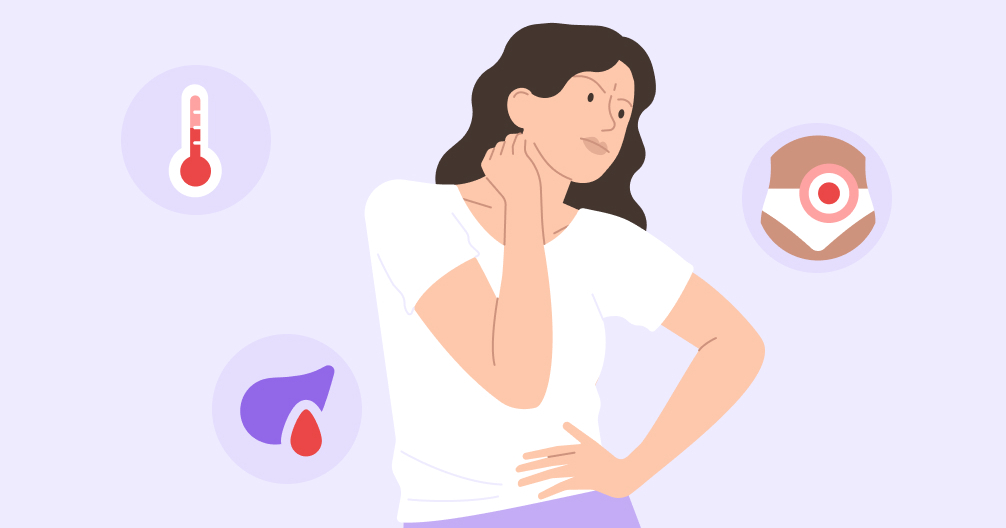

Normal vaginal bleeding: No need to clean frequently

 Normal vaginal bleeding: No need to clean frequently


Genital hygiene is very important during menstruation, pregnancy and sexual intercourse. Because if there is no proper hygiene in the genitals, the risk of infection is high.


Due to the fear of infection, some people take special care in cleaning it. They clean and wipe after going to the toilet. This is not quite right. If there is abnormal discharge from the genitals, then cleaning is necessary. But normal vaginal discharge is not only natural but also necessary.


Normal vaginal discharge (vaginal discharge) protects the genitals from external infections. Prevents the fear of infection from external germs.


Vaginal discharge (vaginal discharge) and its function


Vaginal discharge is the discharge of liquid from the vagina. It is usually composed of cells and bacteria. Which helps to clean the vagina, make it soft to maintain sexual relations and also helps to fight external bad bacteria and infections.


Vaginal discharge is a natural and normal process. So it is normal to have some amount of discharge every day. But if there is excessive fluid flow daily, it should be seen by the doctor.


Most women or teenagers have a little discharge daily, but during ovulation, its amount is more than at other times. Which is sticky white discharge which is natural. Some women may experience changes in discharge due to infection or sexually transmitted diseases, which is known as abnormal discharge.


How to recognize normal vaginal discharge?


The color of normal vaginal discharge is light white or white. It has no bad smell. But its color is different and if it has a smell, it may be due to an infection or disease. For example, yellow, brown or green discharge indicates bacterial or sexually transmitted infections. If it appears white but thicker than normal, it may be due to a fungal infection, which will clear up after treatment.


It is not necessary to clean as soon as it is 'discharged'


It is not necessary to clean it as soon as it is 'discharged' as its job is to prevent any kind of infection. This is a normal procedure, but if there is an excessive amount, a panty liner can be applied. Vagina is cleaned naturally with the help of healthy bacteria and those bacteria prevent some infections, so it is not necessary to clean it frequently. Special care should be taken as too much cleaning will have more negative effects.


How to clean?


The vagina should not be cleaned frequently. To clean the vagina once or twice a day, you can clean it with 'Bhivas' which is easily available in the market. Even clean water can be used to clean the vagina once a day and after urinating, tissue paper can be used to dry the vagina. When cleaning with excessive amounts of water, there is a possibility that the bacteria in the external water will also reach the inside.


Most of them clean it as soon as they have vaginal discharge (vaginal discharge). But vaginal cleansing also protects the vagina from infection to some extent, so it should not be cleaned immediately.


How to keep vagina healthy


-Women should change clean cotton panties daily. Wearing synthetic panties cannot absorb fluids, which increases the risk of infection.


- Take a daily bath. While bathing, the vagina should be cleaned only with Bhivas.


- Do not use scented soap, gel or other feminine products.


- Do not wear tight underwear or sweaty clothes for a long time.


-Wipe the vagina from front to back. It prevents bacteria from entering the vagina from the anus.


"There is also a need to discuss the mental health of teachers"

"There is also a need to discuss the mental health of teachers"


  Recently, there are many problems related to mental health in school students. This affects their ability to acquire skills and knowledge. At times, public awareness programs on mental health are targeted at students.


But the mental health of the teachers who teach the same children is not given much attention. Teachers may also be stressed by personal problems such as their home affairs and career. The effect of which can be seen in their work. It can have a direct impact on students' teaching and learning.


In this case, don't teachers need training on human health? How important is it to discuss the mental health of teachers? What is the teacher's health condition? In this context, psychiatrist Dr. Edited excerpt of online journalist Manisha Thapa's conversation with Vasudev Karki:


How important is it to discuss the mental health of teachers?


Suzuki Dashain Offer


Children are the foundations of the future. Teachers are the creators of children's future. Therefore, if the creator is not mentally healthy, the society of the future will not be prosperous. Therefore, it is very important to take care of the mental health of both children and teachers.


In the context of Nepal, there are many mental health programs targeting children and students. But by focusing on teachers, the discussion about mental health is reduced.


On the other hand, some time ago in America, there was a survey about the mental health of teachers. According to which 27 percent of the teachers were suffering from depression. In a prosperous country like America, teachers are going through mental problems like depression, but in a country like Nepal, the government has not been able to provide even the necessary services and facilities that teachers should get. It can be attributed to the recent teachers' movement. Even if only the teachers present in the movement are studied, 50 percent of them may have problems like depression.


In this case, if the mental condition of the teacher is not good, how can the children like the little buds get quality education from the education given by them? Therefore, it is very important to discuss the mental health of teachers.


Teachers have their own problems. Family matters, financial matters or various things are also making them stressed. Is the side-effect of such stress in the classroom or not?


If the teacher himself is in a stressful situation, its side-effect is completely falling in the classroom. A person who is mentally stressed may also have anxiety and depression. Due to stress, symptoms such as sleeplessness and dizziness may appear in them. How can he teach in the classroom who has not slept all night? On top of that, a teacher who is going through depression may have anger, impulses, and thoughts playing in his mind, and a teacher who comes to the classroom with a stressed mind either does not want to teach and is forced to teach.


Also, even a small mistake by a student in class can cause anger in the teacher. The result may be activities such as scolding and beating students. There are many examples of incidents of beatings by teachers from time to time. This can affect the mental health of not only the teachers, but also the students studying there. Not only that, the teacher may not be able to share enough knowledge as needed, which affects the students' learning.


How does the mood of teachers affect children?


If someone greets you with a smile when you go somewhere, the atmosphere is different. The same principle applies in the classroom. If the teacher looks cheerful and energetic, then even the students who are sitting in the classroom will get energy and vigor. They can easily absorb what is taught. They do not feel that the class is over.


But there is a lot of stress going on in the teacher's mind. He has no energy, no energy and comes with an angry face. And, if they are always presented in the same way in the class, students may not like to read, find it difficult to concentrate, and may not like to ask questions that they do not understand. Some teachers are kind enough to vent their anger on students due to the personal stress of homework. In this case, students are afraid to even sit in class. The class atmosphere is also negative.


All students consider their teachers as the storehouse of knowledge. Children consider teachers as their role models and they dream of being like teachers. Students follow not only the teacher's teaching but also their behavior. The direct effect on the students' emotional state and learning environment also depends on the teacher's presentation.


Even if the student is not scolded or beaten, some behavior of the teacher has a direct effect, right?


First, it was said that small punishments should be given to the students to make them level and discipline them. If you don't do your homework, if you make noise in the classroom, if you don't obey, you will get beaten up. But now the idea that students should not be beaten will have a more negative impact on children. Most teachers believe that the classroom should be child-friendly. However, activities such as not encouraging, not responding, and discouraging the students for their extracurricular activities in the class can have a negative effect on the student's mentality. Not only that, because stressed teachers cannot teach well, students also cannot learn well.


If the teacher himself is depressed or sad, can he cover it up and teach the students properly?


If the teacher himself is sad, he cannot cover it up. Even if they want to, they cannot teach the students properly. No matter how much the teacher tries to hide his indifference, it can be seen in his behavior.


What kind of mental problems can teachers have?


Depression, anxiety and stress are the most common psychological problems among teachers. Some teachers are not even able to experience that they have mental problems. But in their behavior, the symptoms of mental problems are visible and if the problem becomes dominant, the behavior may change. After which students and colleagues around can also notice.


How to make the teacher mentally healthy and emotionally strong?


In order to make them mentally healthy and emotionally strong, their stress can be reduced by giving them the wages that schools and colleges deserve, understanding the problems of teachers from time to time, not giving them unnecessary pressure from the administration, encouraging them when they have done a good job.


Also, it is important for the teacher to have a discussion program with the counselor at school from time to time, so that they can openly discuss the mental stress they have.


It is necessary for the government to conduct mental health awareness programs in all teaching areas and to train teachers on modern education. This can increase the intellectual capacity of the teachers and can also increase their passion for teaching.

Why does the body need sour cream?

Why does the body need sour cream?


There is a proverb in Nepali - red is good, sweet. But it's not just sweets, there are other flavors as well. The tongue experiences sour, bitter, salty, bitter, and sour tastes. All those flavors have their own importance. Nutrient elements are also found in different flavors of food.

There is a lot of confusion about asthma, patients do not need to stop eating

There is a lot of confusion about asthma, patients do not need to stop eating


Asthma is a problem related to breathing. Asthma can be considered as a symptom rather than a disease. If there is a long-term problem in breathing, there is a possibility of asthma. There are mainly two types of asthma due to breathing problems, COPD (chronic asthma) and bronchial asthma (asthma-cough).

Children need to learn practical knowledge from Japan

Children need to learn practical knowledge from Japan


Japan is one of the countries in the world with an exemplary education system. Japan's education system is considered practical. What can we learn from the Japanese education model, which teaches practical education at home from an early age and emphasizes practical education rather than theoretical at school? Interview with Kumud Bhatt, a longtime Japanese education model:

Popular Posts