5 things to teach children to develop leadership qualities

 5 things to teach children to develop leadership qualities


All parents want to teach their children useful things. They want to develop their personality well so that they can achieve success when they grow up.


To achieve success in life, parents should also develop leadership qualities in their children. Developing leadership qualities in children means building their confidence and encouraging their growth on a personal, professional level.
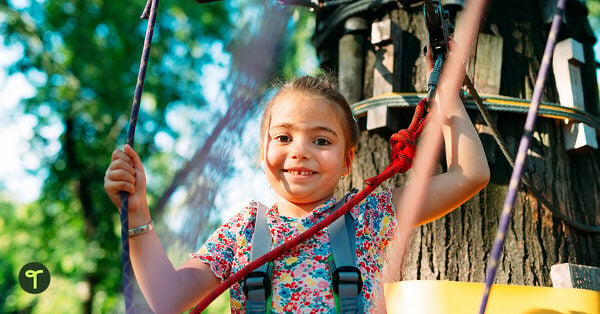


If a child has leadership qualities, he can do excellent work in his field of interest. There is a thought in the society that politics means leadership. But leadership is necessary not only in politics, but also in family and society. Therefore, the child should be taught what leadership development is.


Children can achieve success in their field if leadership qualities are developed during their physical, emotional, intellectual and mental development.


The best way to develop leadership qualities in a child is by showing something. Communicating with the child should be done effectively in a way that reflects responsibility and empathy. A child also learns a lot from parents who are leading in the work field and in society. The child remembers and follows what the parents do. Seeing leadership skills in the behavior of parents, children also start to adopt it.


As much as parents play an important role in developing leadership qualities in children, school teachers also play an important role. Therefore, to develop leadership qualities in children, teachers and parents should teach the child mainly these five things.


Communication skills


This is a skill that every child should have. Communication skills can help every person to move forward in life. It is said that 'the flour of those who speak is sold, even the rice of those who do not speak is not sold'. Therefore, the child should be taught to speak openly and clearly in front of others. If children grow up and want to make a career in media, politics, marketing, then 'communication skills' are very useful for them.


Nowadays, there is a trend of taking various trainings to improve communication skills. But if parents encourage the child to talk to everyone from an early age, it will be beneficial for them.


to admit defeat


Children of parents who adopt a positive attitude towards difficulties and mistakes have the ability to learn new things. Children participate in many activities but can become frustrated if they lose. Don't stop trying even if you lose. Children should be taught that they will succeed if they keep trying. It should be explained to the child that both victory and defeat must be accepted in life. If the habit of accepting defeat is developed in children, this quality is helpful for leadership development.


To participate in social events


Leadership qualities can be developed in children only when children actively participate in social work. Children should be encouraged to participate in social programs to develop these qualities. By participating in social events, they learn to cooperate with others. It also enhances their leadership qualities.


To participate in sports


Sports are not only important for physical activity, but also for mental health. Children involved in games or sports can solve their own problems. Such children often focus on problem solving. Which also develops leadership qualities in them.


Helping to increase confidence


You should help your children to increase their confidence from childhood. To increase self-confidence, the child should be encouraged to participate in extracurricular activities, school functions and social events etc. Such activities increase children's confidence. A confident child often does not hesitate to try new things. This is one of the most important qualities for leadership.


Why don't children like to go to school?

 Why don't children like to go to school?


A child who always goes to school sometimes suddenly refuses to go. They are afraid to go to school, cry, shout, fight. In front of such stubbornness of children, even the parents are helpless and do not send them to school according to their wishes. If such a situation occurs sometimes, it is not serious.


But in some cases children do not agree to go to school even for a long time. Parents' efforts to send the child to school are failing. There is a situation where it is difficult to send someone, who is sent soon, comes back again and sends it the next day.


In such a situation, some parents who are fed up with this behavior of children, instead of understanding the reason why the child does not go to school, think that the child is lying or making excuses and send him to school by beating him. Which is absolutely wrong.


They may not want to go to school because of the school environment, friends or teachers. In this case, instead of beating them, it is important to understand why they don't want to go.


Bullying from peers


School is also a place where friends gather. Most of the children have formed a group in school among their age group and close friend group. Some children may feel isolated because they cannot fit into an already established group. Not only that, sometimes there may be bullying from friends at school. At school, the actions of his friends like teasing, teasing, bullying, teasing and bullying by his friends can make him unable to say anything and fear can gradually settle in the child's heart. Because of that fear, hearing the name of the school can cause a headache for the child.


Consider yourself weak


In school, a child has to compete with his friends in everything. If he is weak in studies like other classmates or is repeatedly told by others, he will consider himself weak and lose confidence, who may not go to school. Furthermore, if a child takes longer to learn than other children, they may become more anxious and have trouble concentrating.


AI generated picture

Fear of being different


If he takes more time to learn than other children, if he cannot answer any question in class, his deficiency is seen as a joke in school. When unable to answer the question, the teacher reprimands the children, compares them with others, friends also tease them, so the children start looking for excuses to hide their weakness. It reduces the morale of children.


Failure to complete tasks on time


In school, teachers not only make them practice in school, but also give them homework to complete at home. In such a situation, some children do not understand the concept of practice or are afraid of being scolded by the teacher when they cannot complete their class work and homework. In such a situation, they think that the best way to avoid this abuse is not to go to school. So they make excuses not to go to school.


Can be anxiety


If a child tries to avoid going to school for various reasons, it can have a negative impact on him for life. For example, even after missing 6 months of schooling, it is difficult for children to rejoin the class later. This will put more mental pressure on them.


If there is a stressful environment in the school and it is not resolved in time, the child may develop anxiety. Inability to pay attention to studies, fear of exams, victimization by other children, beatings and torture by teachers may result in health problems in children such as: not wanting to go to school, fear of going to school, heaviness in the head after going to school, stomach ache, sometimes even fever.


Children suffering from such mental problems do not show any kind of physical illness even after a health check-up. In other words, a stressful environment can cause anxiety in them and make them feel uncomfortable physically as a reaction.


How to solve?


Try to find out the reason for not going to school


If such problems appear, first of all, they should find out the reason why such a problem appeared in them and start solving the problem. The first member close to the child is the parent. Parents should gently ask why they are not allowed to go to school. If the child does not speak, it is important to understand if something has happened at school. Because the more this problem is ignored, the more the child's mood deteriorates.


Behaving like a friend


Always talk to your child as a friend. So that he can tell you all his things openly.


After coming from school, you should try to mingle with the child. To begin with, you should tell about your school and the fun moments at school. So that they can be motivated to go to school thinking that it is a very fun place.


Do not scold if you are weak in studies


If the child is weak in studies, you can try to teach and explain to him. Parents or teachers should encourage them to work hard without pretending that they are weak.


Every teacher should patiently explain any topic to a child in a way they can understand. And, even if something goes wrong, they should be told affectionately so that they can take their weaknesses and mistakes and correct them in a positive way.


In children, if there is no improvement even after reprimanding, then medication should also be given in consultation with the relevant doctor.


How to deal with angry children?

 How to deal with angry children?


Children often have tantrums, which is normal. They express their feelings through anger. What they are not able to say openly, they express it through anger.


Usually, children get angry if they want something, if they are sad or in pain, if they cannot eat what they want. When they get angry, they cry, scream, throw hands, jump from high places. Which is also called tantrum in medical language. But this is normal.


This is how children learn to hold their own and behave. But even as you get older, such behavior, such as getting angry, beating someone when you don't understand, it is called unhealthy behavior. These symptoms are not normal but can also be due to mental illness.


Dr. Vijay Gyawali, Psychiatrist

Why do children keep getting angry even as they grow older?


Children get angry for many reasons. Mental health is also one of the reasons. Attention Deficit Hyperactivity Disorder (ADHD) also causes children to get angry. Its symptoms include inability to concentrate, impulsiveness, quick decision-making, and repetition.


Children also get angry due to separation anxiety. For example, when returning home from school, getting angry, snapping, and chirping are symptoms of it. They are excited to see their parents after the school holidays. Not knowing how to express that enthusiasm, they get angry and angry.


They get angry because they cannot express their feelings clearly due to family discord, quarrels, when their wishes are not fulfilled and also due to bullying in school.


How to trick children?


Usually, children have a habit of getting angry and upset over small things. At this time, they should not be scolded, beaten and beaten. It can have a bad effect on them mentally. Instead, if they are very angry, you should try to understand their feelings.


Children can be fooled by applying Parent Management Technique (PMT).


At first, they should be taught how to express their feelings. When you get angry, write down what you are angry about, show a red card when you get angry, and sit with both hands tied.


If you don't like something, you can make him take a long breath, close his eyes, and sing a song without showing anger. Which helps to reduce their anger.


A change can be made in the language that deceives them. Like, if you are angry, why are you angry, did you do your homework or not?, isn't it time to go to school? Asking them like this can make them even more angry. Instead of using a different kind of language, children can be told 'I am angry today, you are fooling me'. It learns that when angry, this is how it behaves. Anger is also reduced.


Similarly, it can be taken for a walk or to play inside or outside the house. For example, you can make them play in the sand, play football, run, etc. Which helps to 'release' their angry energy.

Five standards, which show that a child is developing correctly

 Five standards, which show that a child is developing correctly


The dimensions of the child's development are mainly of five types. Anil Ojha says.


He says, 'The first basis to see whether a child's development has taken place in the right way or not is his physical development. At what age does the child sit, at what age does it start walking etc. A child had to start walking in one year. There was no problem when I started walking after two or four months. However, if he does not start walking even after that, the parents should be aware that his development has not taken place properly.


The development of another language is equally important. Children start speaking from the age of one year. Ojha says that if they give examples of mother, father or any other word, it should be understood that their language has developed well. He says, "If a child does not speak even until the age of two, and even when speaking, they do not make clear examples of words, then it should be understood that their language development has not been done properly."


According to Ojha, a child's social and emotional development should also be accompanied by age. Like a one-year-old child should be loved by the mother rather than kissing the child on the cheek. I had to clap instead of clapping.


If a child uses his hands, fingers, wrists and muscles to grasp something, it is called 'fine motor skill'. Through these skills, children learn to coordinate their eyes, hands, fingers and wrists. This is important for two- to five-year-old children, says Ojha. This skill should be developed at the age of 2 to 5 years. With its help, children learn to hold things, write, understand etc.'


The intellectual development of a child according to age is equally important. A one-year-old child starts looking for hidden things. If he shows curiosity about something, it should be understood that his intellectual development is also going well. However, Ojha said that if these five skills are not developed in a child, then his development is considered to be delayed.


What should be the weight and height according to the child's age?


If the weight and height of the children are according to their age, it can be understood that the child is healthy and the diet they are getting is good. Developmental pediatrician Dr. Ojha says that age and weight gain is a normal and necessary process as children grow.


He says that a child's weight at birth is 3 kg, but at 6 months, his weight doubles to 6 kg. When a child is born, its height is about 50 cm, and in one year it is 75 cm.


A 5-year-old child should weigh around 17.9 kg. He said that at this age, it is considered healthy for a child to have an average height of 42.5 inches.


If children's height and weight are not developing according to their age, then it should be understood that something is lacking somewhere. A doctor's advice should be taken for this.'' says Ojha.


Until what age does the child's physical development accelerate?


In the first year, the child's physical development is very rapid. Ojha said that physical development happens with the age of the child. However, even in a year, the speed will decrease. The child's mental development is very rapid in the first two to three years.


Special attention should be paid to the diet of the child during this age period


Special attention should be paid to the diet of children in the age group of two to three years. Proper nutrition is a solid foundation for a child's good health and development. Ojha said that children who have good nutrition can learn and grow well.


"Even if only mother's milk is enough for 6 months, from 6 months, you should start eating semi-solid foods such as pulses, jalous, fruit juice, litho." It should be taken.'


If the child is not growing properly, is under-age or abnormally large, the cause should be sought


If the child is not growing properly for its age, is small or abnormally large, it may be due to genetics. Some children look young till 11-12 years old but can grow rapidly in adulthood. Even if the child lacks nutrition, the growth and development of the child will not be done properly. Ojha said that due to some health problem, the child may look younger or older than his age.


He suggested that if children's development is not according to their age, they should seek the help of a doctor to find out the reason.

6 ways to strengthen children emotionally

 6 ways to strengthen children emotionally


  Nowadays, the competition in every field has increased a lot. In such a situation, it is the responsibility of the parents to make the child physically and emotionally strong. If a child is emotionally strong, he can overcome every difficulty easily.


Being emotionally strong enables the child to face problems. Also, they do not give up even in the face of challenges and failures and continue to strive. It is very important for a child to be emotionally strong. Because children who are not emotionally strong, even if they get low marks in the exam, they think that they have made a big mistake.


In such a situation, it is very important for the parents to strengthen the child emotionally from childhood. For that, parents themselves must be emotionally strong. Because children learn a lot by watching their parents.


How to make the child emotionally strong?


Do not scold the child


The way to make a child emotionally strong is not to scold him for small things. If you scold a child for small mistakes, it makes the child emotionally weak and his confidence starts to decrease.


When a child makes a mistake, he should be encouraged not to make the same mistake again. Also, if the child does not agree to do any work, he should be lovingly reasoned with him.


Create an environment where the child can speak freely


Parents should occasionally talk to their children and listen to them. By doing this, the child can tell the parents that this has affected me physically, mentally and emotionally. Even if the child listens carefully to everything and says we are with you, they are emotionally strong.


When children reach their teenage years, they can be very emotional. Even if they are taught how to control their emotions at that time, they become emotionally strong.


Teaching the child the importance of time


With the passage of time, there is a rapid change in technology. Also, there has been a change in children's behavior and confidence. Nowadays, children learn a lot from a young age. In such a situation, the child should be encouraged to do the right thing at the right time. The importance of time should be explained to them. This will create confidence in the child.


Teaching problem solving skills


Life is full of challenges. So it is necessary to teach the child how to deal with those challenges. They should be included in the decision-making process and should be helped to develop problem-solving skills. Children should be encouraged to think critically and solve everyday problems.


Helping to develop positive thinking


It is also important to develop positive thinking in children. There is a way to overcome every challenge. Therefore, continuous effort, perseverance and the ability to learn from mistakes should be increased. By developing a mindset that accepts challenges as a natural part of the learning process, children develop resilience and the ability to bounce back from setbacks.


Explain the importance of family


Emotional strength is the cornerstone to building strong, positive relationships. Encourage your child to develop good relationships with family and friends. The child should be told the benefits of building good relationships with others. With the help of family, friends and colleagues, children can easily get out of every difficult situation.


Parents are role models for children. In such a situation, the child should be supported at every step. He should be motivated to do something new. Encourage them to be better people.

Popular Posts