Sociology of Gender

 Sociology of Gender


The Sociology of Gender is a key area within the field of sociology that explores how societies construct gender roles and how these roles shape individual identities, relationships, institutions, and power structures. Let me give you a comprehensive overview of key concepts related to the Sociology of Gender that may come up in your exam:


### 1. **Gender vs. Sex**

   - **Sex** refers to biological differences between males and females, such as reproductive organs, chromosomes, and hormones.

   - **Gender**, on the other hand, is a social construct that refers to the roles, behaviors, activities, and expectations that societies consider appropriate for men and women.

   - Sociologists emphasize that gender is not innate but learned through socialization and varies across cultures and historical periods.


### 2. **Gender Socialization**

   - Gender socialization is the process through which individuals learn and internalize the values, norms, and behaviors that society considers appropriate for their gender.

   - Socialization occurs through agents such as family, schools, peers, and media. For example, parents might encourage boys to play with trucks and girls with dolls, reinforcing traditional gender roles.

   - This process leads to the perpetuation of gender norms, which can restrict individual freedom by assigning specific roles based on one's gender.


### 3. **Patriarchy and Gender Inequality**

   - **Patriarchy** refers to a social system in which men hold primary power and dominate in roles of political leadership, moral authority, and control over property.

   - Feminist sociologists argue that patriarchy is a root cause of gender inequality, as it privileges men over women in both public and private spheres.

   - Patriarchal norms can manifest in various areas, such as wage gaps, underrepresentation of women in leadership, and domestic violence.


### 4. **Feminist Theories**

   Feminist theory is a broad category of theories that analyze the sources and consequences of gender inequality. There are several branches of feminist theory:

   - **Liberal Feminism** focuses on achieving gender equality through political and legal reform. It emphasizes equal opportunities and rights for men and women.

   - **Radical Feminism** sees patriarchy as a fundamental form of oppression and argues for a radical reorganization of society to eliminate male dominance.

   - **Intersectional Feminism** (coined by KimberlĂ© Crenshaw) emphasizes that gender inequality cannot be fully understood without considering other intersecting social categories such as race, class, and sexuality. It acknowledges that women’s experiences of oppression differ based on their social location.


### 5. **Gender and Power**

   - Sociologists view gender as a central organizing principle of power relations. Gendered power dynamics are embedded in institutions like the family, workplace, government, and education.

   - In many societies, men are often granted more authority and decision-making power than women. This unequal distribution of power reinforces social hierarchies and perpetuates gender inequality.


### 6. **Gender Performativity (Judith Butler)**

   - Judith Butler's theory of **gender performativity** suggests that gender is not something one is, but something one does. Gender is performed through repetitive acts, gestures, language, and behaviors.

   - Butler argues that these performances are socially scripted and are often mistaken for natural expressions of gender identity. By "performing" gender, individuals conform to societal expectations of masculinity or femininity.

   - However, these performances are not fixed, and individuals can challenge and subvert them by enacting different gender behaviors.


### 7. **Masculinity Studies**

   - The study of masculinity explores how the concept of masculinity is constructed and how it varies across cultures, historical periods, and social contexts.

   - Traditional notions of masculinity often emphasize strength, dominance, rationality, and emotional restraint. However, scholars in masculinity studies argue that these norms can be harmful, not just to women but also to men, who are pressured to conform to narrow ideals.

   - Researchers in this field examine multiple masculinities, acknowledging that different types of masculinity exist depending on class, race, ethnicity, and sexuality.


### 8. **Queer Theory**

   - Queer theory challenges fixed and binary categories of gender and sexuality, arguing that identities are fluid, complex, and socially constructed.

   - It criticizes the heteronormativity that privileges heterosexuality as the default or "normal" sexual orientation and explores how sexual identities that deviate from this norm are marginalized.

   - Queer theorists push for a more inclusive understanding of gender and sexuality that goes beyond traditional categories like male/female or gay/straight.


### 9. **Gender and Work**

   - The gender division of labor refers to the ways in which work is divided between men and women. Traditionally, men have been associated with paid labor in the public sphere, while women have been associated with unpaid domestic work in the private sphere.

   - **Occupational segregation** is a key concept in this area, which refers to the concentration of men and women in different types of jobs. "Glass ceiling" and "glass escalator" are terms used to describe how women face barriers in advancing to leadership roles, while men often benefit from quicker promotions in female-dominated fields.

   - The **gender pay gap** is another issue that persists in many societies, with women often earning less than men for the same work.


### 10. **Gender and the Family**

   - The family is a primary site of gender socialization, and gender roles within the family have historically been divided along traditional lines, with men as breadwinners and women as caretakers.

   - However, modern family structures are increasingly diverse, with more dual-income households, single-parent families, and LGBTQ+ families challenging traditional gender roles.

   - Feminist scholars critique how traditional family structures perpetuate gender inequality by expecting women to perform the bulk of unpaid domestic and caregiving labor, even when they are also part of the paid workforce.


### 11. **Gender and Media**

   - Media plays a significant role in shaping and reinforcing gender norms. Men and women are often portrayed in stereotypical ways, with men depicted as strong, dominant, and assertive, and women as passive, emotional, and concerned with appearance.

   - The underrepresentation of women and the objectification of their bodies in the media perpetuate harmful gender norms and contribute to societal expectations around beauty, behavior, and worth.


### 12. **Global Perspectives on Gender**

   - Gender inequality is a global issue, but it takes different forms in different cultural and social contexts.

   - In some parts of the world, women face extreme forms of gender-based violence, discrimination in education and employment, and restrictions on reproductive rights.

   - International organizations like the United Nations focus on gender equality as part of their global development goals, with efforts aimed at increasing women’s political representation, economic opportunities, and access to education and healthcare.


---


If you need more details on specific theories, case studies, or any other aspects of the Sociology of Gender, feel free to ask! This comprehensive understanding should help you approach essay questions or thematic analysis in your exam.

Why Perform Multiple Comparison Tests After ANOVA?

Why Perform Multiple Comparison Tests After ANOVA?


 ## Why Perform Multiple Comparison Tests After ANOVA?


After conducting a one-way **Analysis of Variance (ANOVA)** and finding a significant overall difference among the group means, it is necessary to perform multiple comparison tests for the following reasons:


1. **ANOVA only tells you that at least one pair of means is significantly different**, but it does not specify which pairs differ. Multiple comparison tests help identify which specific pairs of means are significantly different from each other.


2. **Without multiple comparisons, it is not possible to control the family-wise error rate (FWER)**, which is the probability of making one or more Type I errors (false positives) when performing several statistical tests simultaneously. Multiple comparison tests adjust the significance level to maintain the desired FWER.


3. **Multiple comparison tests provide more detailed information about the patterns of differences among the groups**, allowing for a better understanding of the relationships between the groups.


## Tukey's Honestly Significant Difference (HSD) Test


**Tukey's HSD** is a commonly used multiple comparison test that controls the FWER. It is particularly useful when all pairwise comparisons are of interest and the sample sizes are equal across groups.


The steps involved in Tukey's HSD test are as follows:


1. **Calculate the test statistic q for each pair of means**:

   $$q = \frac{|\bar{X}_i - \bar{X}_j|}{\sqrt{\frac{MSE}{n}}}$$

   where $\bar{X}_i$ and $\bar{X}_j$ are the means of the $i$th and $j$th groups, $MSE$ is the mean square error from the ANOVA table, and $n$ is the sample size per group.


2. **Compare the calculated q values to the critical value** from the Studentized Range distribution table, which depends on the desired significance level ($\alpha$) and the number of groups ($k$).


3. **If the calculated q value for a pair of means exceeds the critical value**, the difference between those means is considered statistically significant at the specified $\alpha$ level.


4. **Tukey's HSD test maintains the FWER at $\alpha$ level** by using a more conservative critical value compared to conducting multiple individual t-tests.


## Interpreting Tukey's HSD Results


After performing Tukey's HSD test, the results can be interpreted as follows:


1. **If the difference between two means is significant**, it indicates that those two groups are significantly different from each other at the specified $\alpha$ level.


2. **If the difference between two means is not significant**, it suggests that those two groups are not detectably different from each other at the specified $\alpha$ level.


3. **The results can be presented using a compact letter display (CLD)**, where groups that are not significantly different from each other are assigned the same letter.


In summary, Tukey's HSD is a powerful multiple comparison test that helps identify which specific pairs of means are significantly different after a significant ANOVA result. It controls the FWER and provides a clear interpretation of the relationships among the groups.


Citations:

[1] https://www.youtube.com/watch?v=NeNWMIU9gWw

[2] https://stats.libretexts.org/Bookshelves/Introductory_Statistics/Inferential_Statistics_and_Probability_-_A_Holistic_Approach_%28Geraghty%29/13:_One_Factor_Analysis_of_Variance_%28ANOVA%29/13.06:_Posthoc_Analysis__Tukeys_Honestly_Significant_Difference_%28HSD%29_Test85

[3] https://en.wikipedia.org/wiki/Tukey%27s_range_test

[4] https://arc.lib.montana.edu/book/statistics-with-r-textbook/item/59

[5] https://real-statistics.com/one-way-analysis-of-variance-anova/unplanned-comparisons/tukey-hsd/

[6] https://www.isixsigma.com/dictionary/tukeys-1-way-anova/

[7] https://en.wikipedia.org/wiki/Spearman%27s_rank_correlation_coefficient

[8] https://www.raybiotech.com/learning-center/t-test-anova/

Logic Behind Analysis of Variance (ANOVA)

 Logic Behind Analysis of Variance (ANOVA)


## Logic Behind Analysis of Variance (ANOVA)


**Analysis of Variance (ANOVA)** is a statistical method used to test differences between two or more group means. The fundamental logic behind ANOVA is to assess whether the variability in the data can be attributed to the differences between the group means or if it is simply due to random chance.


### Key Concepts:

1. **Total Variability**: ANOVA partitions the total variability observed in the data into two components:

   - **Between-Group Variability**: This reflects the variation due to the interaction between the different groups being compared. It measures how much the group means differ from the overall mean.

   - **Within-Group Variability**: This reflects the variation within each group. It measures how much individual observations within each group differ from their respective group mean.


2. **F-Ratio**: ANOVA computes an F-ratio, which is the ratio of the variance between groups to the variance within groups. A higher F-ratio suggests that the variability between group means is greater than the variability within groups, indicating a significant difference among the group means.


3. **Hypothesis Testing**: The null hypothesis (H0) states that all group means are equal, while the alternative hypothesis (H1) states that at least one group mean is different. ANOVA tests these hypotheses by analyzing the F-ratio and determining the associated p-value.


## Differences Between ANOVA and T-Test


### Key Differences:

- **Number of Groups**: The most significant difference is that a t-test is used to compare the means of two groups, while ANOVA is used to compare the means of three or more groups.


- **Statistical Output**: A t-test produces a t-statistic and a corresponding p-value, while ANOVA produces an F-statistic and a p-value.


- **Complexity**: ANOVA can handle more complex experimental designs, including factorial designs, where multiple independent variables are analyzed simultaneously.


### When to Use Each:

- **T-Test**: Use when comparing the means of two groups (e.g., comparing test scores between two different teaching methods).


- **ANOVA**: Use when comparing the means of three or more groups (e.g., comparing test scores among three different teaching methods).


## Application of ANOVA in Sociological Research


ANOVA is particularly useful in sociological research when examining the effects of categorical independent variables on continuous dependent variables. Here are some situations where ANOVA would be appropriate:


1. **Comparing Group Differences**: When a researcher wants to compare the impact of different social programs on participants' outcomes (e.g., income levels across different training programs).


2. **Assessing Treatment Effects**: In experimental designs, ANOVA can be used to evaluate the effectiveness of multiple interventions (e.g., comparing the effectiveness of different community outreach strategies on public health).


3. **Analyzing Survey Data**: When analyzing survey responses from different demographic groups (e.g., comparing satisfaction levels across various age groups or income levels).


In summary, ANOVA is a powerful statistical tool that helps researchers determine whether significant differences exist among group means, making it essential for analyzing complex social phenomena in sociological research. It provides insights that can inform policy decisions and enhance understanding of social dynamics.


Citations:

[1] https://www.wallstreetmojo.com/anova-vs-t-test/

[2] https://keydifferences.com/difference-between-t-test-and-anova.html

[3] https://testbook.com/key-differences/difference-between-t-test-and-anova

[4] https://www.voxco.com/blog/anova-vs-t-test-with-a-comparison-chart/

[5] https://www.raybiotech.com/learning-center/t-test-anova/

[6] https://www.youtube.com/watch?v=4WtnVOAefPo

[7] https://www.ncbi.nlm.nih.gov/pmc/articles/PMC6813708/

[8] https://www.reddit.com/r/statistics/comments/12u4zgj/q_why_run_a_ttest_instead_of_an_oneway_anova/

Scatter Diagram and Correlation Coefficient

 Scatter Diagram and Correlation Coefficient


## Scatter Diagram and Correlation Coefficient


### Scatter Diagram


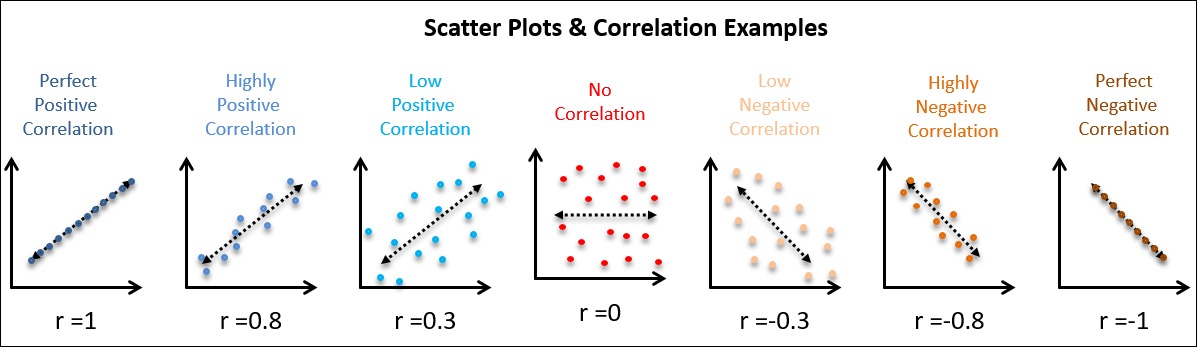
A **scatter diagram** (or scatter plot) is a graphical representation that displays the relationship between two quantitative variables. Each point on the scatter plot corresponds to an observation in the dataset, with one variable plotted along the X-axis and the other along the Y-axis. This visual representation helps to identify patterns, trends, and potential correlations between the variables.


#### Key Features:

- **Axes**: The horizontal axis (X-axis) typically represents the independent variable, while the vertical axis (Y-axis) represents the dependent variable.

- **Data Points**: Each point on the diagram represents a pair of values from the two variables being analyzed.

- **Correlation Identification**: The pattern of the plotted points indicates the nature of the relationship:

  - **Positive Correlation**: Points trend upwards from left to right, indicating that as one variable increases, the other also tends to increase.

  - **Negative Correlation**: Points trend downwards from left to right, indicating that as one variable increases, the other tends to decrease.

  - **No Correlation**: Points are scattered without any discernible pattern, suggesting no relationship between the variables.


### Correlation Coefficient


The **correlation coefficient** quantifies the strength and direction of the relationship between two variables. The most commonly used correlation coefficient is **Pearson's correlation coefficient (r)**, which ranges from -1 to +1.


#### Interpretation of Pearson's Correlation Coefficient:

- **+1**: Perfect positive correlation. As one variable increases, the other variable increases perfectly in a linear fashion.

- **0**: No correlation. Changes in one variable do not predict changes in the other variable.

- **-1**: Perfect negative correlation. As one variable increases, the other variable decreases perfectly in a linear fashion.


### Interpretation in a Sociological Study


In a sociological context, interpreting Pearson's correlation coefficient involves understanding the implications of the relationship between two social variables. For example, consider a study examining the relationship between education level (measured in years) and income (measured in dollars).


1. **Positive Correlation (e.g., r = 0.8)**:

   - Interpretation: There is a strong positive correlation between education level and income. This suggests that as education level increases, income tends to increase as well. This finding could support policies aimed at increasing educational access as a means to improve economic outcomes.


2. **No Correlation (e.g., r = 0.0)**:

   - Interpretation: There is no correlation between education level and income. This could indicate that other factors, such as job market conditions or personal circumstances, play a more significant role in determining income than education alone.


3. **Negative Correlation (e.g., r = -0.5)**:

   - Interpretation: A moderate negative correlation might suggest that as one variable increases, the other decreases. For example, if the study found a negative correlation between hours spent on social media and academic performance, it could imply that increased social media use may be associated with lower academic achievement.


### Conclusion


Scatter diagrams and correlation coefficients are essential tools in sociological research for visualizing and quantifying relationships between variables. By interpreting Pearson's correlation coefficient, researchers can draw meaningful conclusions about the nature and strength of associations, informing both theoretical understanding and practical policy implications.


Citations:

[1] https://www.vedantu.com/commerce/scatter-diagram

[2] https://byjus.com/commerce/scatter-diagram/

[3] https://asq.org/quality-resources/scatter-diagram

[4] https://www.geeksforgeeks.org/scatter-diagram-correlation-meaning-interpretation-example/

[5] https://byjus.com/maths/scatter-plot/

[6] https://en.wikipedia.org/wiki/Spearman%27s_rank_correlation_coefficient

[7] https://www.westga.edu/academics/research/vrc/assets/docs/ChiSquareTest_LectureNotes.pdf

[8] https://byjus.com/maths/chi-square-test/


One-Sample Z Test

 One-Sample Z Test


The **one-sample Z test**, **t-test**, and **F test** are statistical methods used to analyze data and test hypotheses in various research situations. Each test has specific applications based on sample size, data distribution, and the nature of the hypothesis being tested. Below is a detailed comparison of these tests, including when to use each.


## One-Sample Z Test


### Definition

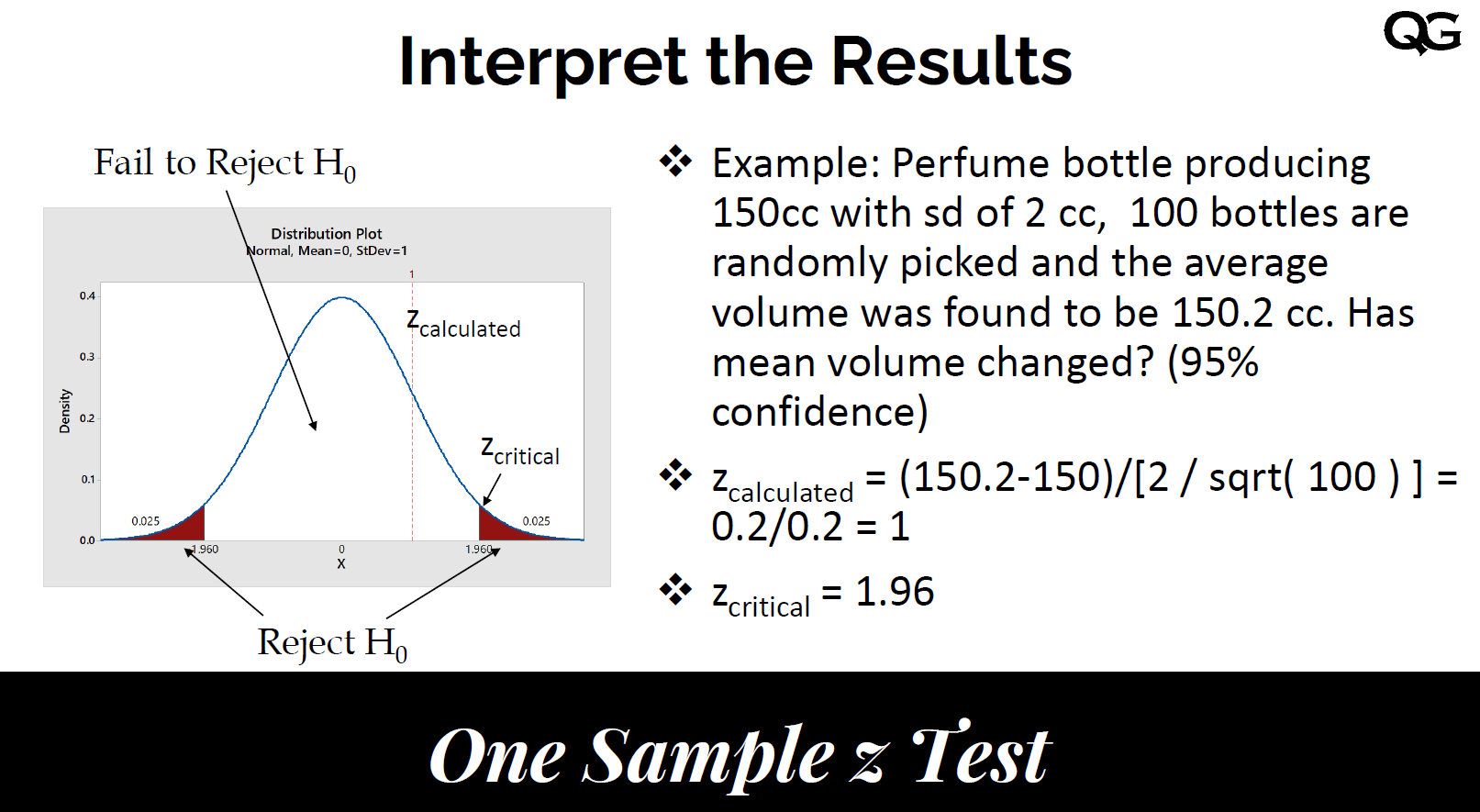
The one-sample Z test is used to determine whether the mean of a single sample differs significantly from a known population mean when the population variance is known. It is applicable primarily when the sample size is large (typically $$n \geq 30$$).


### When to Use

- **Large Sample Size**: When the sample size is 30 or more.

- **Known Population Variance**: When the population standard deviation is known.

- **Normal Distribution**: When the data is approximately normally distributed.


### Example

A researcher wants to test if the average height of a sample of students differs from the known average height of students in the population, which is 170 cm. If the sample size is 50 and the population standard deviation is known, a Z test would be appropriate.


## T-Test


### Definition

The t-test is used to compare the means of one or two groups when the population variance is unknown and the sample size is small (typically $$n < 30$$). There are different types of t-tests, including one-sample, independent samples, and paired samples t-tests.


### When to Use

- **Small Sample Size**: When the sample size is less than 30.

- **Unknown Population Variance**: When the population standard deviation is not known.

- **Normal Distribution**: When the data is normally distributed.


### Example

If a researcher wants to determine whether the average test score of a class of 25 students is significantly different from the national average score of 75, they would use a one-sample t-test.


## F Test


### Definition

The F test is used to compare the variances of two or more groups. It is often employed in the context of ANOVA (Analysis of Variance) to determine if there are any statistically significant differences between the means of multiple groups.


### When to Use

- **Comparing Variances**: When the goal is to assess whether the variances of two or more groups are significantly different.

- **Multiple Groups**: When comparing means across multiple groups (more than two).


### Example

A researcher may use an F test to compare the variances of test scores among three different teaching methods to see if one method has more variability than the others.


## Summary of Differences


| Test Type        | Sample Size Requirement | Known Variance | Purpose                                   | Example Application                                     |

|------------------|-------------------------|----------------|-------------------------------------------|--------------------------------------------------------|

| One-Sample Z Test| $$n \geq 30$$           | Known          | Compare sample mean to a known population mean | Testing if average height of students differs from a known average |

| T-Test           | $$n < 30$$              | Unknown        | Compare sample mean to a known population mean or compare means of two groups | Testing if average test scores of a small class differ from national average |

| F Test           | Any size                | Not applicable | Compare variances of two or more groups   | Comparing variances of test scores among different teaching methods |


## Conclusion


Understanding the differences between the one-sample Z test, t-test, and F test is crucial for selecting the appropriate statistical method based on the research design, sample size, and data characteristics. Each test serves a specific purpose, helping researchers draw valid conclusions from their data.


Citations:

[1] https://brandalyzer.blog/2010/12/05/difference-between-z-test-f-test-and-t-test/

[2] https://www.cuemath.com/data/z-test/

[3] https://testbook.com/key-differences/difference-between-t-test-and-f-test

[4] https://www.shiksha.com/online-courses/articles/difference-between-z-test-and-t-test-blogId-158833

[5] https://www.ncbi.nlm.nih.gov/pmc/articles/PMC6813708/

[6] https://www.investopedia.com/terms/z/z-test.asp

[7] https://www.simplilearn.com/tutorials/statistics-tutorial/z-test-vs-t-test

[8] https://www.scribbr.com/statistics/chi-square-tests/


Popular Posts