What are the medicinal properties of garlic?

 What are the medicinal properties of garlic?


There is no need to say much about the taste of garlic. It tastes bitter when eaten raw. When it is mixed with pulses, vegetables, the taste changes.


Basically, garlic is used in Nepali cuisine for flavor. However, it is also considered full of medicinal properties. That is why garlic has been used as medicine since ancient times. Garlic is called 'Rason' in Sanskrit. Because out of the 6 juices on earth (bitter, bitter, salty, tart, sour, sweet), garlic has five juices. Garlic does not have only 'sour' juice.


It is called 'Rasone' because 'Ras Un' means one less juice. In Ayurveda, garlic is classified as a pain reliever.


History of Garlic


Garlic has been used for thousands of years in China and Egypt. In 1325 BC, garlic was placed in the tomb of the Egyptian emperor Tutankhamun to preserve the body. At that time, the inhabitants of Egypt used to put garlic in the grave after someone's death. It was believed that when a person reaches the next world after death, he should not be afflicted with diseases.


Similarly, the soldiers going on a long journey also used to carry garlic, so that if there was any problem, they could use it as a medicine.


With the migration of people, the use of garlic became widespread. It is mentioned in history that garlic has entered China and India in the sixth century BC. At that time it was used only for treatment. After that, garlic was gradually used not only in treatment but also in daily life.


The importance of garlic is also mentioned in mythology. According to the story, when Lord Indra took the nectar and brought it to the earth, garlic was born from the drops of nectar that fell.


What can be inferred from these stories is that garlic has been used as a medicinal plant for centuries.


What happens in garlic?


According to medical research, a compound called allicin is mainly found in raw garlic. This is the same element, which has antibacterial and antifungal properties. Also, garlic is rich in salts like phosphorus, zinc, potassium and magnesium. The smell of garlic is pungent because it contains sulphur.


What does garlic do?


Also, garlic is still being used in pulses and vegetables, which may have direct-indirect benefits. Apart from that, eating two to four cloves of garlic on an empty stomach in the morning is beneficial. The 'Allicin' element in garlic helps to protect against various types of infections. It does not allow typhoid, fever, allergy infection.


Garlic is also used to reduce pain in the body. Garlic can be placed on the swollen or painful area and massaged with heated oil. Raw garlic contains the antioxidant sulfhydryl substance, which helps in removing toxins from the body.


Regular use of garlic removes bad cholesterol accumulated in blood vessels. It reduces the risk of heart attack. Consuming garlic in proper amount reduces the pressure on the blood vessels. Garlic is also considered useful for regulating blood pressure. Garlic can be used for some skin problems.


Who should not eat?


Garlic allergy, blood deficiency and if the patient is taking blood thinners, it is advisable not to consume garlic. Because if you consume garlic in such a situation, other problems may increase. Even if you have an ulcer, its consumption is appropriate.


If you are taking any medication or undergoing treatment while using garlic as a medicine, you should consult a doctor.

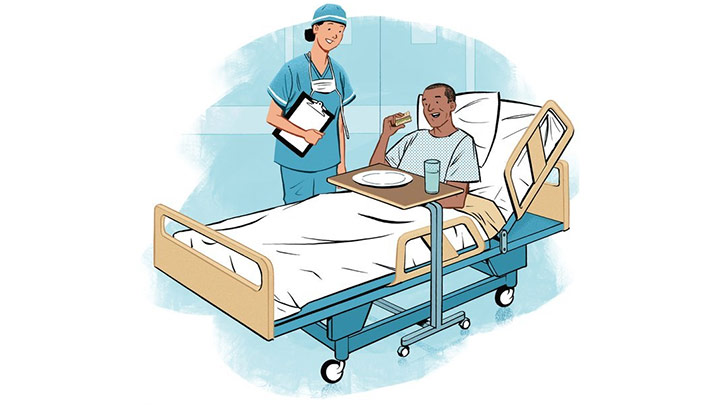
How can the patient recover quickly?

 How can the patient recover quickly?


A recent research has revealed that the human brain has made a timetable for the work of cells throughout the body.


During the 24 hours of the day, these cells work according to the same schedule, called the 'circadian rhythm' or 'body clock', the biological clock. According to this biological clock, the way the body works during the day and night is different. The body works in different ways at different times of the 24 hours. The Greek physician Hippocrates understood this long ago.


In traditional Chinese medicine, it is mentioned that the lungs work best from 3 am to 5 am, the heart from 11 am to 1 pm, and the kidneys from 5 pm to 7 pm.


Perhaps based on this, new research is being conducted in this direction today. Research by biologist John O'Neill has shown that cells called "fibroblasts" quickly repair tissues damaged by injuries during the day. Fibroblast cells penetrate the skin cells to the site of injury, and help it to heal.


After evaluating the International Burn Injury Database, Professor O'Neill said in his research, "People who burn at night take 11 days longer to heal compared to patients who burn during the day."


The biological clock must be understood


Our body's ability to fight disease also affects our body clock. It is important to have a strong immune system to fight any kind of infection that spreads in the body.


Virologist Rachel Edgar is researching the relationship between the 'body clock' biological clock and viral infections. He has researched the ringworm virus in mice.


According to him, this virus is 10 times more active at night and its effect is much less in the morning. This change is probably due to the immune system being less active. The rhythm of the infected cells is also effective in increasing the infection.


Similar results have been observed in seasonal fever. If you take the medicine in the morning rather than in the afternoon, you will get relief sooner. But it is also true that the chances of getting sick during the day are more. The same principle does not apply to different types of infections.


Medicines should be taken at the right time


Professor Edgar says, 'If it is known at what time the virus is affecting the surrounding cells, it can be prevented from spreading through antiviral therapy. By doing this, the amount of antiviral drugs can also be reduced.


According to the World Health Organization, about 250 basic and essential medicines are available in almost all hospitals in the world. But the time to take all of them is different. The effects of these drugs are determined by the body's internal cellular clock. Because of this, the effect of medicine may be less or more. These include painkillers, blood pressure, asthma and cancer medications.


How effective the medicine will be depends on when it is used. This means that if those medicines are not taken at the right time, their effect will be reduced.


For example, if blood pressure medication is taken in the evening instead of in the morning, it is only 60% effective. Another study showed that the effect of radiation therapy was greater in the afternoon than in the morning.


Not everyone's body works the same way


It is not so easy to find out which medicine is more effective at what time and at what time. It is not always possible for the patient to take the medicine at the right time. Also, the mathematics behind the medicine cannot be explained to the patient.


Many times patients take time to recover if they do not take medication on time. Medicines should be taken regularly without skipping a beat. If the medicine is stopped in between, the medicine will not work properly. Patients do not understand this.


Every person's 'body clock' is different. Some people's sleeping, waking up and eating time do not match. Some have the habit of staying up late at night and sleeping late in the morning.


Many people work at night. As a result, the rhythm of their 'body clock' becomes completely different, which also affects their health.


Light, sleep and time


Our platelets and blood clotting cells grow during the day. Also, adrenaline hormone, which increases the heart rate and constricts the nerves, is also released more during the day.


In some intensive care units or cardiac care units, dim lights are turned on at night, which is good for patients. The time of day and night and the patient's biological clock play an important role in many types of surgery and speedy recovery. Researchers hope to soon develop a circadian pill to cure heart disease, an environment that can be used in the presence or absence of light as needed.


Light, sleep and time are the most important to maintain good health, but not all of us pay attention to these things. From cancer, heart disease to allergy patients, medicine is given when it works best in the body. It helps the patient to recover quickly.


Popular Posts