The Sociology of Markets. Neil Fligstein and Luke Dauter.

 The Sociology of Markets.
Neil Fligstein and Luke Dauter.


The Sociology of Markets, as explored by Neil Fligstein and Luke Dauter, delves into the intricate web of social relationships and structures that underlie market dynamics. This theoretical framework offers a profound understanding of how markets operate not merely as economic entities but as social institutions shaped by human interactions, cultural norms, and institutional arrangements.


One key aspect emphasized by Fligstein and Dauter is the concept of "socially embedded markets." They argue that markets are not detached from society but are deeply embedded within social structures. In their seminal work, the sociologists highlight how relationships, trust, and social networks play a pivotal role in shaping market outcomes. This perspective challenges traditional economic theories that often treat markets as purely rational and efficient entities divorced from social context.


Furthermore, Fligstein and Dauter introduce the notion of "strategic action fields" to explain the ongoing struggles and negotiations within markets. According to this concept, various actors, including firms, regulatory bodies, and consumers, engage in strategic actions to advance their interests. The authors argue that understanding these action fields is crucial for understanding market dynamics, as it sheds light on the power relations, alliances, and conflicts that define market structures.


In their analysis, Fligstein and Dauter also highlight the role of institutions in shaping market behavior. Institutions, both formal and informal, provide a set of rules and norms that guide economic interactions. The sociologists argue that institutional arrangements influence not only individual behavior but also the overall functioning of markets. This perspective aligns with the broader field of economic sociology, which seeks to integrate sociological insights into the study of economic phenomena.


The authors pay particular attention to the concept of "market as a social structure." They argue that markets are not only arenas for economic exchange but also social structures that shape and are shaped by societal values, norms, and power dynamics. This approach challenges the traditional economic view that sees markets primarily as mechanisms for allocating resources efficiently. Instead, Fligstein and Dauter advocate for a more holistic understanding that considers the social and cultural dimensions of markets.


Another crucial element of their work is the examination of market dynamics in relation to globalization. The increasing interconnectedness of markets on a global scale has profound implications for social structures and relationships. Fligstein and Dauter explore how globalization influences the power dynamics within markets, shapes the role of nation-states, and contributes to the emergence of transnational markets.


In conclusion, the Sociology of Markets, as articulated by Neil Fligstein and Luke Dauter, offers a comprehensive and nuanced perspective on the interplay between markets and society. Their emphasis on socially embedded markets, strategic action fields, and the role of institutions provides a rich framework for understanding the complexities of contemporary market systems. By integrating sociological insights into the analysis of markets, Fligstein and Dauter contribute significantly to a more holistic and interdisciplinary understanding of economic phenomena.


Here are key points about "The Sociology of Markets" by Neil Fligstein and Luke Dauter in bullet form:


- **Socially Embedded Markets:**

   - Markets are not isolated from society but deeply connected to social structures.

   - Emphasizes the role of relationships, trust, and social networks in shaping market dynamics.


- **Strategic Action Fields:**

   - Describes ongoing struggles and negotiations among various market actors.

   - Focuses on how actors, including firms and regulatory bodies, engage in strategic actions to advance their interests.


- **Institutional Influence:**

   - Institutions, both formal and informal, play a crucial role in shaping market behavior.

   - Rules and norms provided by institutions guide economic interactions at both individual and market levels.


- **Market as a Social Structure:**

   - Views markets not only as economic arenas but also as social structures.

   - Acknowledges that markets shape and are shaped by societal values, norms, and power dynamics.


- **Globalization Impact:**

   - Examines how globalization influences market dynamics.

   - Considers the interconnectedness of global markets and its implications for power dynamics and the role of nation-states.


- **Holistic Understanding:**

   - Advocates for a more comprehensive and interdisciplinary approach to studying markets.

   - Challenges traditional economic perspectives by integrating sociological insights.


- **Power Dynamics:**

   - Highlights the power relations, alliances, and conflicts within Mark etc.

   - Recognizes that understanding these dynamics is essential for understanding market structures.


- **Transnational Markets:**

   - Explores the emergence and impact of transnational markets in the context of globalization.

   - Considers how global interconnectedness influences the behavior of market actors.


- **Cultural Dimensions:**

   - Acknowledges the influence of culture on market behavior.

   - Argues that cultural factors are integral to understanding the complexities of market systems.


- **Economic Sociology Alignment:**

   - Aligns with the broader field of economic sociology.

   - Integrates sociological perspectives into the study of economic phenomena.


These points provide a concise overview of the key concepts and contributions of Fligstein and Dauter's work on the Sociology of Markets.


Here are some important points about "The Sociology of Markets" by Neil Fligstein and Luke Dauter:


- The sociology of markets is a field of study that examines the social, cultural, and economic factors that influence the behavior of individuals and groups within markets.

- Markets are not inherent, but rather are socially constructed, meaning they are shaped by the interactions of individuals and groups within a society.

- Cultural factors play a significant role in shaping market behavior, as they influence how individuals perceive value, make decisions, and interact with others within the market.

- Social structures, such as institutions, organizations, and networks, influence the operation of markets by providing the context within which market participants interact and transact.

- Power dynamics between market participants can impact market outcomes and the distribution of resources.

- The increasing interconnectedness of global markets has led to the emergence of new market dynamics, such as the growth of multinational corporations, the rise of emerging markets, and the intensification of competition.

- Technological advancements have transformed the way markets operate, from the advent of the internet and e-commerce to the development of new technologies that enable real-time trading and information sharing.

- The sociology of markets has been one of the most vibrant fields in sociology in the past 25 years.

- The major ideas in the sociology of markets include the social construction of markets, cultural factors, social structures, power dynamics, globalization, and technological advancements.

- The sociology of markets has made significant progress in exploring context as the 'origins, operations, and dynamics of markets as social structures'.

- The “micro-constructionist” perspective on market creation suggests that markets function when producers and consumers establish a stable social organization with roles and niches.

- For any market to function, supply must be brought into contact with demand in "social spaces where repeated exchanges occur".

- The sociology of markets is a multidisciplinary field that seeks to understand the complex interactions between human behavior, social structures, and market forces.

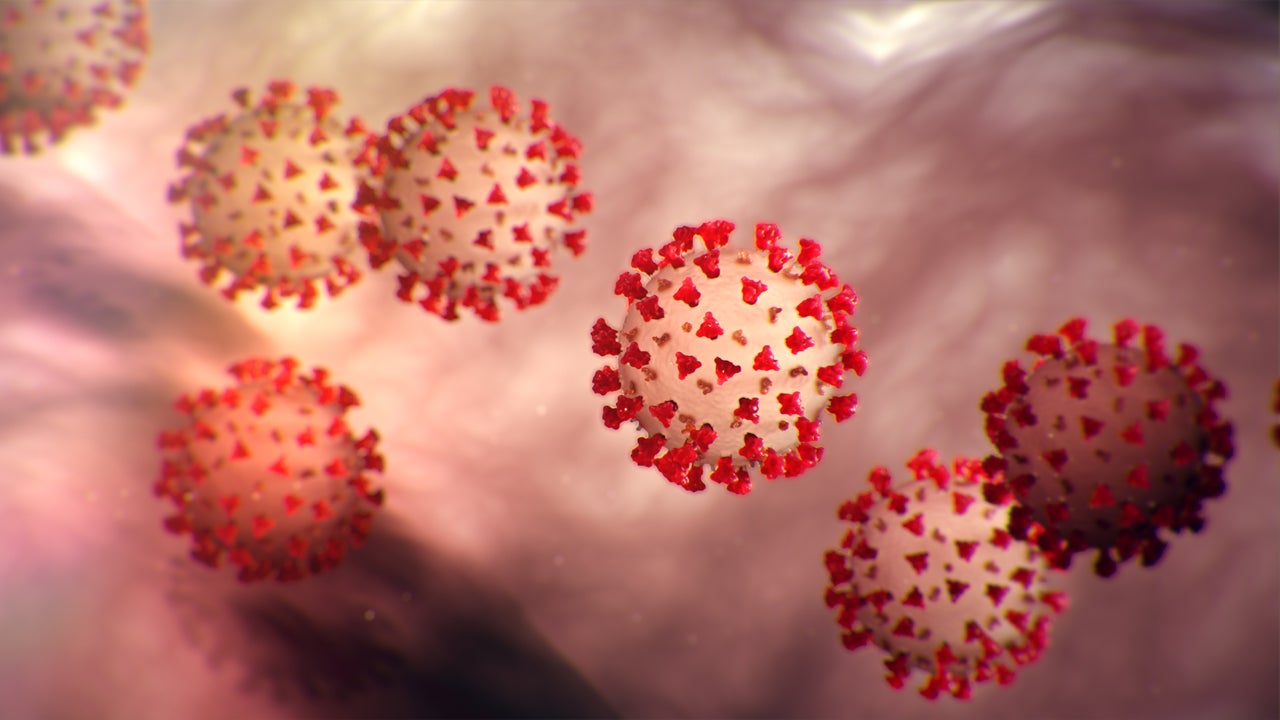

New variant of Korana also found in Noida, JN.1 variant has raised concern

 New variant of Korana also found in Noida, JN.1 variant has raised concern

Covid-19 JN.1 Variant Updates: According to the data released by the Ministry of Health, 594 new cases of Corona have been registered in the country in the last 24 hours.


Covid-19 JN.1 Variant Updates: The cases of corona virus in the country have started increasing again. According to the data released by the Union Health Ministry on Thursday, 594 new cases of Corona have been registered in the country in the last 24 hours. More new cases of corona are coming from states like Kerala, Maharashtra, Tamil Nadu. After the increase in new cases of Corona in the country, the number of active cases has increased to 2669. The government is also on alert due to the rapidly increasing cases of Corona. Let us tell you that for the past few days, cases of the new variant of Corona, JN.1, are also coming to the fore in the country. This new variant is spreading rapidly in countries like China, America and Singapore.


A case of Corona found in Noida


A new case of Corona has also been found in Noida (Gautam Budh Nagar), which is adjacent to the capital Delhi, after many months. A 54-year-old man working in a multinational company in Gurugram has been found corona positive. The local health department is now taking the history of the patient. Instructions have been given to test the people who come in contact with the patient. The sample of the corona positive person has been sent to a lab in Delhi for genome sequencing. The local health department has come into alert mode due to the first case of corona in Noida after months.


Guidelines for screening patients with viral and influenza

The government is working in action mode after a new case of Corona was found in Noida. The order from the government is that the examination of patients with symptoms of viral infection, respiratory tract infection and influenza should be a priority. Patients who have symptoms of the new variant JN.1 should also be screened after their contacts have been taken.


JN.1 Variant Symptoms - JN.1 Variant Symptoms

These symptoms are seen in patients infected with JN.1 variant-


Symptoms of influenza illness

High fever and headache

Muscle pain

sore throat

Physical weakness

runny nose

sore throat

Gastrointestinal problems

Fatigue and muscle weakness


The JN.1 variant, which has been spreading in America and China since September this year, is being said to be more dangerous than the previously found variant. This variant is formed after a mutation in the BA.2.86 variant and Pirola's spike protein. Let us tell you that the spike protein is a part of the virus, which attacks human cells. In this new variant, the ability to dodge the immune system is more than the previously found variant.


These symptoms are seen when infected with the JN.1 variant, warned the former WHO scientist

JN.1 Variant Signs and Symptoms: The JN.1 variant is composed of the BA.2.86 variant and a mutation in Pirola's spike protein.


JN.1 Variant Signs And Symptoms: For the past 3 years, the corona virus epidemic has been a headache for the whole world. In the past few days, the new variant of Corona JN.1 is spreading rapidly all over the world. The World Health Organization (WHO) has called the new JN.1 variant of Corona a 'variant of interest'. Cases of JN.1 variant are also increasing in India. Earlier, the JN.1 variant was confirmed in China, Singapore and the US. The symptoms seen in patients infected with this new JN.1 variant of Corona are not recognized at the beginning. This is the reason why patients can be identified after some time after being infected. Experts believe that the infection capacity of this variant is much higher than the previously found variant and if its infection is not controlled, it can infect many people. Let us know in detail in this article the symptoms and prevention of the new JN.1 variant of Corona.


Symptoms and signs of JN.1 variants


The JN.1 variant, which has been spreading in America and China since September this year, is being said to be more dangerous than the previously found variant. This variant is formed after a mutation in the BA.2.86 variant and Pirola's spike protein. Let us tell you that the spike protein is a part of the virus, which attacks human cells. In this new variant, the ability to dodge the immune system is more than the previously found variant.


When infected with the JN.1 variant, the patient shows these symptoms-


High fever and headache

Symptoms of influenza illness

sore throat

Muscle pain

Physical weakness

runny nose

sore throat

Gastrointestinal problems

Fatigue and muscle weakness


Former scientist of WHO said this - Dr Soumya Swaminathan on The New Covid Variant

Soumya Swaminathan, the former chief scientist of the World Health Organization, said in a conversation with a TV channel that, "It would be a big mistake to think of Covid as a common cold. The risk of mental problems increases." He further said that India is now fully prepared to fight such an infection. In order to avoid infection, special attention should be paid to the immunity of children and the elderly, and masks should be worn in public places.


358 new cases have come in the last 24 hours - Latest Covid Cases in India

According to the data released by the Union Health Ministry, 358 new cases of Corona have been registered in India in the last 24 hours. 84 percent of these cases are from Kerala alone. 300 new cases of corona have been found in Kerala during the last 24 hours. Apart from this, 3 patients have died due to corona virus infection in the country in the last 24 hours, these three deaths are in Kerala. After the registration of new cases, the number of active patients of Kovid in the country has increased to 2,669.


Corona's new variant JN.1 has appeared, know how dangerous it is compared to other variants?

Recently a new variant of Corona JN.1 has come out. According to scientists, it can prove to be more contagious than other variants.


The case of Corona has not completely stopped yet, so new variants of Kovid are being seen. Recently, a new variant of Corona, JN.1, has come out, which has increased the concern of scientists. According to scientists, it is more contagious than other variants. Not only this, it can also be harmful to the immune system.


This variant is found in many countries

According to scientists, it has also been found in England, Iceland and France. This variant was first spotted in Luxembourg on 25 August 2023. However, the good thing is that not a single case of the JN.1 variant has been confirmed in India yet. According to scientists, it is different from JN.1, XBB.1.5 and HV.1 variants. This variant can also trick the immune system. So far 10 mutations have been observed in XBB.1.5 and HV.1. At the same time, 41 changes have been made in the JN.1 variant compared to the XBB.1.5.


Characteristics of the JN.1 variant

The symptoms of this variant may also be similar to the old variants of Kovid.

Exposure to this variant may cause body fatigue and breathing difficulties.

In this situation, along with muscle pain, headache can also occur.

In such a case, along with the problems related to the stomach, the problem of phlegm can also occur.

Exposure to this variant may cause problems with taste or smell.


How important it is to take the vaccine to avoid corona

According to health experts, it is very important to get vaccinated to avoid this variant of Corona. You can avoid damage to the immune system through the vaccine. Some time ago, the updated vaccines of Corona have also become available in India. After which the Center for Disease Control and Prevention (CDC) advised people to get a new booster dose vaccine to avoid corona infection.

Popular Posts