The Role of Nation-States in the World-System

 The Role of Nation-States in the World-System


3. The Role of Nation-States in the World-System


Question: Analyze the rise of the modern nation-state system. How did sovereign nation-states, colonies, and the interstate system develop within the framework of the capitalist world-system?

Relevant Readings: Wallerstein, Chapter 3 of World-Systems Analysis.
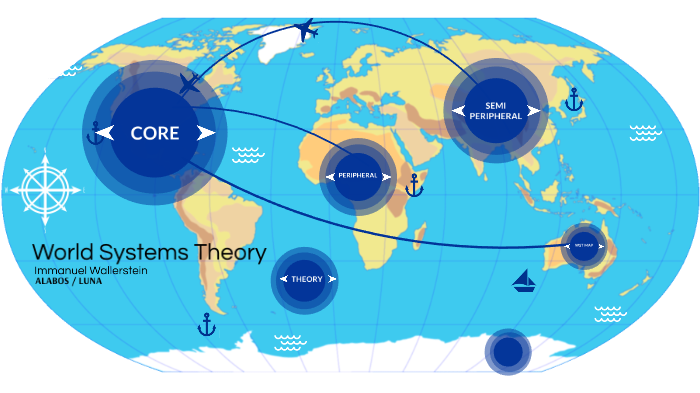


Immanuel Wallerstein’s analysis of the rise of the modern nation-state system is deeply intertwined with his broader framework of world-systems theory, which emphasizes the capitalist world economy as a dynamic and interrelated system. This system encompasses sovereign nation-states, colonial entities, and the interstate system, all of which developed in response to the economic imperatives of capitalism.


## The Rise of the Modern Nation-State System


### Historical Context


The modern nation-state system began to take shape in the late medieval period and solidified during the early modern era, particularly from the sixteenth century onward. Wallerstein argues that this evolution was not merely a political transformation but was fundamentally linked to the emergence of a capitalist world economy. 


- **Feudalism to Capitalism**: The transition from feudalism to capitalism marked a significant shift in political and economic structures. As feudal lords lost power and centralized monarchies gained strength, sovereign nation-states emerged. This transition was facilitated by the growth of trade and commerce, which required stable political entities to manage economic interests.


- **Sovereignty and Territoriality**: The concept of sovereignty became central to the modern nation-state system. States began to assert control over defined territories, establishing legal frameworks and governance structures that allowed them to regulate economic activities within their borders. This sovereignty was crucial for engaging in international trade and competition, which were essential for capitalist expansion.


### Development of Colonies


Colonialism played a pivotal role in shaping the modern nation-state system within the capitalist framework. European powers established colonies to exploit resources and expand their markets, leading to the following developments:


- **Resource Extraction**: Colonies provided core nations with raw materials and agricultural products, which were essential for industrial production. This extraction was often achieved through exploitative labor practices, including slavery and forced labor.


- **Market Expansion**: Colonies served as markets for manufactured goods produced in core countries. This relationship reinforced the economic dependency of colonies, as they became integrated into the capitalist world economy primarily as suppliers of raw materials and consumers of finished goods.


- **Political Control**: The establishment of colonial administrations allowed core nations to exert political control over vast territories. This control was often justified through ideologies of racial superiority and civilizing missions, which masked the economic motives behind colonial expansion.


## The Interstate System


The interstate system refers to the network of relationships and interactions among sovereign states. Wallerstein views this system as both a product of and a contributor to the capitalist world economy:


- **Competition Among States**: The capitalist world economy fosters competition among nation-states for resources, markets, and geopolitical influence. This competition can lead to conflicts, alliances, and shifts in power dynamics, shaping the behavior of states on the global stage.


- **Regulation of Trade and Investment**: Nation-states play a crucial role in regulating trade and investment flows, often through policies that favor their economic interests. This regulation can include tariffs, trade agreements, and diplomatic relations, which are essential for maintaining the capitalist system.


- **Global Governance**: The emergence of international organizations and agreements reflects the need for cooperation among states to address global challenges, such as trade disputes, environmental issues, and security threats. However, these institutions often reflect the interests of core countries, perpetuating inequalities within the world-system.


## Conclusion


Wallerstein’s analysis highlights the intricate relationship between the rise of the modern nation-state system, colonialism, and the capitalist world economy. Sovereign nation-states emerged as essential actors in a global system characterized by economic competition and exploitation. The development of colonies provided the resources and markets necessary for capitalist expansion, while the interstate system facilitated the regulation and management of these economic relationships. Understanding this interplay is crucial for analyzing contemporary global dynamics and the ongoing challenges of inequality and conflict in the capitalist world-system.


Citations:

[1] https://en.wikipedia.org/wiki/Immanuel_Wallerstein

[2] https://www.studysmarter.co.uk/explanations/human-geography/economic-geography/world-systems-theory/

[3] https://www.earth.columbia.edu/sitefiles/file/about/director/pubs/Oxfordreview_winter99.pdf

[4] https://web.mit.edu/esd.83/www/notebook/WorldSystem.pdf

[5] https://www.journals.uchicago.edu/doi/abs/10.1086/226431

[6] https://en.wikipedia.org/wiki/World-systems_theory


Capitalism and the World-System

 Capitalism and the World-System


2. Capitalism and the World-System


Question: Explain Wallerstein’s concept of the capitalist world economy. How does the production of surplus value contribute to global economic polarization between the core and the periphery?

Relevant Readings: Wallerstein, Chapter 2 of World-Systems Analysis: An Introduction.


Immanuel Wallerstein's concept of the capitalist world economy is a foundational element of his world-systems analysis, which seeks to understand the intricate relationships and dynamics of global capitalism. This framework emphasizes the historical development of a capitalist system that has been in existence since the sixteenth century and highlights the ongoing processes of economic polarization between core and peripheral nations.


## The Capitalist World Economy


### Definition and Structure


Wallerstein defines the capitalist world economy as a complex system characterized by:


- **Endless Accumulation of Capital**: At its core, capitalism prioritizes the continuous accumulation of capital, which drives economic activity and shapes social relations. This accumulation is not merely about profit-making; it involves the systematic reinvestment of profits to generate further wealth.


- **Global Division of Labor**: The capitalist world economy is marked by a structured international division of labor, where different regions specialize in various types of production. This division is not based on national boundaries but rather on the roles that countries play within the global economic system.


- **Core, Semi-Periphery, and Periphery**: Wallerstein categorizes countries into three distinct zones:

  - **Core**: These are economically advanced nations that dominate global trade, control high-value production, and enjoy significant political power. They typically have strong industrial bases and high standards of living.

  - **Semi-Periphery**: These countries have mixed characteristics, often exhibiting both core and peripheral traits. They may exploit peripheral nations while being exploited by core countries. Examples include Brazil and India.

  - **Periphery**: These nations are often less developed, providing raw materials and labor to core countries. They experience economic dependency and are generally characterized by lower levels of industrialization and higher rates of poverty.


### Historical Context


Wallerstein traces the origins of the capitalist world economy to the "long" sixteenth century (approximately 1450 to 1640), during which Europe transitioned from feudalism to capitalism. This shift was facilitated by the expansion of trade networks, colonialism, and the rise of capitalist agriculture. The establishment of a global market allowed for the commodification of labor and resources, which are integral to the functioning of capitalism.


## Production of Surplus Value and Global Economic Polarization


### Surplus Value


A central concept in Wallerstein's analysis is the production of *surplus value*, which refers to the difference between the value produced by labor and the actual wages paid to laborers. This surplus is crucial for capital accumulation and is generated through various means, including:


- **Exploitation of Labor**: Core countries often exploit labor in peripheral nations by paying lower wages than the value of the goods produced. This leads to significant profit margins for businesses in core countries, which can reinvest this surplus into further capital accumulation.


- **Monopolistic Practices**: Core nations often maintain quasi-monopolistic control over certain industries, allowing them to dictate prices and extract higher profits. This monopolization is supported by state policies, patents, and trade agreements that favor core economies.


### Global Economic Polarization


The production of surplus value contributes to global economic polarization in several ways:


- **Wealth Disparities**: The accumulation of surplus value in core countries leads to significant wealth disparities between core and peripheral nations. While core countries experience economic growth and technological advancement, peripheral countries remain trapped in cycles of poverty and dependence.


- **Dependency Relationships**: Peripheral nations often rely on core countries for investment, technology, and markets for their raw materials. This dependency perpetuates their subordinate position within the global economy, making it difficult for them to achieve sustainable development.


- **Social and Political Instability**: The economic polarization resulting from surplus value production can lead to social unrest and political instability in peripheral nations. As inequalities grow, marginalized populations may resist exploitation, leading to conflicts that can disrupt both local and global economies.


## Conclusion


Wallerstein's concept of the capitalist world economy provides a critical lens for understanding the dynamics of global capitalism and its implications for social change. The production of surplus value is central to the functioning of this system, driving economic polarization between core and peripheral nations. By analyzing these relationships, Wallerstein's world-systems analysis highlights the structural inequalities inherent in the global capitalist system, emphasizing the need for a comprehensive understanding of economic interactions that transcend national boundaries.


Citations:

[1] https://www.journals.uchicago.edu/doi/abs/10.1086/226431

[2] https://ciaotest.cc.columbia.edu/olj/iirp/25_2005-06_winter/25_2005-06_winter_j.pdf

[3] https://edisciplinas.usp.br/pluginfile.php/7235362/course/section/6380657/WALLERSTEIN%20I.%20%281999%29.%20Patterns%20and%20Perspectives%20of%20the%20Capitalist%20World%20Economy.pdf

[4] https://www.nehrlich.com/blog/2008/06/03/world-systems-analysis-by-immanuel-wallerstein/

[5] https://en.wikipedia.org/wiki/World-systems_theory

[6] https://www.studysmarter.co.uk/explanations/human-geography/economic-geography/world-systems-theory/

[7] https://en.wikipedia.org/wiki/Immanuel_Wallerstein

[8] https://revisesociology.com/2015/12/05/world-systems-theory/


Popular Posts