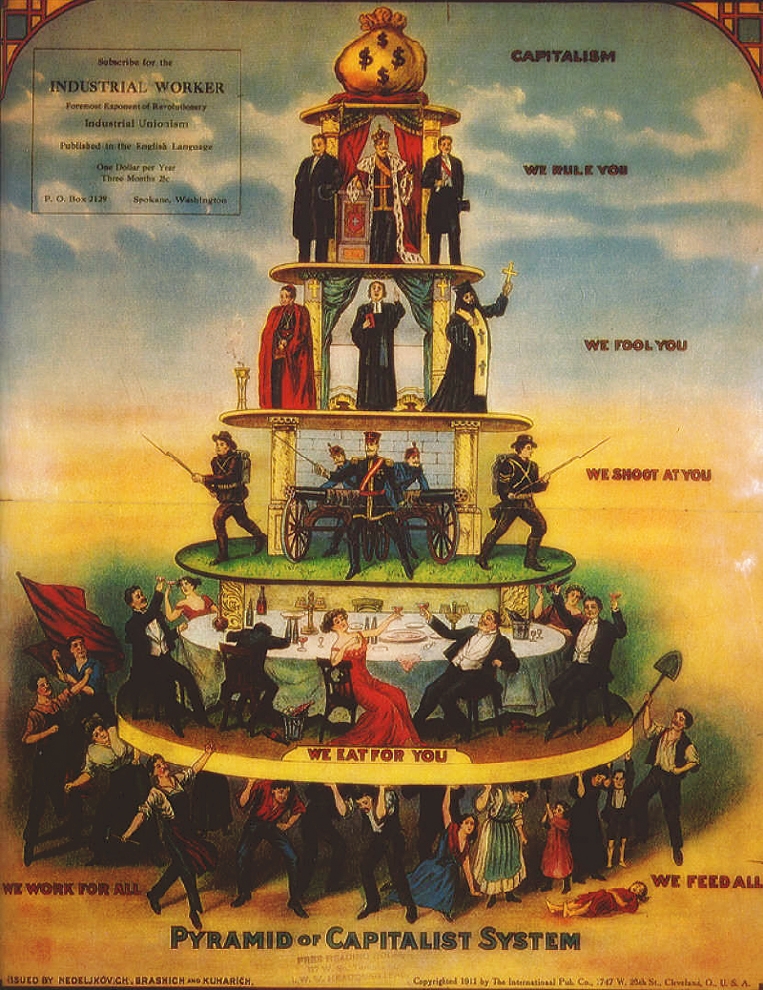
What is mode of production. Compare and contrast economic features of feudal and capitalist mode of production.
**Mode of Production:**
The mode of production refers to the way in which a society organizes and carries out economic activities, including how goods and services are produced, distributed, and consumed. It involves the relationships between the means of production (such as land, labor, and capital) and the social relations of production (such as the organization of labor and the distribution of resources). Marx identified different historical modes of production, each characterized by distinct economic structures and class relations.
**Feudal Mode of Production:**
1. **Economic Structure:**
- Land is the primary means of production in feudalism. The feudal lord owns the land and grants portions to vassals (nobles) in exchange for loyalty and services.
- Agricultural production is central, and the majority of the population works as peasants on the lord's land.
2. **Class Relations:**
- Feudal society is characterized by a hierarchical structure. The king or monarch is at the top, followed by nobles and vassals, with peasants forming the majority.
- Serfs, tied to the land, provide labor in exchange for protection from the lord.
3. **Surplus Extraction:**
- Surplus extraction occurs primarily through direct control of land. Lords extract surplus through a portion of the agricultural produce produced by peasants.
4. **Economic Dynamics:**
- The feudal system is static, with limited social mobility. Social status and economic roles are largely determined by birth.
**Capitalist Mode of Production:**
1. **Economic Structure:**
- Capitalism is characterized by private ownership of the means of production, such as land and factories.
- Wage labor becomes a central feature, with workers selling their labor power to capitalists (owners) in exchange for wages.
2. **Class Relations:**
- Capitalist society is marked by a class division between the bourgeoisie (capitalist class) and the proletariat (working class).
- The bourgeoisie owns the means of production, while the proletariat sells their labor to survive.
3. **Surplus Extraction:**
- Surplus extraction occurs through the production process. Capitalists accumulate surplus value by paying workers less than the value produced by their labor.
4. **Economic Dynamics:**
- Capitalism is characterized by dynamic economic growth, technological advancements, and constant innovation.
- Social mobility is theoretically possible, as individuals can accumulate wealth and change their class position.
**Comparison:**
1. **Ownership of Means of Production:**
- Feudalism: Means of production, especially land, are owned by the feudal lords.
- Capitalism: Means of production, including land and factories, are privately owned by individuals or corporations.
2. **Labor Relations:**
- Feudalism: Serfs provide labor in exchange for protection, and there is limited mobility.
- Capitalism: Workers sell their labor power for wages, and social mobility is theoretically possible.
3. **Role of Surplus Extraction:**
- Feudalism: Surplus extraction is mainly through control of land and agricultural produce.
- Capitalism: Surplus extraction occurs within the production process through wage labor.
4. **Social Mobility:**
- Feudalism: Social mobility is restricted, and social roles are often determined by birth.
- Capitalism: Social mobility is theoretically possible, allowing for the accumulation of wealth and change in class position.
5. **Economic Dynamics:**
- Feudalism: Economic activity is relatively static, with limited technological progress.
- Capitalism: Dynamic economic growth, technological innovation, and constant change characterize capitalist economies.
In summary, the feudal and capitalist modes of production represent distinct economic structures with different ownership relations, labor dynamics, and mechanisms of surplus extraction. The transition from feudalism to capitalism marked a significant shift in societal organization and economic relations.
Class and class struggle.
**Class:**
In the context of Marxist theory, a class is a social group characterized by its relationship to the means of production. The two primary classes in capitalist societies, as identified by Karl Marx, are the bourgeoisie and the proletariat.
- **Bourgeoisie:** The capitalist class, or owners of the means of production (factories, land, resources). They derive profit from the labor of the proletariat.
- **Proletariat:** The working class, those who sell their labor power to the bourgeoisie. They do not own the means of production and are dependent on wages for their livelihood.
**Class Struggle:**
Class struggle refers to the ongoing conflict and tension between social classes, particularly between the bourgeoisie and the proletariat. Marx argued that this struggle is intrinsic to capitalist societies and is rooted in the fundamental economic relations of production.
- **Nature of Class Struggle:**
- **Economic Exploitation:** The primary source of class struggle is the exploitation of the proletariat by the bourgeoisie. The capitalist system relies on extracting surplus value from the labor of workers.
- **Conflicts of Interest:** The interests of the bourgeoisie and proletariat are inherently conflicting. While the bourgeoisie seeks to maximize profits, the proletariat aims to improve working conditions, wages, and gain control over their labor.
- **Forms of Class Struggle:**
- **Economic Strikes:** Workers may engage in strikes to demand better wages, improved working conditions, or protest against unfair labor practices.
- **Political Movements:** Class struggle can manifest in political movements advocating for workers' rights, social equality, and sometimes revolutionary change.
- **Unionization:** Formation of labor unions is a way for the proletariat to collectively negotiate with the bourgeoisie for better terms of employment.
- **Historical Materialism:**
- Marx's historical materialism asserts that the dynamics of class struggle drive historical change. Transitions from one mode of production to another (e.g., feudalism to capitalism) are propelled by class conflicts.
- **Role of Class Consciousness:**
- Class consciousness refers to the awareness among the proletariat of their common interests and collective identity. Marx argued that the development of class consciousness is crucial for effective class struggle.
**Critiques and Developments:**
- Some critics argue that the modern working class may not align precisely with Marx's industrial proletariat, leading to challenges in applying traditional Marxist class analysis.
- Contemporary Marxist scholars explore intersections of class with other social categories, such as race and gender, acknowledging the complexities of identity and inequality.
In summary, class and class struggle are foundational concepts in Marxist theory, providing a lens to understand the dynamics of power, exploitation, and societal change within capitalist systems.
Historical marerialism.
**Historical Materialism:**
Historical materialism is a key concept in Marxist theory developed by Karl Marx and Friedrich Engels. It is a methodological approach to understanding societal development and change, emphasizing the role of material conditions in shaping historical processes. The central tenets of historical materialism include:
1. **Primacy of Material Conditions:**
- Historical materialism posits that the material or economic structure of a society—specifically, the mode of production—forms the foundation upon which all other social, political, and cultural structures are built.
2. **Modes of Production:**
- Societies are characterized by distinct modes of production, each with its specific relations of production and means of production. Marx identified historical epochs, such as feudalism, capitalism, and socialism, as different modes of production.
3. **Dialectical Change:**
- Historical materialism employs a dialectical approach, drawing inspiration from Hegelian dialectics. It sees historical development as a process involving contradictions, conflicts, and transformations. Changes in material conditions lead to social conflicts and, eventually, new social structures.
4. **Class Struggle:**
- Class struggle is a central dynamic in historical materialism. Changes in the mode of production often arise from conflicts between social classes. For example, the transition from feudalism to capitalism is characterized by the struggle between feudal lords and emerging capitalist classes.
5. **Base and Superstructure:**
- The economic base, encompassing the relations and means of production, influences the superstructure, which includes cultural, legal, political, and ideological institutions. Changes in the base drive changes in the superstructure.
6. **Revolutionary Change:**
- Historical materialism suggests that significant societal transformations often require revolutionary change, particularly changes in the mode of production. For Marx, the transition from capitalism to socialism would involve a proletarian revolution.
7. **Human Agency and Consciousness:**
- While material conditions shape societal structures, historical materialism recognizes the role of human agency. People act within the constraints of their material conditions but can also influence and transform those conditions. Class consciousness, or awareness of one's social class and interests, is crucial for social change.
**Application to History:**
1. **Feudalism to Capitalism:**
- Marx applied historical materialism to explain the transition from feudalism to capitalism. Changes in agricultural technology, property relations, and the rise of merchant capitalism played pivotal roles in this historical process.
2. **Capitalism to Socialism:**
- Marx envisioned the proletarian revolution as the next stage in historical development, leading to the establishment of socialism. The transition involves the collective ownership of the means of production and the abolition of class distinctions.
3. **Global Application:**
- Historical materialism has been used to analyze the development of various societies worldwide, accounting for differences in historical trajectories based on economic structures.
**Critiques and Developments:**
1. **Non-economic Factors:**
- Critics argue that historical materialism may oversimplify complex historical processes by reducing them solely to economic factors, neglecting the influence of culture, ideas, and non-material forces.
2. **Intersectionality:**
- Contemporary scholars have expanded historical materialism to consider intersections with race, gender, and other social categories, recognizing that class is just one dimension of social hierarchy.
3. **Adaptability:**
- Some argue that historical materialism is adaptable and can be applied to understand various forms of societal development beyond the classic capitalist framework.
Historical materialism remains a foundational concept in Marxist thought, providing a framework for analyzing the historical development of societies and the interconnectedness of economic, social, and political structures.
Marxist notion of consciousness.
The Marxist notion of consciousness is a critical aspect of Karl Marx's philosophical and sociological framework. In Marxist theory, consciousness refers to the awareness, beliefs, and ideas that individuals hold about themselves, society, and their position within the social structure. Key components of the Marxist notion of consciousness include:
1. **Base and Superstructure:**
- Marx proposed the concept of the base and superstructure to explain the relationship between the economic structure of society (base) and the cultural, political, and ideological elements (superstructure). Consciousness is seen as part of the superstructure and is influenced by the underlying economic conditions.
2. **False Consciousness:**
- Marx introduced the concept of false consciousness to describe a situation where individuals hold beliefs and ideas that are contrary to their own class interests. This occurs when the dominant ideas in society, often shaped by the ruling class, mislead individuals into accepting and supporting the existing social order.
3. **Class Consciousness:**
- Class consciousness is a crucial concept in Marxist theory. It refers to the awareness that individuals have of their membership in a particular social class and their understanding of the shared interests and goals of that class. For the proletariat, developing class consciousness is seen as a precursor to revolutionary action.
4. **Ideological State Apparatuses:**
- Louis Althusser, influenced by Marxist thought, introduced the concept of Ideological State Apparatuses (ISAs). These are institutions like schools, media, and religious organizations that disseminate ideological messages reinforcing the existing social order. They play a role in shaping and maintaining the consciousness of individuals.
5. **Role in Social Change:**
- Marx believed that changes in the economic base of society would eventually lead to changes in consciousness. As the material conditions of production change, individuals' awareness and understanding of their place in society are expected to evolve, potentially leading to shifts in political and social structures.
6. **Revolutionary Consciousness:**
- Marx envisioned a process where the proletariat, through developing class consciousness, would achieve revolutionary consciousness. This involves an understanding of the need to overthrow the existing capitalist system and replace it with a socialist or communist society.
7. **Materialism and Consciousness:**
- Central to Marxist philosophy is historical materialism, emphasizing the material conditions of society as the driving force behind historical development. Consciousness, according to Marx, is rooted in these material conditions, and changes in the mode of production can influence ideological shifts.
8. **Critique of Religion:**
- Marx famously described religion as the "opium of the people," suggesting that religious beliefs often serve to mask the harsh realities of class-based exploitation. He argued that changes in economic conditions would lead to a transformation in religious and ideological consciousness.
In summary, the Marxist notion of consciousness is intricately linked to the social and economic structures of a given society. It encompasses ideas of false consciousness, class consciousness, and the potential for revolutionary transformation based on shifts in material conditions and individuals' awareness of their social roles.