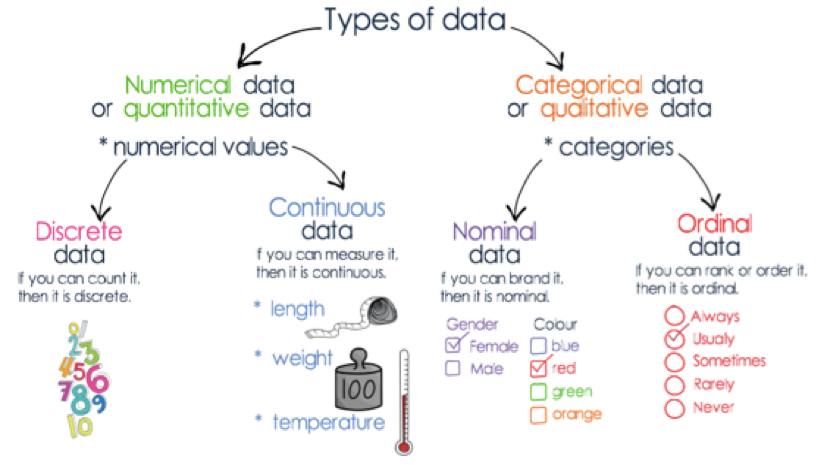
Importance of Measures of Central Tendency and Dispersion in Sociological Analysis

 Importance of Measures of Central Tendency and Dispersion in Sociological Analysis


 ## Importance of Measures of Central Tendency and Dispersion in Sociological Analysis


In sociological research, summarizing and understanding the characteristics of data is crucial for drawing meaningful conclusions. Measures of central tendency and measures of dispersion play a vital role in this process by providing concise yet informative statistics that capture the essence of a dataset. Let's explore how these measures help in sociological analysis:


### Measures of Central Tendency


**Mean, Median, and Mode**:

- **Mean**: The arithmetic average, calculated by summing all values and dividing by the number of observations. It represents the central point and is useful for understanding the overall level of a variable[1][4].

- **Median**: The middle value when data is ordered from least to greatest. It is less affected by outliers and skewed distributions, providing a more robust measure of central tendency[1][4].

- **Mode**: The value that occurs most frequently in the dataset. It can reveal the most common response in survey research or the typical value for a variable[1][4].


These measures help sociologists summarize the central tendency of a variable, identify patterns, and make comparisons between groups or time periods[1][2]. For example, comparing the median income of different social classes can uncover disparities in wealth distribution[1].


### Measures of Dispersion


**Range, Variance, and Standard Deviation**:

- **Range**: The difference between the highest and lowest values in a dataset. It provides a simple measure of the spread of data[5].

- **Variance**: A measure of the average squared deviation from the mean. It quantifies the overall variability in the dataset[5].

- **Standard Deviation**: The square root of the variance. It represents the average distance of values from the mean and is more interpretable than variance[5].


Measures of dispersion complement central tendency by providing insights into the spread and variability of data. They help identify outliers, assess the consistency of a variable, and determine the reliability of central tendency measures[2][5]. For instance, a high standard deviation indicates that values are spread out from the mean, suggesting greater variability in the data[5].


### Importance in Sociological Analysis


1. **Data Summarization**: Central tendency and dispersion measures condense large datasets into a few representative values, facilitating data interpretation and communication of research findings[1][2].


2. **Comparison and Analysis**: These measures enable sociologists to compare variables, identify patterns, and analyze trends within and across different groups or time periods[1][2].


3. **Hypothesis Testing**: Central tendency and dispersion statistics are essential for formulating and testing hypotheses. For example, researchers can compare the mean values of two groups to determine if there are significant differences[1][2].


4. **Identifying Outliers**: Measures of dispersion, particularly the range and standard deviation, help identify extreme values that may significantly impact the interpretation of research findings[1][4].


5. **Assessing Data Quality**: Analyzing the central tendency and variability of data can reveal potential errors, inconsistencies, or biases in data collection and sampling[2].


By employing measures of central tendency and dispersion, sociologists can gain a comprehensive understanding of their data, draw more accurate conclusions, and communicate their findings effectively to inform social policies and interventions.


Citations:

[1] https://easysociology.com/research-methods/central-tendency-in-research-an-outline-and-explanation-in-sociology/

[2] https://www.alooba.com/skills/concepts/statistics/measures-of-central-tendency/

[3] https://www.wiley.com/en-us/Basic%2BStatistics%2Bfor%2BSocial%2BResearch-p-9781118234150

[4] https://easysociology.com/research-methods/understanding-a-univariate-analysis/

[5] https://statisticsbyjim.com/basics/measures-central-tendency-mean-median-mode/

[6] https://www.abs.gov.au/statistics/understanding-statistics/statistical-terms-and-concepts/measures-central-tendency

[7] https://revisesociology.com/2023/10/10/univariate-analysis-in-quantitative-social-research/

[8] https://bookdown.org/tomholbrook12/bookdown-demo/measures-of-central-tendency.html

Differences Between Univariate, Bivariate, and Multivariate Data

Differences Between Univariate, Bivariate, and Multivariate Data


 ## Differences Between Univariate, Bivariate, and Multivariate Data


In sociological research, understanding the types of data is essential for analyzing social phenomena effectively. The three primary categories of data are univariate, bivariate, and multivariate data. Each type serves different analytical purposes and provides unique insights into social issues.


### Univariate Data


**Definition**: Univariate data consists of observations on a single variable. The analysis focuses solely on describing and summarizing the characteristics of that one variable without considering relationships with other variables.


**Example**: A sociologist studying the income levels of a population would collect data on individual incomes. In this case, the variable is "income," and the analysis might involve calculating the average income, median income, and the distribution of income levels within the population.


**Application in Sociological Research**:

- **Descriptive Analysis**: Univariate analysis helps summarize large datasets, making it easier to communicate findings. For instance, if a researcher examines the educational attainment of a community, they might report the percentage of individuals with high school diplomas, college degrees, etc.


- **Data Cleaning**: This type of analysis can identify outliers or errors in the data. For example, if the income data shows an unusually high value that is inconsistent with the rest of the dataset, the researcher can investigate further.


### Bivariate Data


**Definition**: Bivariate data involves two different variables and explores the relationship or association between them. The analysis seeks to understand how one variable may influence or correlate with another.


**Example**: A sociologist might examine the relationship between education level and income. The two variables here are "education level" and "income." 


**Application in Sociological Research**:

- **Relationship Analysis**: Bivariate analysis can reveal correlations, such as whether higher education levels are associated with higher income. Researchers might use scatterplots to visualize this relationship and calculate correlation coefficients to quantify the strength of the association.


- **Hypothesis Testing**: For instance, a researcher may hypothesize that individuals with college degrees earn significantly more than those without. Bivariate analysis can help test this hypothesis by comparing the income means of the two groups.


### Multivariate Data


**Definition**: Multivariate data consists of observations on three or more variables. This type of analysis allows researchers to explore complex relationships and interactions among multiple variables simultaneously.


**Example**: A study investigating the impact of education, gender, and age on income would involve multivariate data. Here, the variables are "education level," "gender," and "age."


**Application in Sociological Research**:

- **Complex Relationship Analysis**: Multivariate analysis can uncover intricate patterns that are not apparent when examining variables in isolation. For example, researchers can analyze how the effect of education on income varies by gender and age, providing a more nuanced understanding of social dynamics.


- **Predictive Modeling**: Sociologists can use techniques like regression analysis to predict outcomes based on multiple predictors. For instance, a researcher might develop a model to predict income based on education, gender, age, and work experience.


### Summary of Differences


| Type of Data    | Number of Variables | Focus of Analysis                                  | Example Application                                      |

|------------------|---------------------|---------------------------------------------------|---------------------------------------------------------|

| Univariate       | 1                   | Descriptive statistics of a single variable       | Analyzing the average income of a population            |

| Bivariate        | 2                   | Relationship between two variables                 | Examining the correlation between education and income   |

| Multivariate     | 3 or more           | Interactions among multiple variables              | Investigating how education, gender, and age affect income |


Understanding these distinctions is crucial for sociologists as they design studies and interpret data. Each type of analysis serves as a building block for more complex inquiries, allowing researchers to explore social phenomena in depth and detail.


Citations:

[1] https://easysociology.com/research-methods/understanding-a-univariate-analysis/

[2] https://study.com/academy/lesson/statistical-tests-in-psychology-types-lesson-quiz.html

[3] https://www.wiley.com/en-us/Basic%2BStatistics%2Bfor%2BSocial%2BResearch-p-9781118234150

[4] https://study.com/learn/lesson/univariate-data-analysis-examples.html

[5] https://www.geeksforgeeks.org/univariate-bivariate-and-multivariate-data-and-its-analysis/

[6] https://www.toolshero.com/research/univariate-analysis/

[7] https://www.socialsciences.manchester.ac.uk/social-statistics/about/what-is-social-statistics/

[8] https://revisesociology.com/2023/10/10/univariate-analysis-in-quantitative-social-research/

Popular Posts