Basic Statistics in Sociological Research
## Basic Statistics in Sociological Research
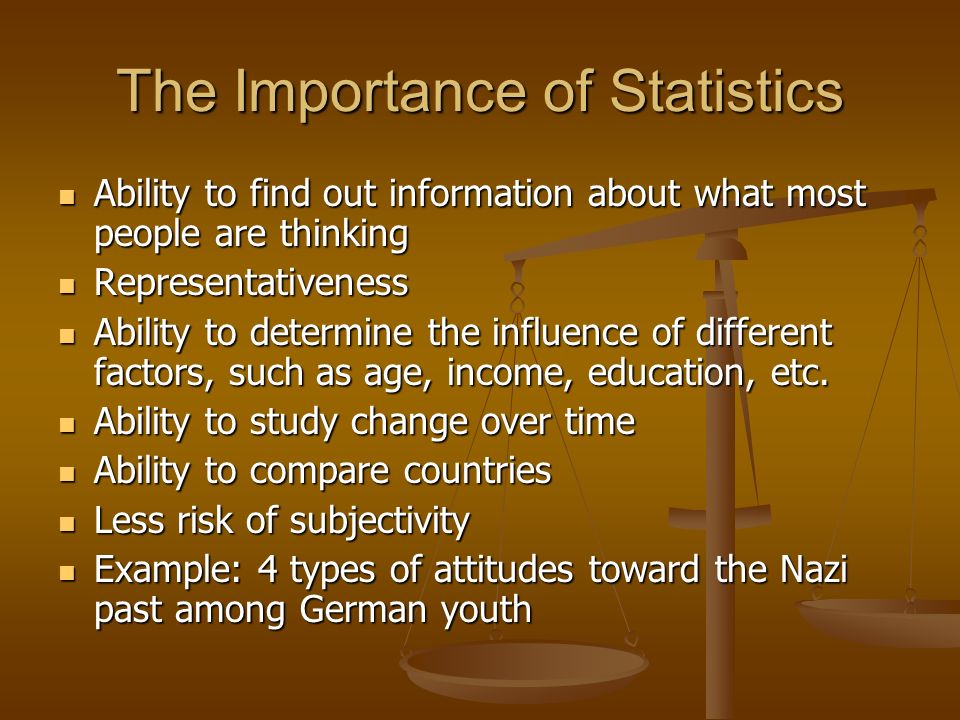
Statistics play a crucial role in sociological research, providing the tools necessary for analyzing social phenomena, understanding human behavior, and informing policy decisions. This overview will cover the fundamental concepts of statistics as applied in sociological contexts, the types of statistics used, and the significance of statistical methods in social research.

### Understanding Statistics in Sociology
Statistics in sociology can be broadly categorized into two types: **descriptive statistics** and **inferential statistics**.
- **Descriptive Statistics**: These statistics summarize and describe the characteristics of a dataset. Common measures include:
- **Mean**: The average value.
- **Median**: The middle value when data is ordered.
- **Mode**: The most frequently occurring value.
- **Standard Deviation**: A measure of the amount of variation or dispersion in a set of values.
Descriptive statistics are essential for providing a clear picture of the data at hand, allowing researchers to present findings in a comprehensible manner.
- **Inferential Statistics**: This type involves making predictions or inferences about a population based on a sample of data. It includes:
- **Hypothesis Testing**: Determining whether there is enough evidence to support a specific hypothesis.
- **Confidence Intervals**: Estimating the range within which a population parameter lies with a certain level of confidence.
- **Regression Analysis**: Exploring relationships between variables to predict outcomes.
Inferential statistics are vital for generalizing findings from a sample to a broader population, enabling sociologists to draw conclusions that can inform social policies and interventions.
### The Role of Social Statistics
Social statistics are employed to study various aspects of human behavior and societal structures. They help answer critical questions such as:
- How do socioeconomic factors influence educational attainment?
- What is the relationship between income levels and health outcomes?
- How do demographic changes affect community dynamics?
By employing statistical methods, sociologists can analyze trends, test theories, and evaluate the impact of policies on different social groups. For instance, social statistics can be used to assess the effectiveness of welfare programs by comparing poverty rates before and after implementation[2].
### Data Collection and Analysis
The process of statistical analysis in sociological research involves several key steps:
1. **Planning and Designing**: Researchers must define their research questions clearly and design a study that will effectively address these questions. This includes selecting appropriate methodologies (e.g., surveys, experiments, observational studies).
2. **Data Collection**: This involves gathering data through various means such as surveys, interviews, or existing databases. The choice of data collection method can significantly impact the quality of the data obtained.
3. **Data Analysis**: Once data is collected, statistical software (e.g., SPSS, R) is often used to perform analyses. This step includes applying descriptive and inferential statistical techniques to interpret the data and draw conclusions.
4. **Reporting Findings**: The results of the analysis are then reported, often including visual representations such as graphs and tables to enhance understanding.
### Importance of Statistical Literacy
Statistical literacy is crucial for sociologists and social researchers. A solid understanding of statistical concepts enables researchers to design effective studies, analyze data accurately, and interpret results responsibly. Misapplication of statistical methods can lead to erroneous conclusions, which may have significant ethical implications in social research[5].
### Conclusion
Basic statistics are foundational to sociological research, providing the necessary tools for understanding complex social dynamics. By utilizing both descriptive and inferential statistics, sociologists can analyze data effectively, draw meaningful conclusions, and contribute to the development of informed social policies. As the field of sociology continues to evolve, the importance of statistical literacy and the application of robust statistical methods will remain paramount in addressing the challenges faced by societies today.
Citations:
[1] https://www.wiley.com/en-us/Basic%2BStatistics%2Bfor%2BSocial%2BResearch-p-9781118234150
[2] https://www.socialsciences.manchester.ac.uk/social-statistics/about/what-is-social-statistics/
[3] https://books.google.com/books/about/Basic_Statistics_for_Social_Research.html?id=ySxjvXKFRVMC
[4] https://the-sra.org.uk/SRA/Shared_Content/Events/Event_display.aspx?EventKey=BSASR19
[5] https://www.ncbi.nlm.nih.gov/pmc/articles/PMC5037948/
[6] https://www.youtube.com/watch?v=MNE4he4A8KY
[7] https://www.thoughtco.com/introduction-to-statistics-3026701
[8] https://www.amazon.com/Statistics-Social-Research-Robert-Hanneman/dp/0470587989