The modern world-system as a capitalist world economy
II. Key themes
A. ‘The modern world-system as a capitalist world economy: Production, surplus value and
polarization’
• IW: Chapter 2 of World-Systems Analysis: An Introduction (WSA). Pp. 22-41
B. ‘The rise of the states-system: Sovereign nation-states, colonies and the interstate system’
• IW: Chapter 3 of WSA: Pp. 42-59
C. ‘The modern world-system in crisis: Bifurcation, chaos and choices’
• IW: Chapter 5 of WSA: Pp. 77-90
• Frank Elwell: ‘Wallerstein’s crisis of capitalism.’ P. 5
• Christopher Chase-Dunn. ‘Five linked crises in the contemporary world system.’
Journal of World-Systems Research. Vol 19, No. 2, 175-80
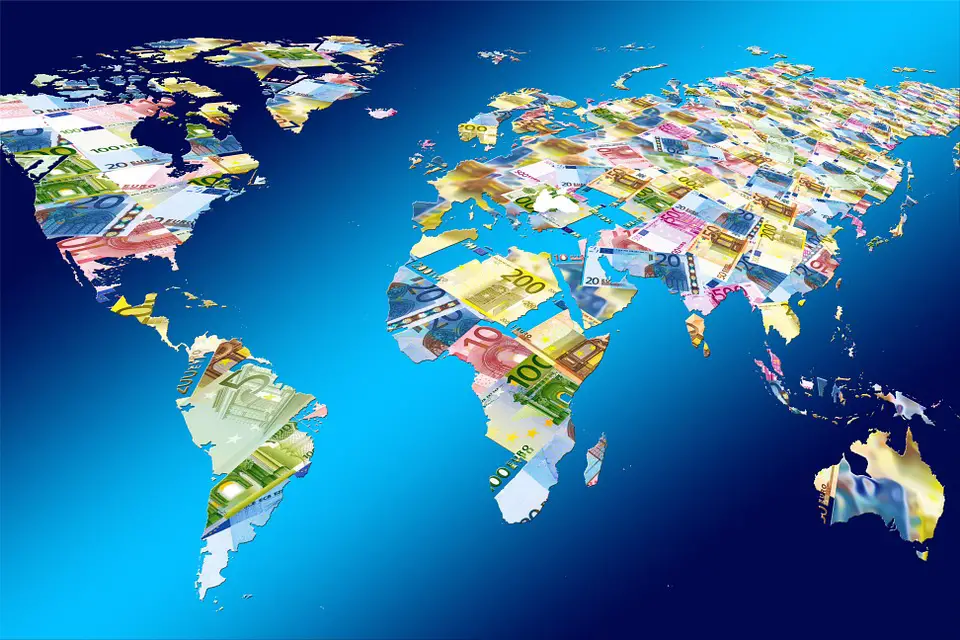
The **key themes** from these readings focus on understanding the structure of the modern capitalist world-system, the role of nation-states and colonies in its development, and the current crises and challenges facing the system. Below is a detailed exploration of each of these themes:
### A. **The Modern World-System as a Capitalist World Economy: Production, Surplus Value, and Polarization**
- *Immanuel Wallerstein: Chapter 2 of World-Systems Analysis: An Introduction (Pp. 22-41)*
This chapter provides a detailed overview of the capitalist world-economy, focusing on how **production** and the extraction of **surplus value** are organized across the world-system. Wallerstein builds on **Marxist economics** to explain how capitalism operates globally, but he expands the analysis to incorporate the **international division of labor** between core, semi-peripheral, and peripheral regions.
#### Key Points:
- **Capitalist production** in the world-system is organized to maximize the extraction of **surplus value**—the value produced by labor beyond what is needed to sustain workers. This surplus is primarily accumulated in the core, where advanced industries and high-profit enterprises are concentrated.
- **Polarization** is a central concept, referring to the increasing gap between the wealthy core nations and the impoverished periphery. As capitalism expands, this inequality becomes more entrenched, with core regions benefiting from the exploitation of labor and resources in the periphery.
- **Unequal exchange** is a mechanism through which core nations extract surplus value from the periphery. Peripheral regions are often forced to export raw materials and labor-intensive goods at low prices while importing high-value products from the core, perpetuating their dependency and underdevelopment.
Wallerstein highlights that the **global hierarchy** of nations is not just a reflection of economic productivity but of historical processes that allowed certain regions (mostly Europe) to dominate global trade, finance, and politics.
### B. **The Rise of the States-System: Sovereign Nation-States, Colonies, and the Interstate System**
- *Immanuel Wallerstein: Chapter 3 of World-Systems Analysis: An Introduction (Pp. 42-59)*
This chapter focuses on the **political dimension** of the world-system, especially the rise of **sovereign nation-states** and the development of the **interstate system**. Wallerstein argues that the modern world-system cannot be understood purely as an economic entity—it is also a political one, structured by the interaction of states.
#### Key Points:
- The **sovereign nation-state** emerged alongside the capitalist world-economy in the 16th century. The state became the primary political unit through which capitalism was organized and regulated.
- The interstate system, or the network of relationships between sovereign states, played a critical role in maintaining global capitalism. **Colonialism** was one of the key features of this system, where core nations established colonies in peripheral regions to secure resources and labor.
- Wallerstein emphasizes that while nation-states may appear to be independent political entities, they are deeply embedded in the **world-system**. Their sovereignty is often limited by the pressures of the global market and the power dynamics of the interstate system.
- The **balance of power** between states, especially the core nations, ensures that no single state can dominate the system entirely, although certain nations have held hegemonic positions (e.g., the Netherlands in the 17th century, Britain in the 19th century, and the United States in the 20th century).
This chapter also highlights how the **state** serves as an agent of capitalism, facilitating the conditions for capital accumulation, such as protecting private property, enforcing contracts, and regulating labor.
### C. **The Modern World-System in Crisis: Bifurcation, Chaos, and Choices**
- *Immanuel Wallerstein: Chapter 5 of World-Systems Analysis: An Introduction (Pp. 77-90)*
- *Frank Elwell: "Wallerstein’s Crisis of Capitalism"*
- *Christopher Chase-Dunn: "Five Linked Crises in the Contemporary World System"*
This theme addresses the **current crisis** in the capitalist world-system and the potential for its transformation. Wallerstein, Elwell, and Chase-Dunn argue that the world-system is facing multiple crises that are fundamentally destabilizing its structures.
#### Key Points from Wallerstein:
- **Bifurcation and Chaos**: Wallerstein argues that the modern world-system is approaching a point of **bifurcation**—a major transition where the system may either evolve into something new or collapse into chaos. He describes this as a period of systemic crisis, where the internal contradictions of capitalism (such as inequality, environmental degradation, and overaccumulation of capital) can no longer be managed effectively.
- **Choices**: As the system approaches this chaotic state, Wallerstein suggests that we are faced with important **choices** about the future of the world-system. He implies that this period of crisis offers opportunities for fundamental change, potentially leading to the creation of a more just and equitable global order, though he also warns that the system could descend into greater inequality and oppression.
#### Key Points from Elwell:
- **Crisis of Capitalism**: Elwell builds on Wallerstein’s analysis to argue that capitalism is in crisis due to its inability to resolve its inherent contradictions. For example, the drive for profit leads to environmental destruction and social inequality, which undermine the long-term sustainability of the system.
- Elwell points to the increasing polarization between rich and poor countries, environmental degradation, and political instability as evidence that the **world-system** is reaching its limits.
#### Key Points from Chase-Dunn:
- **Five Linked Crises**: Chase-Dunn identifies five interrelated crises facing the world-system today:
1. **Economic stagnation**: Global growth has slowed, leading to economic uncertainty and unemployment.
2. **Ecological crisis**: Environmental degradation, including climate change, threatens the survival of the system.
3. **Social inequality**: The gap between rich and poor, both within and between nations, continues to widen, leading to social unrest.
4. **Geopolitical instability**: Rising tensions between major powers, such as the United States and China, pose risks to global peace and stability.
5. **Legitimacy crisis**: There is a growing distrust of political institutions, both national and international, as people lose faith in the ability of governments and global organizations to solve pressing problems.
Chase-Dunn argues that these crises are interconnected, and together they represent a **systemic challenge** to the existing global order. Like Wallerstein, he suggests that the world is at a crossroads, where the current system may be replaced by something new—either more democratic and equitable or more authoritarian and exploitative.
### Conclusion
The key themes explored in these readings reveal the **multi-dimensional nature** of the modern world-system as theorized by Wallerstein. His analysis provides a comprehensive framework for understanding global capitalism, its historical development, and its current challenges. By focusing on the **economic, political, and systemic crises** facing the world today, these readings also highlight the urgency of addressing the **structural contradictions** of capitalism, which are pushing the world-system toward a critical juncture.
These themes are essential for understanding the **historical trajectory of global capitalism**, the role of nation-states and colonialism, and the future challenges that the world faces as the capitalist system approaches a point of crisis. Understanding these dynamics can provide valuable insights for analyzing contemporary issues, including those specific to regions like Nepal.


