Leadership and Development
### **Unit II: Leadership and Development** (9 hours)
This unit explores the concept of *leadership* and its connection to *development*, focusing on various leadership styles, the functions of leadership, and the impact that leadership has on social and economic progress. Leadership is a crucial element in shaping policies, guiding social movements, and influencing political and economic change, all of which are vital for development processes.
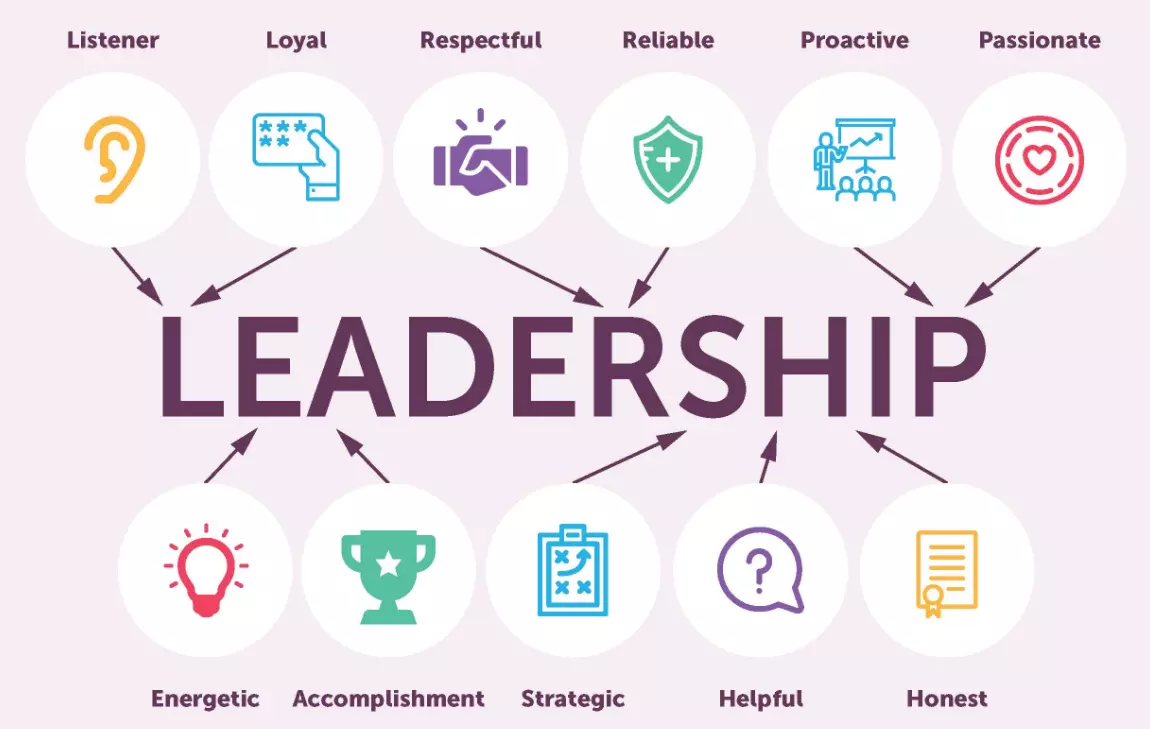
### **Key Concepts:**
#### 1. **Leadership: Definition**
Leadership is a process through which an individual influences a group of people to achieve a common goal. It involves the ability to guide, direct, and inspire others towards a shared vision or objective. In the context of development, leadership plays a pivotal role in mobilizing resources, creating policies, and promoting collective action aimed at improving societal well-being.
- **Traditional Definition:** Leadership is often defined as the act of guiding or managing a group, organization, or country. Leaders are individuals who hold formal or informal authority to make decisions and influence the direction of a group.
- **Modern Definition:** Leadership today encompasses not just formal authority but also the ability to inspire, motivate, and facilitate collaboration among diverse groups of people to address complex challenges, such as those found in development contexts.
#### 2. **Features of Leadership**
Leadership can take various forms, with differing styles impacting the way decisions are made and implemented. Two primary forms of leadership are *autocratic* and *democratic* leadership, which represent contrasting approaches to decision-making and authority.
- **Autocratic Leadership:**
Autocratic leadership is characterized by centralization of power and decision-making in the hands of a single leader or a small group of leaders. In this style, the leader makes decisions unilaterally, without seeking input or feedback from others.
- **Key Features:**
- Strong central authority.
- Decisions are made quickly, often without consulting others.
- Limited participation by followers or subordinates.
- Leader controls all aspects of decision-making and implementation.
- **Pros and Cons:**
- **Pros:** Quick decision-making, useful in crisis situations or environments requiring strong direction.
- **Cons:** Can lead to resentment, lack of engagement from followers, and poor long-term outcomes due to lack of input and collaboration.
- **Examples in Development:** Autocratic leadership might work in certain development contexts where quick, decisive action is required, such as in disaster response or in top-down government initiatives, but it may also stifle innovation and community involvement in long-term development processes.
- **Democratic Leadership:**
Democratic leadership, on the other hand, is characterized by shared decision-making and an emphasis on collaboration and participation. Leaders in democratic systems value input from group members and encourage open communication.
- **Key Features:**
- Decision-making is collaborative and involves consultation.
- Followers have a role in shaping policies and outcomes.
- Emphasizes teamwork, inclusivity, and transparency.
- **Pros and Cons:**
- **Pros:** Encourages participation, fosters ownership and accountability, improves morale, and can lead to more sustainable outcomes as decisions are more inclusive.
- **Cons:** Slower decision-making process, potential for indecision or gridlock, especially in large groups with diverse opinions.
- **Examples in Development:** Democratic leadership is well-suited for community-based development projects, where the participation and ownership of local stakeholders are crucial for the success of the initiatives. It encourages grassroots engagement and long-term sustainability by involving the community in decision-making.
#### 3. **Functions of Leadership**
Leadership plays a multifaceted role in both societal and organizational contexts. In terms of development, the functions of leadership are crucial for guiding nations, organizations, and communities through processes of change and progress. The core functions of leadership include:
- **Vision Setting:**
Leaders provide a sense of direction and vision for the future. In development, a leader’s ability to articulate a clear, long-term goal for societal or economic progress can help unify and motivate people to work toward that common goal. For example, a national leader may set a vision for reducing poverty, improving education, or increasing access to healthcare.
- **Decision-Making:**
Leaders are responsible for making key decisions that impact the group or society they lead. In development, leaders must make informed decisions about resource allocation, policy priorities, and strategy implementation, often balancing short-term needs with long-term development goals.
- **Mobilizing Resources:**
Effective leaders can mobilize both financial and human resources to achieve development goals. This includes securing funding, building coalitions, and organizing the workforce. Leaders in development contexts often need to engage with international donors, NGOs, and local stakeholders to ensure that projects are well-resourced.
- **Inspiring and Motivating:**
Leaders must inspire and motivate their followers to take action and stay committed to their goals. In development, this function is crucial for maintaining public support for long-term projects, which may take years or even decades to bear fruit.
- **Building Partnerships:**
Collaboration is essential for development, as it often involves multiple actors such as governments, civil society, international organizations, and private sector companies. Leaders play a key role in building partnerships and ensuring that different actors work together effectively towards shared development goals.
- **Ensuring Accountability:**
In both autocratic and democratic systems, leadership must ensure that actions and decisions are accountable. For development to be sustainable, leaders need to establish mechanisms for transparency and accountability, ensuring that resources are used effectively and ethically.
#### 4. **Role of Leadership in Development**
Leadership is a driving force behind social, political, and economic development. Leaders can shape the course of development through their policies, vision, and ability to influence and inspire people. The role of leadership in development can be understood in several key areas:
- **Policy Formulation and Implementation:**
Leaders are crucial in crafting policies that foster development. In this role, they decide which areas to prioritize, such as education, healthcare, infrastructure, or economic growth. Good leadership ensures that policies are not only formulated but also implemented effectively.
- **Institution Building:**
Strong leadership is necessary for building effective institutions, such as government agencies, educational systems, and judicial bodies. These institutions are the backbone of sustainable development, providing services and stability to the population.
- **Conflict Resolution:**
In many developing countries, conflicts (whether political, social, or economic) can be a major barrier to development. Leaders play a critical role in mediating and resolving conflicts, helping to create the stability necessary for development to proceed.
- **Promoting Social Equity:**
Leadership is also vital in ensuring that development is inclusive and benefits all members of society, particularly marginalized groups. Leaders with a commitment to social equity can implement policies that address inequalities and ensure that development projects reach the poorest and most vulnerable populations.
- **Fostering Innovation and Adaptation:**
In a rapidly changing world, development requires innovation and the ability to adapt to new challenges, such as climate change, technological advances, and shifts in global economic patterns. Leaders who encourage creativity, embrace new technologies, and promote learning can significantly enhance a society's capacity to develop.
- **Sustainable Development:**
Leadership is essential in guiding a society toward sustainable development, balancing economic growth with environmental protection and social well-being. Leaders who prioritize sustainability can steer their societies toward long-term prosperity without depleting natural resources or exacerbating social inequalities.
---
### **Summary of Key Points:**
- Leadership involves the ability to influence and guide individuals or groups toward achieving a common goal.
- There are different types of leadership styles, with *autocratic* leadership emphasizing central control and quick decision-making, and *democratic* leadership encouraging collaboration, participation, and shared decision-making.
- The functions of leadership include vision setting, decision-making, mobilizing resources, motivating others, building partnerships, and ensuring accountability.
- Leadership plays a crucial role in development by shaping policies, fostering social equity, promoting sustainability, and resolving conflicts.
- Effective leadership is essential for driving social, economic, and political development in a sustainable and inclusive manner.
By understanding the various features, functions, and impacts of leadership, students can grasp how leadership contributes to the broader development process in diverse contexts.
Here is an overview of the key readings for **Unit II: Leadership and Development**. These readings focus on the definitions, functions, and implications of leadership, particularly in political and developmental contexts. They explore the distinction between autocratic and democratic leadership and the role of leadership in facilitating growth and development.
### **1. John Gastill (1994). "A Definition and Illustration of Democratic Leadership" in *Human Relations*, Vol. 47, No. 8, pp. 953-975**
In this seminal article, John Gastill explores the concept of **democratic leadership** and provides a detailed definition and framework for understanding it. He contrasts democratic leadership with autocratic models, emphasizing the participatory and inclusive nature of democratic leadership. Key points include:
- **Definition of Democratic Leadership:** Gastill defines democratic leadership as a form of leadership that involves shared decision-making and encourages participation from group members. It contrasts with autocratic leadership, where decisions are made unilaterally by the leader.
- **Key Features of Democratic Leadership:**
- **Inclusiveness and Participation:** Leaders foster open discussions, encourage input from group members, and ensure that all voices are heard.
- **Equality and Mutual Respect:** Leadership is viewed as a shared responsibility, with the leader acting more as a facilitator than a decision-maker.
- **Focus on Group Goals:** Democratic leadership aligns individual efforts with group objectives, promoting cohesion and collective responsibility.
- **Benefits of Democratic Leadership:**
- **Empowerment of Group Members:** By involving group members in decision-making, democratic leadership empowers individuals, increases commitment to the group's goals, and fosters a sense of ownership.
- **Innovation and Creativity:** Open participation encourages diverse viewpoints and solutions, leading to more creative problem-solving and innovative approaches.
- **Illustrations and Case Studies:** Gastill uses case studies to demonstrate how democratic leadership functions in various settings, including political organizations, workplaces, and community groups. These examples illustrate the practical application of democratic leadership and its impact on group performance and cohesion.
This article provides a comprehensive understanding of democratic leadership, its principles, and its positive impact on group dynamics and decision-making.
---
### **2. Joseph Masciulli, Mikhail A. Molchanov, and W. Andy Knight (2010). "Political Leadership in Context." UK: Auguste Research Ltd.**
In this chapter, Masciulli, Molchanov, and Knight provide an in-depth analysis of **political leadership** and its role in shaping societal and developmental outcomes. They argue that leadership cannot be understood in isolation but must be examined within its broader socio-political context. Key themes include:
- **Contextualizing Political Leadership:** The authors stress that political leadership varies significantly depending on the historical, cultural, and institutional context in which it operates. Leadership styles and strategies that work in one setting may not be effective in another.
- **Types of Political Leadership:**
- **Charismatic Leadership:** Based on personal magnetism and the ability to inspire followers through vision and rhetoric.
- **Institutional Leadership:** Derived from the leader's position within a formal political structure, such as a government or organization.
- **Transformational Leadership:** Focuses on bringing about significant change by addressing deep-seated issues and reshaping institutions or policies.
- **Leadership and Development:** The chapter explores the role of political leadership in driving development, particularly in emerging or transitioning economies. It emphasizes that effective political leadership is critical for creating the conditions necessary for economic and social development, including fostering stability, encouraging investment, and promoting good governance.
- **Challenges of Leadership in a Globalized World:** The authors also discuss how globalization has complicated political leadership, as leaders now have to contend with both domestic and international pressures. Leadership in a globalized world requires balancing national interests with global interdependence.
This reading highlights the complexity of political leadership and underscores the importance of understanding the specific context in which leadership occurs, particularly in relation to development and state-building.
---
### **3. David Brady and Michael Spence (2010). "Leadership and Politics: A Perspective from the Commission on Growth and Development" in *Leadership and Growth*, Washington: The World Bank**
In this work, Brady and Spence explore the relationship between **leadership and economic growth**, drawing on insights from the **Commission on Growth and Development**, which was established to identify the key factors that drive sustained economic growth. Their analysis focuses on the role of political leadership in fostering development. Key takeaways include:
- **The Role of Leadership in Growth:** Leadership is seen as a critical factor in creating the conditions for sustained economic growth. The authors argue that effective leadership can guide a nation through the complex challenges of development by implementing sound policies, fostering a stable environment, and encouraging innovation and investment.
- **Key Functions of Political Leadership in Development:**
- **Visionary Leadership:** Leaders must articulate a clear and compelling vision for the future, inspiring confidence and mobilizing resources to achieve developmental goals.
- **Institution-Building:** Successful development requires strong institutions. Leaders must work to create, strengthen, and reform institutions that support economic growth, such as legal frameworks, regulatory bodies, and financial institutions.
- **Adaptability and Pragmatism:** Leadership must be flexible and adaptive to changing circumstances. The ability to respond to external shocks (e.g., global financial crises) and internal challenges (e.g., political instability) is crucial for sustained growth.
- **Case Studies of Leadership and Growth:** Brady and Spence provide examples of countries where political leadership has played a pivotal role in achieving high rates of economic growth. These case studies illustrate the diverse ways in which leadership can influence development, from promoting economic liberalization to fostering social stability and inclusive growth.
This reading emphasizes the importance of leadership in development, highlighting the role of leaders in shaping policy, building institutions, and responding to challenges that can impact a nation's growth trajectory.
---
### **Conclusion:**
The readings in **Unit II: Leadership and Development** provide a multifaceted understanding of leadership's role in shaping both political and developmental outcomes. Gastill's work on democratic leadership emphasizes the participatory and inclusive nature of leadership, while Masciulli, Molchanov, and Knight contextualize political leadership within broader socio-political frameworks. Brady and Spence's analysis of leadership and growth demonstrates the critical role that visionary, adaptive, and institution-building leadership plays in fostering sustained economic development. These texts collectively underscore the importance of leadership as a dynamic and context-dependent force in both political and developmental processes.