Sociology - Caste and Class - Nepal

Sociology - Caste and Class - Nepal


Information about the concepts of caste and class in the context of Nepal.


**Caste in Nepal:**

Caste has played a significant role in the social structure of Nepal for centuries. The caste system in Nepal is deeply rooted in Hindu traditions and divides society into hierarchical groups, often referred to as "jatis" or "varnas." Each caste has traditionally been associated with specific occupations and social roles. The caste system has historically determined social interactions, marriage alliances, and access to resources and opportunities.


The caste system in Nepal was officially abolished in 1963, but its influence still lingers in various aspects of Nepali society. Discrimination, untouchability practices, and restricted social mobility continue to be challenges. Dalits (formerly known as "untouchables") have been the most marginalized group within the caste system, facing systemic discrimination and exclusion.


**Class in Nepal:**

While caste has been a significant factor in the social structure, class distinctions based on economic factors have also been influential in Nepal. The country's economy is primarily agrarian, with a majority of the population engaged in subsistence agriculture. This has led to an uneven distribution of wealth and resources, contributing to socioeconomic disparities.


Urbanization and economic changes in recent years have led to the emergence of a growing urban middle class and an increasingly interconnected economy. However, class divisions often intersect with caste divisions, as historically disadvantaged castes have had limited access to education and economic opportunities, which can perpetuate economic inequality.


**Interplay between Caste and Class:**

The interplay between caste and class in Nepal is complex. While efforts have been made to address caste-based discrimination and promote social inclusion, structural inequalities persist. Disadvantaged castes often face barriers to accessing education, healthcare, and employment opportunities, which in turn affects their economic mobility.


Political and policy initiatives have been launched to address these inequalities, including affirmative action programs and reservations in government jobs and educational institutions for marginalized groups. However, the effectiveness of these measures has been debated, and the process of social change is gradual.


It's important to note that Nepal is a diverse country with various ethnic groups, languages, and cultural practices. The experiences of caste and class can vary across different regions and communities.


The Book "Homo Hierarchicus" was the Brahminical view of caste (Berreman, 1991), Discuss.


"Homo Hierarchicus: The Caste System and its Implications" is a book written by Louis Dumont, not Berreman, published in 1966. It is an influential work that examines the caste system in India, particularly from the perspective of Brahminical ideology. While Berreman is also a notable scholar who has written about caste and related topics, it's important to correctly attribute "Homo Hierarchicus" to Louis Dumont.


Louis Dumont, a French anthropologist, conducted extensive research on Indian society, particularly focusing on the caste system. "Homo Hierarchicus" presents his analysis of the caste system, emphasizing the ideological foundations and the social hierarchy it establishes. The book explores the worldview of traditional Indian society, with a focus on the Brahminical perspective.


Dumont's key argument revolves around the concept of hierarchy. He suggests that the caste system is not merely a system of social stratification but a complex cultural structure that reflects a particular way of thinking and organizing society. In the Brahminical view presented in the book, Dumont argues that hierarchy is an inherent and fundamental aspect of the Indian social order.


The Brahminical view, as portrayed by Dumont, perceives hierarchy as natural and essential for maintaining order and balance in society. This perspective is rooted in the religious and philosophical beliefs of Hinduism, where each caste is assigned a specific role and duty (dharma) based on their position in the hierarchy. The Brahmin caste is traditionally placed at the top of the hierarchy due to its role in performing religious and intellectual functions.


Dumont's work is notable for its focus on the ideological underpinnings of the caste system rather than just its structural aspects. He delves into the symbolic meanings associated with different castes and the ways in which these meanings are expressed in everyday life, rituals, and social interactions.


While "Homo Hierarchicus" provides valuable insights into the Brahminical perspective on caste, it has also been subject to criticism and debate. Critics argue that Dumont's portrayal might oversimplify the complexity and diversity of the caste system and its historical variations. Additionally, some scholars contend that the book does not adequately address the agency of lower-caste individuals and their resistance to oppressive caste norms.


Overall, "Homo Hierarchicus" remains an influential work in the field of Indian sociology and anthropology, shaping discussions and understandings of the caste system and its cultural implications.


What is the caste hierarchy of Nepal based on muluki Ain of 1854? 


The "Muluki Ain" of 1854, also known as the "Legal Code of Nepal 1854," was a comprehensive legal code enacted by the then ruling Rana regime in Nepal. This legal code included provisions related to various aspects of Nepalese society, including caste hierarchy. The caste hierarchy outlined in the Muluki Ain was largely influenced by Hindu caste-based social norms prevalent at the time. Here is a simplified version of the caste hierarchy based on the Muluki Ain:


1. **Brahmins**: At the top of the hierarchy were the Brahmins, who were traditionally priests and scholars. They were considered the most pure and were responsible for performing religious ceremonies.


2. **Chhetris**: The Chhetri caste was considered second in the hierarchy. They were often associated with martial and administrative roles. They were historically involved in the military and held positions of authority.


3. **Vaishyas**: The Vaishya caste included merchants, traders, and farmers. They were involved in economic activities and were considered below the Brahmins and Chhetris in the social order.


4. **Shudras**: The Shudras were laborers, artisans, and service providers. They were placed below the three higher castes and often had limited social and economic mobility.


5. **Dalits**: The Dalits, often referred to as "untouchables," were at the bottom of the hierarchy. They were assigned tasks considered impure, such as cleaning and handling deceased animals. They faced severe social discrimination and exclusion.


It's important to note that the caste hierarchy outlined in the Muluki Ain was a reflection of the societal norms and power structures prevalent during that time. The Muluki Ain was abolished in the 1950s, following political changes in Nepal, and the country underwent a series of reforms aimed at addressing caste-based discrimination and promoting social equality. Despite these reforms, caste-based inequalities and discrimination have persisted to some extent in Nepalese society.


Additionally, Nepal's transition to a federal democratic republic in the 21st century has led to further changes in the social and political landscape, and discussions around caste and social justice continue to be relevant in the country's ongoing development.


Title: Caste Hierarchy in Nepal According to the Muluki Ain of 1854: Historical Context and Implications


**Page 1: Introduction**

The Muluki Ain of 1854, also known as the Legal Code of Nepal 1854, played a pivotal role in shaping the socio-cultural and legal landscape of Nepal during the Rana regime. One of the key aspects outlined in the Muluki Ain was the hierarchical caste system that reflected the prevailing Hindu social norms of the time. This essay delves into the caste hierarchy as delineated in the Muluki Ain, its historical significance, and its implications for Nepalese society.


**Page 2: Caste Hierarchy in the Muluki Ain**

The Muluki Ain established a rigid caste hierarchy that structured society based on traditional Hindu principles. At the top of the hierarchy were the **Brahmins**, revered for their role as priests and scholars. They held significant influence over religious and intellectual matters. Following the Brahmins were the **Chhetris**, associated with military and administrative roles. The **Vaishyas**, comprising traders and farmers, were the third caste. **Shudras** occupied the fourth tier and performed labor, artisan, and service roles. Lastly, the **Dalits** were positioned at the lowest rung, subjected to extreme social discrimination and relegated to menial tasks.


**Page 3: Historical Context**

The caste hierarchy established by the Muluki Ain reflected the broader societal norms and power dynamics of its time. The Ain codified the existing caste divisions that had their roots in Hindu scriptures and tradition. The privileged status of the Brahmins and Chhetris was reinforced by their roles in religious and administrative domains. The caste hierarchy, therefore, became an instrument of social control and legitimized the prevailing socio-economic disparities.


**Page 4: Implications and Consequences**

The caste hierarchy defined by the Muluki Ain had far-reaching implications for Nepalese society. It reinforced social inequalities by cementing privileges for the higher castes and perpetuating discrimination against the lower castes, especially the Dalits. This discrimination had deep social, economic, and psychological impacts, limiting opportunities for upward mobility and reinforcing intergenerational cycles of disadvantage.


**Page 5: Resistance and Reform**

Over time, the oppressive nature of the caste hierarchy sparked resistance and led to reform movements. Advocates for social justice challenged the discriminatory practices rooted in the Muluki Ain. The movement gained momentum during Nepal's transition to a federal democratic republic. The constitution of 2007 recognized the need to eliminate untouchability and caste-based discrimination, marking a significant departure from the Muluki Ain's provisions.


**Page 6: Contemporary Landscape and Conclusion**

In contemporary Nepal, the remnants of the caste hierarchy from the Muluki Ain era persist, although they have been challenged by reforms and changing societal dynamics. The country's transition to a federal democratic republic and its commitment to social justice and equality are transforming the landscape. While the Muluki Ain's caste hierarchy once rigidly governed society, the complexities of modern Nepal demand more inclusive and egalitarian approaches.


In conclusion, the caste hierarchy established by the Muluki Ain of 1854 in Nepal reflected the hierarchical structure of Hindu social norms at the time. This hierarchy not only defined social positions but also shaped access to opportunities and resources. Understanding the historical context and implications of this hierarchy is crucial for comprehending the challenges and changes in Nepal's socio-cultural landscape. As Nepal continues to evolve, addressing the legacy of the caste system remains an ongoing process that intersects with broader struggles for equality and social justice.


Discuss the Newar caste hierarchy based on Gopal Singh Nepali (1965)?


Gopal Singh Nepali (1911–1963) was a prominent Nepali poet, playwright, and lyricist. While his works often explored a range of themes, including social issues, his writings are not typically associated with an extensive analysis of the Newar caste hierarchy. Therefore, there might be some confusion regarding Gopal Singh Nepali's specific contribution to discussing the Newar caste hierarchy in 1965.


However, I can provide you with a general overview of the Newar caste hierarchy based on traditional social structures prevalent in the Newar community of the Kathmandu Valley, Nepal. Keep in mind that caste hierarchies can be complex and vary across different sources and regions.


**Newar Caste Hierarchy:**


The Newars are the indigenous people of the Kathmandu Valley, with a rich history and unique culture. The Newar society historically operated with a caste-based social hierarchy, although there have been variations in its specifics over time.


1. **Brahmins**: The Newar Brahmins traditionally held a high social status due to their role in performing religious rituals and ceremonies. They were often associated with temples and religious institutions.


2. **Chathariyas/Kshatriyas**: This caste, also known as Chathariyas or Kshatriyas, was historically associated with warrior and administrative roles. They held positions of power and were involved in the governance of the valley.


3. **Vaishyas**: The Vaishya caste comprised traders, merchants, and businesspeople. They played a crucial role in commerce and economic activities in the valley.


4. **Shresthas**: The Shresthas were a diverse group engaged in various professions such as trade, business, and service. They held significant influence in the urban centers of the valley.


5. **Jyapus**: The Jyapus were primarily involved in farming and agriculture. They held an essential role in providing food to the community and were known for their expertise in traditional agricultural practices.


6. **Gubhaju**: The Gubhajus were primarily priests who performed rituals for specific deities. They held a unique position in Newar society due to their religious duties.


7. **Kusundas**: The Kusundas were often marginalized and were traditionally associated with hunting and gathering activities.


8. **Kumhals**: The Kumhals were engaged in pottery and crafting activities, contributing to the artistic and utilitarian needs of the community.


It's important to note that the Newar caste hierarchy was not as strictly stratified as some other caste systems in South Asia. Interactions and intermarriages between castes were not uncommon, and social mobility could occur through various means, such as economic success, education, and inter-caste marriages.


While the traditional caste system still has some influence in Newar communities, social changes and modernization have led to shifts in attitudes and practices. Efforts to promote inclusivity, education, and awareness about social equality have also played a role in challenging the rigidity of the caste system.


If you have specific information from Gopal Singh Nepali's works in 1965 that you would like to discuss, please provide additional details, and I'll do my best to assist you.


Discuss the way of Dipankar Gupta analytically describes social stratification in terms of hierarchy and difference? 


Dipankar Gupta, a prominent Indian sociologist, has contributed significantly to the study of social stratification and inequality. He is known for his analytical approach to understanding the complexities of social hierarchies and differences. In his work, Gupta presents a nuanced perspective on how social stratification operates through both hierarchy and difference. Let's delve into his ideas in more detail:


**1. Hierarchy:**

Gupta emphasizes the role of hierarchy in social stratification. Hierarchy refers to the arrangement of individuals or groups in a vertical order of superiority or inferiority. In this context, certain groups or categories hold more power, resources, and privileges than others. Gupta's analysis of hierarchy highlights how power dynamics are often rooted in social, economic, and political factors. He examines how hierarchies are established, maintained, and legitimized within societies.


**Key Points about Hierarchy:**


- **Power and Control:** Gupta acknowledges that hierarchies are not just about differences in wealth or status; they involve unequal power dynamics where certain groups control resources and institutions.


- **Institutionalization:** He highlights how hierarchies become institutionalized over time, shaping various aspects of life, including education, politics, and the economy.


- **Social Closure:** Gupta discusses the concept of "social closure," where dominant groups restrict access to resources and opportunities to maintain their privileged position.


- **Caste and Class:** Gupta's analysis often draws from India's complex social fabric, where both caste and class hierarchies intersect. He examines how these hierarchies intertwine and influence social interactions.


**2. Difference:**

In addition to hierarchy, Gupta also explores the concept of difference as a component of social stratification. Difference refers to the distinctions and variations that exist between individuals or groups based on various attributes such as ethnicity, gender, religion, and more. Gupta's perspective on difference highlights the ways in which these variations contribute to the social stratification process.


**Key Points about Difference:**


- **Identity and Recognition:** Gupta emphasizes that differences are not inherently negative; they are markers of individual and group identities. These differences often influence how individuals are recognized and treated in society.


- **Intersectionality:** Gupta's analysis recognizes that individuals and groups are not defined by a single attribute but are shaped by a combination of characteristics. Intersectionality, where multiple aspects of identity intersect, plays a role in how individuals experience stratification.


- **Social Exclusion:** Differences can lead to social exclusion when certain groups are marginalized based on their attributes. Gupta explores how social exclusion is perpetuated and the consequences it has on individuals and society.


- **Cultural Significance:** Gupta emphasizes that understanding differences also involves recognizing the cultural significance of various attributes. These cultural dimensions impact how individuals and groups perceive themselves and others.


In summary, Dipankar Gupta's analytical approach to social stratification involves examining both hierarchy and difference. He acknowledges the interconnectedness of these concepts and their impact on power dynamics, social interactions, and the broader functioning of societies. Gupta's work contributes to a deeper understanding of how social inequalities are constructed, maintained, and challenged in diverse contexts.

What do you mean by caste? Discuss the key features of the caste mentioned by G.S. Ghurye? 


Caste refers to a social category or group into which individuals are born, and which typically determines their social status, occupation, and roles within a particular society. The caste system has historically been prevalent in many societies, particularly in South Asia, and has played a significant role in shaping social relationships, roles, and hierarchies.

G.S. Ghurye (1893–1983), an eminent Indian sociologist, extensively studied and wrote about the caste system. He provided a comprehensive analysis of caste and its various features. Here are some key features of the caste system as discussed by G.S. Ghurye:

1. **Ascribed Status:** Caste is an ascribed status, meaning it is determined by birth. Individuals inherit their caste membership from their parents and belong to a particular caste from the moment they are born. This ascribed status creates a fixed social identity that affects every aspect of an individual's life.

2. **Endogamy:** One of the most distinctive features of the caste system is endogamy, which refers to the practice of marrying within one's own caste. Caste endogamy helps preserve the purity and social boundaries of each caste group. Marrying outside one's caste is often discouraged or considered taboo.

3. **Occupational Specialization:** Each caste group historically had specific occupations associated with it. The division of labor based on caste often led to specialized skills and expertise within particular fields. This occupational specialization was seen as contributing to the stability of society.

4. **Hierarchy and Ranking:** Caste groups are hierarchically arranged, with certain castes being considered higher in social status than others. This hierarchy is often justified through religious and cultural narratives. Brahmins, at the top of the hierarchy, were traditionally associated with religious and intellectual pursuits, while lower castes performed manual or menial tasks.

5. **Social Restrictions:** Castes come with social restrictions and rules that govern interactions between different caste groups. Some castes were considered "polluting" and had to maintain physical distance from higher castes. The touch of lower-caste individuals could be considered contaminating to higher-caste individuals.

6. **Ritual Purity and Pollution:** Caste norms often revolve around notions of ritual purity and pollution. Certain activities, such as food habits, occupations, and interactions, were associated with ritual purity or impurity. These norms determined social interactions and relationships.

7. **Social Mobility:** While the caste system is known for its rigidity, social mobility within castes has historically been limited. However, Ghurye recognized that changes over time, including urbanization, education, and economic opportunities, have led to shifts in social mobility patterns.

8. **Regional Variation:** Ghurye highlighted that the caste system exhibits regional variations, with different practices, rankings, and even different caste names existing across various regions of India.

It's important to note that while Ghurye's analysis provides valuable insights into the caste system, there have been debates and critiques regarding his perspectives, especially in the context of modern changes and developments in caste dynamics. The caste system has evolved and adapted over time due to social, economic, and political transformations, and its contemporary manifestations can differ from historical descriptions.


Describe how the caste system is changing in Nepal? 


The caste system in Nepal has been undergoing significant changes over the years due to various social, political, and economic factors. While the traditional caste hierarchy has deeply influenced Nepali society for centuries, recent developments have brought about shifts in attitudes, practices, and policies. Here are some ways in which the caste system is changing in Nepal:

1. **Legal Reforms:** The Nepalese government has taken several steps to address caste-based discrimination and promote social equality. The 2015 Constitution of Nepal explicitly prohibits untouchability and caste-based discrimination. It also recognizes the need for affirmative action and the inclusion of marginalized groups in various sectors.

2. **Reservations and Affirmative Action:** The government has implemented policies such as reservations in educational institutions, government jobs, and political representation for marginalized groups, including Dalits. These policies aim to uplift historically disadvantaged communities and provide them with better opportunities for education and representation.

3. **Educational Attainment:** Access to education has expanded significantly in Nepal, leading to increased awareness and social mobility. Education has played a crucial role in challenging traditional caste-based restrictions and empowering individuals from lower castes to pursue diverse careers.

4. **Urbanization and Migration:** As urbanization and labor migration have increased, caste identities have often become less pronounced in urban areas and among migrants. In cities and foreign countries, people from different castes often interact on a more equal footing, and caste-based practices might be less prominent.

5. **Inter-Caste Marriages:** Inter-caste marriages have become more common, especially among younger generations. This trend challenges the strict endogamy associated with the caste system and contributes to the blurring of caste boundaries.

6. **Changing Social Attitudes:** Modernization, urbanization, and increased exposure to different cultures and ideas have led to changing social attitudes. Many individuals and communities are challenging discriminatory practices and advocating for social justice.

7. **Civil Society and Activism:** Various civil society organizations and activists are working to raise awareness about caste-based discrimination and promote social inclusion. They engage in advocacy, education, and awareness campaigns to address the issues faced by marginalized groups.

8. **Media and Technology:** Media and technology have played a role in disseminating information and challenging discriminatory practices. Social media platforms have provided spaces for discussions on caste-related issues, allowing for greater visibility and solidarity among marginalized communities.

9. **Economic Changes:** Economic changes, including shifts from traditional agrarian livelihoods to diverse economic opportunities, have contributed to changes in social dynamics. Economic success can often transcend traditional caste boundaries.

10. **Political Changes:** The political landscape of Nepal has evolved, with increasing representation of marginalized groups in political parties and leadership roles. This has influenced policy decisions and led to greater recognition of caste-based disparities.

Despite these positive changes, it's important to note that the caste system's influence still persists in many areas of Nepali society, and challenges related to discrimination and social inequality remain. Progress is gradual, and the caste system's complete eradication requires continuous efforts on multiple fronts, including education, policy reforms, and changes in societal attitudes.


**a. Roles of Colonialism in Identification and Production of Indian Tradition (Driks, 2001):**


Colonialism had a profound impact on the identification and production of Indian tradition. Dr. S.N. Driks (2001) discusses how colonial rule influenced the way Indian traditions were understood, constructed, and portrayed. The colonial encounter with India led to the reconfiguration of Indian cultural practices, histories, and identities. 

Key Points:

- **Cultural Appropriation:** Colonial powers often appropriated and manipulated indigenous practices and traditions to suit their own interests. This often involved categorizing and defining various cultural practices in ways that aligned with colonial narratives.

- **Construction of Authenticity:** Colonial rulers sometimes sought to define and legitimize "authentic" Indian traditions, often emphasizing certain cultural aspects while marginalizing others. This process contributed to the shaping of what was considered "Indian tradition."

- **Orientalism:** Orientalist perspectives emerged among colonial scholars, who interpreted Indian culture through a Eurocentric lens. This influenced how Indian traditions were studied, represented, and even commodified.

- **Cultural Hybridity:** The colonial period facilitated cultural interactions between Indians and the colonizers, leading to the emergence of hybrid cultural forms that were influenced by both indigenous and colonial elements.

- **Reinterpretation of History:** Colonialism led to the reinterpretation of Indian history, often emphasizing certain periods or narratives while disregarding others. This influenced how Indians understood their own past and identity.

**b. Dumont's Theory of Caste:**


Louis Dumont's theory of caste is a seminal contribution to the understanding of the caste system in India. Dumont's work, particularly in "Homo Hierarchicus" (1966), highlights the ideological and structural aspects of caste.

Key Points:

- **Hierarchical Nature:** Dumont emphasized that caste is not solely a system of social stratification but also an expression of a hierarchical worldview. Caste is based on principles of hierarchy, where each caste has a specific role and function in the larger social order.

- **Dharma and Ritual Purity:** Dumont highlighted the importance of dharma (duty/righteousness) and ritual purity in shaping the caste system. Each caste's dharma is determined by its position in the hierarchy, with Brahmins at the top performing religious duties and lower castes performing tasks considered less pure.

- **Interdependence:** Dumont argued that the caste system is sustained by an interdependent relationship between castes. Each caste contributes to the overall functioning of society, and their roles are valued differently based on their position in the hierarchy.

- **Holism and Hierarchy:** Dumont saw the caste system as a manifestation of a holistic worldview where everything is interconnected, but at the same time, hierarchy is intrinsic to maintaining order and balance.

**c. Fundamental Dynamics of Inter-Caste Relations in Bisipara Village (Bailey, F.G. 1957):**


F.G. Bailey's study on inter-caste relations in the Bisipara village provides insights into the dynamics of caste interactions in a specific community.

Key Points:

- **Endogamy and Exogamy:** Bailey explored how endogamy (marrying within one's own caste) and exogamy (marrying outside one's caste) influenced social relationships and maintained caste boundaries.

- **Joking Relationships:** Bailey introduced the concept of "joking relationships," where individuals from different castes engage in light-hearted banter. These interactions serve to reduce tension and maintain social harmony.

- **Caste Solidarity and Conflict:** The study illustrated how caste solidarity and cooperation were essential for various community activities, but tensions and conflicts also arose due to differences in caste status and economic disparities.

- **Economic Exchange:** Economic interactions, such as labor exchange and agricultural cooperation, played a role in fostering inter-caste relationships and mitigating conflicts.

**d. Social Inclusion/Exclusion:**

Social inclusion and exclusion refer to the processes through which individuals or groups are either integrated into or marginalized from mainstream social, economic, and political spheres.

Key Points:

- **Social Inclusion:** Inclusion involves providing equal opportunities and rights to all individuals, regardless of their background. It promotes access to education, healthcare, employment, and political participation.

- **Social Exclusion:** Exclusion refers to the marginalization and discrimination faced by certain individuals or groups due to factors such as caste, gender, ethnicity, or economic status. Excluded groups often lack access to resources and opportunities.

- **Intersectionality:** Social exclusion often results from the intersection of multiple identity factors. For example, marginalized groups may face compounded discrimination due to their caste and gender.

- **Policy Interventions:** Governments and organizations often implement policies and initiatives aimed at promoting social inclusion, reducing inequalities, and ensuring equal rights for all members of society.

- **Human Rights Perspective:** Social inclusion is closely linked to human rights principles, emphasizing the importance of dignity, equality, and non-discrimination for all individuals.

In summary, these topics provide insights into the complexities of social structures, cultural dynamics, and the challenges faced by marginalized groups. Understanding these concepts is crucial for comprehending the evolution of societies and the efforts towards creating more equitable and just communities.

Structural-Function Perspective Sociology

Structural-Function Perspective Sociology 


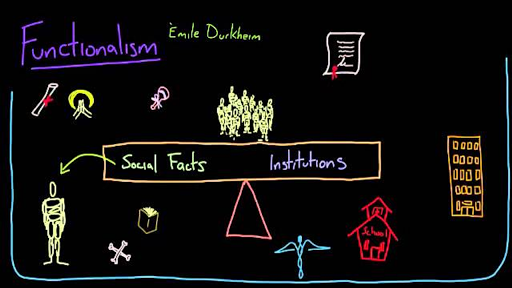
The Structural-Functional perspective is a major theoretical framework in sociology that focuses on understanding society by examining the roles and functions of its various components. This perspective is often associated with the work of early sociologists like Emile Durkheim, Talcott Parsons, and Robert Merton. It's also known as structural-functionalism or functionalism.


Key Concepts:


1. **Function**: This perspective views society as a system of interrelated parts that work together to maintain stability and order. Each part of society is believed to have a specific function that contributes to the overall stability and functioning of the whole. Functions can be manifest (explicitly intended) or latent (unintended or hidden).


2. **Structure**: Refers to the arrangement of various components of society, such as institutions, social norms, roles, and values. These components are interconnected and form the framework that gives shape to society.


3. **Equilibrium**: Structural-functionalists believe that societies strive to achieve a state of equilibrium or balance. When there's a disturbance in one part of society, other parts will adapt in order to restore stability. This notion is often referred to as the "organic analogy," comparing society to a living organism where each part plays a crucial role.


4. **Social Institutions**: Institutions like family, education, religion, economy, and government are seen as essential components of society, each serving specific functions. For example, family provides socialization and emotional support, education imparts knowledge and skills, religion offers moral guidance, the economy ensures material needs are met, and government maintains order.


5. **Functional Requirements**: Societies are believed to have certain functional requirements that must be met to ensure their survival and stability. These requirements often include the need for social order, cooperation, division of labor, and social cohesion.


6. **Social Change**: Structural-functionalism tends to emphasize the importance of stability and continuity in society. However, it does acknowledge that social change can occur when there's a need to adapt to new circumstances. This adaptation is usually viewed as a gradual and controlled process.


7. **Critiques**: One of the main criticisms of the structural-functional perspective is that it can oversimplify social dynamics and overlook issues related to power, conflict, and inequality. It's been criticized for not adequately addressing how social changes and conflicts are catalysts for societal progress. Additionally, some argue that the perspective doesn't account for the dysfunctional aspects of institutions and societal arrangements.


Overall, the structural-functionalist perspective provides valuable insights into the interconnectedness of societal components and their contributions to maintaining order and stability. However, it's essential to complement this perspective with other theoretical frameworks to gain a more comprehensive understanding of the complexities of society.


Critically examine the contribution of Auguste Comte, Herbert Spencer, Emile Durkheimian, Max  Weber in developing structural functional approach in sociology. 


Certainly, let's examine the contributions of these key sociologists in developing the structural-functional approach in sociology:


1. **Auguste Comte (1798-1857)**:

   Auguste Comte is often referred to as the "father of sociology" and laid the foundation for the structural-functional approach with his concept of "social physics" or "positivism." He emphasized the scientific study of society using empirical observation and measurement. Comte proposed that societies evolve through distinct stages, from theological to metaphysical to scientific (positivist). He believed that each stage had specific characteristics and that society's stability and progress depended on a clear understanding of these stages. Comte's ideas contributed to the idea that societies have a natural order and follow predictable patterns of development, aligning with the structural-functional focus on stability and order.


2. **Herbert Spencer (1820-1903)**:

   Spencer is known for popularizing the concept of "social Darwinism" and coined the phrase "survival of the fittest." While his work is often associated with evolutionary theories and individualism, he also contributed to the development of the structural-functional perspective. Spencer believed that societies were analogous to biological organisms, with various parts working together to maintain equilibrium. He introduced the concept of "organic analogy," likening society to a living organism. This idea emphasized the interdependence of societal components and their contributions to maintaining social stability.


3. **Emile Durkheim (1858-1917)**:

   Durkheim is a central figure in the development of structural-functionalism. He emphasized the study of social facts—external forces that shape individual behavior—and believed that individuals were constrained and guided by social norms and institutions. Durkheim's work on social cohesion and integration laid the groundwork for understanding how different parts of society contribute to its overall stability. His concept of "anomie" highlighted the breakdown of societal norms and its consequences, showcasing how social order and cohesion were vital for a functional society.


4. **Max Weber (1864-1920)**:

   While Weber is often associated with the development of symbolic interactionism and the study of individual actions, his contributions are also relevant to the structural-functional approach. Weber's concept of the "ideal type" and his analysis of different types of authority (traditional, charismatic, and rational-legal) provide insights into how societal structures and institutions influence behavior and maintain order. His work emphasized the significance of bureaucracy and rationalization in modern societies, highlighting their role in maintaining efficient functioning and stability.


In examining the contributions of these sociologists, it's important to note that while they laid the groundwork for the structural-functional perspective, they also had their unique ideas and areas of emphasis. Comte's positivism focused on scientific study, Spencer introduced the organic analogy, Durkheim emphasized social integration, and Weber examined the influence of rationalization and authority. These combined ideas contributed to the development of the structural-functional approach by highlighting the interconnectedness of societal components and their roles in maintaining stability and order. However, it's also important to acknowledge that each of these thinkers' ideas has been critiqued and expanded upon by subsequent sociologists, leading to a more nuanced understanding of society's complexities.


Discuss how Robert K. Merton reformulates the postulates of functional unity, universality, indispensability and functional alternatives for making functionalism more empirical. 


Robert K. Merton, a prominent sociologist, made significant contributions to reformulating the postulates of functionalism, aiming to make the theory more empirical and adaptable to the complexities of real-world societies. Merton's ideas can be understood through his concept of "manifest and latent functions" and his critique of the functionalist postulates of functional unity, universality, indispensability, and functional alternatives. 


1. **Manifest and Latent Functions**:

   Merton introduced the distinction between manifest and latent functions to address the limitations of earlier functionalism. Manifest functions are the intended and explicit consequences of an action or institution, while latent functions are unintended and often hidden consequences. This distinction allowed for a more nuanced analysis of functions, acknowledging that not all functions are positive or apparent.


2. **Functional Unity and Universality**:

   Merton criticized the assumption of functional unity and universality – the idea that all parts of society contribute positively to the overall functioning of the system. He argued that this assumption oversimplified the complexity of society and failed to account for dysfunctional aspects. Instead, he proposed the concept of "functional alternatives." Merton suggested that multiple institutions or actions could serve similar functions, and some might be more functional than others in a given context. This approach allowed for a more empirical examination of different social arrangements.


3. **Indispensability**:

   Merton questioned the idea of indispensability, which implied that every part of society was necessary for its stability. He pointed out that some institutions or practices might not be indispensable and could be replaced by other arrangements without causing significant disruption. He proposed the concept of "functional prerequisites," acknowledging that certain functions were indeed necessary for societal survival, but not all parts were equally indispensable.


Merton's reformulations made functionalism more empirically grounded and adaptable to a wider range of social contexts. His ideas encouraged sociologists to consider unintended consequences, alternatives, and variations in the functioning of institutions. This shift allowed for a more critical analysis of functional relationships and provided a framework for addressing dysfunctional aspects of society.


Merton's perspective brought greater flexibility to the structural-functional approach, acknowledging that not all parts of society are equally beneficial or necessary. His contributions paved the way for a more balanced and nuanced understanding of how various components of society contribute to its stability and change. Merton's work also inspired subsequent developments in sociological theory, such as the study of unintended consequences, social dysfunction, and the intersection of functionalism with other theoretical perspectives.


Referring to the concept of self-referencing developed by Nikals Luhmann, discuss the process through which social system has been able to change itself. 


Niklas Luhmann, a German sociologist, developed the concept of self-referencing as a central idea in his theory of social systems. Self-referencing refers to the ability of a system to generate and process its own internal information, enabling it to maintain coherence, adapt to changes, and even trigger self-induced transformations. Luhmann's theory of self-referencing has significant implications for understanding how social systems can change themselves.


Luhmann's theory is complex and interdisciplinary, drawing insights from sociology, cybernetics, and systems theory. His approach emphasizes the autonomy and complexity of social systems, which include organizations, institutions, and societies. Here's how the process of self-referential change in a social system can be understood:


1. **Autopoiesis and Self-Referencing**:

   Luhmann's concept of autopoiesis describes how social systems are self-organizing and self-producing. They generate their own elements and maintain their own boundaries. Self-referencing is a core aspect of autopoiesis. It involves a system using its own internal references, codes, and distinctions to process information and make decisions. In essence, the system observes itself through its internal communication processes.


2. **Double Contingency and Complexity**:

   Social systems interact with their environment, which can be unpredictable and contingent. Luhmann proposed the idea of "double contingency," where both the system and its environment influence each other. Social systems cope with this complexity by processing information through their self-referential mechanisms. They create distinctions and codes that help them filter and process the massive amount of information from the environment.


3. **Adaptation and Learning**:

   Through self-referencing, a social system can adapt to changes in its environment. The system continuously observes and assesses the information it generates internally and receives from the environment. If discrepancies or disruptions occur, the system may adjust its responses, rules, or structures to restore equilibrium. This process of adaptation is not directed by external control but emerges from the system's own dynamics.


4. **Self-Induced Transformations**:

   Luhmann argued that social systems can also trigger self-induced transformations. When a system encounters challenges that cannot be addressed within its existing structures or codes, it might undergo a process of internal reorganization. This could involve altering its basic premises, norms, or patterns of communication. These transformations are not externally driven but emerge from the system's internal dynamics.


5. **Crisis and Change**:

   Crisis situations, where a system faces disruptions that its current structures cannot handle, can lead to substantial change. Self-referencing allows the system to recognize these crises and potentially reconfigure itself. In times of crisis, the system may experiment with new codes, reevaluate its operations, and seek new ways to restore stability. Such changes are not linear or deterministic but emerge through the interplay of the system's internal processes and its relationship with the environment.


In summary, Niklas Luhmann's concept of self-referencing highlights how social systems can change themselves by utilizing their internal communication processes, codes, and distinctions. This approach underscores the autonomy and complexity of social systems, which can adapt to changes, learn from their own experiences, and even transform themselves in response to internal and external challenges.


Discuss how functional prerequisites or imperative or imperative visualize the function of social institutions contributing to the survival of the social system. 


Functional prerequisites, also known as functional imperatives, refer to the essential functions that social institutions and structures must fulfill to ensure the survival and stability of a social system. This concept is closely associated with structural-functionalism, a sociological perspective that examines how different parts of a society contribute to its overall functioning. Functional prerequisites help us understand the interdependence of various institutions and how they collectively maintain the equilibrium of the social system.

Here are some key points to consider when discussing functional prerequisites:

1. **Basic Survival and Reproduction**:
   The most fundamental functional prerequisites are related to the basic survival and reproduction of a society. These include ensuring access to food, water, shelter, and reproduction. Social institutions like the family and the economy play crucial roles in fulfilling these prerequisites. For example, the family provides care for children, which is essential for the continuation of the society.

2. **Social Order and Stability**:
   Functional prerequisites also involve maintaining social order, stability, and cohesion. Institutions such as the legal system and the government provide mechanisms for resolving conflicts, enforcing rules, and ensuring that the society functions smoothly. A functional legal system, for instance, prevents excessive chaos and contributes to the overall stability of the social system.

3. **Economic Production and Distribution**:
   Economic institutions are responsible for the production, distribution, and allocation of resources within a society. Meeting the economic functional prerequisites involves ensuring that there is enough production to meet the needs of the population and that resources are distributed fairly. Economic systems contribute to the overall functioning by providing goods and services that sustain society.

4. **Education and Socialization**:
   Education is a critical institution for meeting the functional prerequisite of socialization. Through education, individuals acquire the necessary knowledge, skills, and values to participate effectively in the society. Education contributes to the continuity of cultural norms and prepares individuals for their roles in the social system.

5. **Social Integration and Cohesion**:
   Functional prerequisites also address the need for social integration and cohesion. Religious institutions, for example, often provide a sense of shared values, beliefs, and purpose, helping to bind individuals together and create a sense of community. Social integration contributes to the overall stability and solidarity of the society.

6. **Communication and Information**:
   Communication is essential for coordinating activities, disseminating information, and maintaining social relationships. Institutions related to media, communication, and information-sharing contribute to meeting the functional prerequisite of effective communication within the social system.

7. **Adaptation to Change**:
   Social systems must also adapt to changes in their environment. Institutions that facilitate adaptation, such as innovation, research, and social mobility, contribute to the society's ability to respond to new challenges and opportunities.

Overall, the concept of functional prerequisites helps us visualize how different social institutions are interconnected and interdependent, working together to fulfill essential functions that ensure the survival and stability of the social system. This perspective emphasizes the importance of each institution's contribution and the need for a balance among them to maintain a well-functioning society.


Critically examine Kingsley Davis and Wilbert Moore's principles on social stratification. Draw suitable example from your own community to justify the empiricism. 


Kingsley Davis and Wilbert Moore's theory of social stratification, often referred to as the "Davis-Moore thesis," suggests that social inequality is functional for society as a whole. According to their perspective, social stratification exists because certain positions in society are functionally more important than others, and these positions require individuals with specific skills and training. As a result, societies offer higher rewards (such as higher income, prestige, and privileges) to individuals who occupy these positions to ensure that these roles are filled.

Critique of Davis-Moore Thesis:

While the Davis-Moore thesis has been influential, it has also faced significant criticism. Critics argue that the theory overlooks important factors such as historical inequalities, power dynamics, and the potential for social mobility. It assumes a meritocratic system where rewards are solely based on an individual's talents and efforts, disregarding the impact of social advantages and disadvantages.

Additionally, the theory doesn't account for the ways in which stratification can lead to social tensions, conflict, and instability. It tends to emphasize the positive functions of inequality without adequately addressing its potential negative consequences.

Example from a Community:

Let's take the example of a small rural community where traditional farming is the primary occupation. In this community, the social stratification is based on land ownership and agricultural skills. Those who own larger plots of land and have advanced farming knowledge are considered more valuable to the community's survival and well-being.

According to Davis and Moore's theory, these individuals would receive higher rewards and greater prestige because their roles are essential for ensuring food production and the community's overall stability. They might be given decision-making authority within the community due to their vital contributions. This, in turn, could result in economic and social inequalities.

However, a critical examination of this example reveals complexities that challenge the Davis-Moore thesis. While farming skills and land ownership are undoubtedly important for the community's sustenance, the theory fails to address historical injustices that might have led to initial disparities in land ownership. Additionally, it overlooks the potential contributions of individuals in other roles, such as teachers, healthcare providers, and community organizers, who also play vital roles in the community's functioning.

Empirically, the example demonstrates that while certain roles may indeed be more essential in certain contexts, social stratification can result from a combination of historical legacies, power dynamics, and unequal opportunities. The Davis-Moore thesis oversimplifies the complex interactions that lead to stratification and doesn't adequately consider the potential negative consequences of such inequalities, including social unrest and dissatisfaction.

In summary, while the Davis-Moore thesis offers insights into the functional aspects of social stratification, it fails to capture the full complexity and nuances of real-world social dynamics. Empirical examples often reveal the limitations of theoretical models, highlighting the importance of considering historical context, power dynamics, and the multifaceted nature of social inequalities.

Justify, why Nikals Luhmann viewed social system as against to solar system. Discuss how Luhmann's concept of risk and danger is enhancing our understanding of Modern society. 


Niklas Luhmann viewed the concept of a social system in contrast to that of a solar system to emphasize the fundamental differences between physical and social systems. This analogy illustrates Luhmann's approach to understanding the complexity and autonomy of social systems compared to more deterministic physical systems like solar systems.

1. **Social System vs. Solar System**:
   Luhmann's comparison between social systems and solar systems is rooted in the distinction between closed and open systems. A solar system, governed by the laws of physics, is a closed system where interactions are determined by fixed physical principles. In contrast, social systems are open systems that involve complex human interactions, communication, and adaptation. Luhmann argued that while a solar system is characterized by predictable interactions between celestial bodies, a social system is characterized by continuous change, adaptation, and self-reference.

   The comparison serves to highlight the autonomy and complexity of social systems, which are influenced by human agency, communication, and the capacity for self-observation and adaptation.

2. **Luhmann's Concept of Risk and Danger**:
   Luhmann's concept of risk and danger is integral to his understanding of modern society. He argued that modern societies are characterized by increased complexity and interdependence, leading to the emergence of new forms of risk and danger. Luhmann distinguished between these terms in the following way:

   - **Risk**: Risk refers to situations where potential outcomes are known and can be calculated or estimated. In modern society, various sectors such as finance, technology, and health are characterized by complex risks that require sophisticated methods of assessment and management. For example, financial institutions use risk analysis to predict potential losses in investment.

   - **Danger**: Danger, on the other hand, pertains to situations where potential outcomes are uncertain and not easily calculable. Dangers arise from the unforeseen consequences of complex interactions. Modern society faces dangers that can emerge unexpectedly due to interconnectedness and the rapid pace of change. For instance, the unforeseen side effects of technological advancements or environmental changes can lead to dangerous situations.

   Luhmann's distinction between risk and danger helps enhance our understanding of modern society by acknowledging that while risks can be managed through calculation and prediction, dangers are more challenging to address due to their unpredictable nature.

In summary, Luhmann's view of social systems as opposed to solar systems emphasizes the autonomy, complexity, and adaptability of social systems compared to deterministic physical systems. His concept of risk and danger adds depth to our understanding of modern society by highlighting the unique challenges posed by complex interdependence and rapid change. Luhmann's approach encourages us to recognize the distinctiveness of social systems and the need for innovative approaches to managing uncertainties and dangers in contemporary societies.


Discuss how the concept of "conservative man" is used for criticizing functional perspective.


The concept of the "conservative man" is used as a criticism of the functionalist perspective in sociology. This critique highlights a potential bias and limitation within the functionalist approach, particularly regarding its assumptions about social stability, order, and the preservation of the status quo. The term "conservative man" doesn't refer to a literal individual but rather symbolizes a theoretical perspective that tends to uphold traditional norms, values, and power structures.

Key points to consider when discussing the concept of the "conservative man" in criticizing functionalism:

1. **Preservation of Status Quo**: The functionalist perspective, with its emphasis on the functions and contributions of various societal components, can sometimes overlook the dysfunctions and inequalities that exist within a society. It might prioritize maintaining social order over addressing underlying issues that contribute to social inequality and injustice.

2. **Lack of Change and Progress**: Critics argue that functionalism can hinder societal progress by emphasizing the need for stability and continuity. By focusing on how institutions contribute to the overall equilibrium, functionalism might discourage the exploration of alternative arrangements that could lead to positive changes and innovations.

3. **Reinforcement of Inequality**: Functionalism might be criticized for justifying existing social hierarchies and inequalities by attributing them to necessary functional roles. This perspective might not adequately address how power and privilege are perpetuated through certain institutions, limiting social mobility and reinforcing structural inequalities.

4. **Neglecting Conflict and Change**: Functionalism tends to downplay the role of conflict and social change in shaping societies. Critics argue that it underestimates the importance of conflict and societal tension as catalysts for progress, challenging unjust power dynamics, and promoting social transformation.

5. **Cultural Bias**: The functionalist perspective can be culturally biased, assuming that the functions and norms of one society are universally applicable to all societies. This can lead to oversimplifications and misunderstandings of how different cultures and contexts operate.

6. **Neglecting Individual Agency**: Critics also argue that functionalism may not adequately consider the agency and decision-making capacity of individuals. It might portray individuals as passive recipients of societal norms and structures, neglecting their capacity to challenge and reshape those norms.

In essence, the concept of the "conservative man" in criticism of functionalism highlights how the perspective's focus on stability, equilibrium, and the contributions of institutions can lead to a reluctance to acknowledge and address social inequalities, conflict, and the need for societal progress. This critique encourages sociologists to adopt more comprehensive frameworks that consider both the functional and dysfunctional aspects of social arrangements while also recognizing the potential for change and transformation within societies.

"Our lives are guided by social structures, which are relatively stable patterns of social behavior." Justify this argument with suitable examples. 


The argument that "our lives are guided by social structures, which are relatively stable patterns of social behavior" highlights the significant influence that social structures have on shaping individual behavior, interactions, and experiences within a society. Social structures provide a framework that guides how people interact, communicate, and fulfill their roles within a given social context. Let's justify this argument with suitable examples:

1. **Family Structure**:
   The family is a fundamental social structure that shapes our lives from an early age. The roles, expectations, and dynamics within a family structure influence how individuals perceive themselves and their relationships. For instance, in many cultures, the family structure includes distinct roles for parents, children, and extended family members. These roles come with specific responsibilities and expectations that guide behaviors and interactions within the family unit.

2. **Educational System**:
   The educational system is another example of a social structure that plays a significant role in guiding our lives. Schools have established routines, hierarchies, and expectations that structure students' daily lives. The educational structure includes roles for teachers, students, administrators, and support staff. The routines and rules within this structure shape students' learning experiences and interactions with peers and educators.

3. **Workplace Structure**:
   The workplace is characterized by its own social structure, with hierarchies, job roles, and rules of interaction. This structure guides how employees collaborate, communicate, and fulfill their job responsibilities. For example, a corporate workplace has a clear hierarchy, with managers, supervisors, and employees each having distinct roles and responsibilities. This structure influences decision-making processes, communication patterns, and career advancement opportunities.

4. **Gender Roles**:
   Gender roles represent a social structure that dictates societal expectations and behaviors based on one's gender. These roles influence how individuals perceive themselves and interact with others. For instance, traditional gender roles might assign specific responsibilities and behaviors to men and women within a society. These roles impact everything from career choices to household responsibilities.

5. **Political Systems**:
   Political structures define how governance and decision-making occur within a society. They establish roles for leaders, legislators, and citizens. Political structures guide the processes of lawmaking, policy implementation, and civic engagement. For instance, a democratic political structure encourages citizen participation through voting and advocacy, shaping the ways individuals engage with their government.

6. **Cultural Norms and Values**:
   Cultural norms and values are also a form of social structure. They provide guidelines for appropriate behavior, communication, and interaction within a society. For example, cultural norms might dictate behaviors related to greetings, expressions of respect, and forms of social etiquette. These norms influence how individuals navigate social situations and form relationships.

In each of these examples, social structures offer stability and predictability by providing established patterns of behavior and interaction. These structures guide our actions, choices, and relationships, contributing to the overall functioning and order of society. However, it's important to note that while social structures provide stability, they are not static and can change over time due to shifts in cultural norms, technological advancements, and social movements.


Popular Posts