Showing posts with label This. Show all posts

Prashant Tamang's death due to 'cardiac arrest', what is this problem?

Prashant Tamang's death due to 'cardiac arrest', what is this problem?


In our society, cardiac arrest and heart attack are considered as one problem. But from a medical point of view, these two are completely different problems.


Singer and actor Prashant Tamang passed away at the age of 42 due to cardiac arrest at his residence in Delhi.

Cardiac arrest is a sudden cardiac arrest that can lead to death within 3 to 5 minutes.

The number of cardiac arrests among young people in Nepal is increasing and modern lifestyle, stress, and lack of sleep are the main reasons. 

Kathmandu. There was once a very popular name in the music world - Prashant Tamang.


Tamang, a Nepalese resident of Darjeeling, is the winner of Indian Idol Season 3. In 2007, his voice and personality won the hearts of Nepali and Indian audiences.


In recent years, he seemed to be more busy with films than singing. And recently he made his debut in Bollywood. Along with singing and acting, his simple lifestyle made him an inspiration to many youngsters. But that inspiring character suddenly left this world at the age of 42. The reason was, 'cardiac arrest'.


In the last few years, not only in Nepal, but all over the world, news such as 'He fell and died while walking', 'He died while sleeping', 'Young people who were going to the gym suddenly fainted and could not survive' are increasing rapidly.


In the last few years, not only in Nepal, but all over the world, there are many news such as 'he died while walking', 'he died while sleeping', 'the young man who was exercising suddenly fainted, he could not escape', he fell while talking'.

Sudden death like this is often thought of as a heart attack, but medical science has shown that the reality is different. Doctors say that the real reason for most of these incidents is 'cardiac arrest' i.e. sudden heart failure.


What is cardiac arrest?


Cardiac arrest is when the heart suddenly stops working. Senior Consultant Cardiologist Dr. According to Ranjit Kumar Sharma, the word cardiac refers to the heart and arrest means stopping or stopping. When the electrical system of the heart breaks down, the heart beats irregularly and the heart cannot pump blood, the condition is called cardiac arrest. Dr. Sharma is currently the head of cardiology department at Medicity Hospital.


How can it lead to death? In response, Dr. Sharma says, 'Heart is the most important pump of our body. It continuously carries blood with oxygen to all parts of the body. When a cardiac arrest occurs, the heart suddenly stops working. Its effects start to appear in the brain within a few seconds. The person suddenly faints, breathing stops and the supply of oxygen to the body stops. If the heart does not restart within 3 to 5 minutes, the brain is permanently damaged and death occurs.


Why does cardiac arrest happen?


Dr. According to Sharma, in most cases, heart attacks occur first. A heart attack damages the heart muscle, due to which the electrical system of the heart breaks down, leading to cardiac arrest. During a heart attack, a sudden blockage (clot) forms in the artery that supplies blood to the heart (coronary artery) or the artery is completely closed. This causes the electrical system (rhythm) of the heart to deteriorate due to insufficient blood and oxygen supply to the heart muscle.


After the rhythm is disturbed, the normal movement of the heart is disturbed, leading to dangerous conditions such as ventricular fibrillation or ventricular tachycardia. In this condition, the heart cannot pump blood effectively, the heart only 'vibrates', not pumping. Cardiac arrest in this way Dr. Sharma says.


Also read this

Singer Prashant Tamang passed away

Therefore, if a heart attack is left untreated, it can turn into a cardiac arrest and cause death, he says.


He says that heart rhythm disturbance is another reason for cardiac arrest. "A heart attack, electrolyte imbalance, stress, medication, or congenital causes can cause the heart to beat very fast or irregularly," Dr. Sharma says, 'When the lower part of the heart starts beating very fast or irregularly, the heart cannot pump blood. It can knock down a person in a few seconds.


Cardiomyopathy (thickening of the heart muscle)


Virat Medical College Senior Cardiologist Dr. According to Madhav Bista, cardiomyopathy is the thickening of the heart wall. It makes the heart hard and does not allow blood to fill. This problem is mostly congenital and many are not aware of it. He says that the first symptom is sudden death.


"The most dangerous aspect is that congenital heart disease may be hidden in many young people," says Dr. Bisht. Even if a person with these diseases looks healthy on the outside, the risk of cardiac arrest increases due to sudden excessive stress, alcohol consumption, or physical fatigue.


Therefore, he suggests that young people should also get their heart health checked from time to time. Dr. Bisht says that it is wise not to do too much physical exercise at once and not to insist on alcohol.


Why is cardiac arrest increasing in young people?


In the last 10-15 years, the incidence of sudden cardiac arrest among young people is increasing rapidly all over the world. Nepal is also not exempt from this. The problem of cardiac arrest in Nepal is increasing alarmingly. Sharma says. First cardiac arrest It was considered to be a disease that occurs in 60-70 years, says Dr. Sharma, but now, even in the age group of 25 to 45 years, its number is increasing alarmingly.


According to him, the biggest reason for this is the modern lifestyle. The habit of sitting in front of mobile phones, laptops and screens for a long time has made the body inactive. When physical activity decreases, weight increases, cholesterol increases, blood pressure increases and the arteries of the heart narrow. He says that this situation will later cause heart attack and cardiac arrest.


He was very kind to his three-year-old daughter, he didn't even mention his career for her

Cardiologist Dr. Stress and lack of sleep in today's youth is another main factor leading to cardiac arrest. Bisht says. Dr. Bisht says, "The habit of using mobile phones till 2-3 o'clock in the night, sleeping irregularly, and taking pressure from work makes the electrical system of the heart unbalanced. It causes cardiac arrest, heart attack."


Smoking, alcohol, energy drinks, junk food and processed food have become part of the daily life of the youth. Dr. They cause swelling of body parts, increase blood pressure and damage of arteries. Bista says.


Studies have confirmed that such incidents can happen even after drinking too much alcohol. According to a study published in the National Library of Medicine, excessive alcohol can cause heart rhythm disturbances, which can make the heart beat irregularly. Alcohol lowers blood pressure and causes electrolyte imbalance, which destabilizes the heart. Sleeping drunk also increases the risk of vomiting or respiratory arrest. Those with chronic heart disease or other health problems are at greater risk.


What is the difference between heart attack and cardiac arrest?


In our society, cardiac arrest and heart attack are considered as one problem. But from a medical point of view, these two problems are completely different. Sharma says.


A heart attack is a blockage of the coronary artery leading to the heart and the oxygen supply to the heart muscle is stopped. It damages a part of the heart. But a person who has a heart attack can speak, walk, reach the hospital,'' he says, 'but cardiac arrest is the stopping of the heart. In this condition, the heart cannot pump blood at all. The person immediately collapses, passes out and can die within a few minutes.


According to him, cardiac arrest is a more dangerous condition than heart attack because it has the danger of dying quickly. If CPR and defibrillator are not used immediately, chances of survival are very low. For this reason, defibrillators are placed in sports fields, gyms, airports, large department stores, malls, railway stations, offices, etc. around the world, says Sharma.


Prashant Tamang: 'Poster Boy' of Nepali-speaking unity

"This device is easy to use and gives instructions by speaking," says Sharma, "If someone has a sudden cardiac arrest, anyone can use it to save their life."


What are the symptoms of cardiac arrest?


Cardiac arrest often comes without warning, but before that, the body has already started giving small signals. The problem is, many young people ignore those signs as fatigue or gastric. According to Dr. Sharma, chest pain, sudden increase in heart rate, difficulty in breathing, dizziness are some of its symptoms. Sometimes chest heaviness, burning sensation, pain in the back, neck or left arm can also be signs of a heart attack. Cardiac arrest can occur after a heart attack.


If a young person is experiencing the problem of frequent fainting, shortness of breath while running or climbing stairs, waking up at night while sleeping, then it should not be taken as normal, said Dr. Madhav Bista says. "That's not normal, it could be a sign of hidden heart disease," he says.


Sudden collapse, unresponsiveness, stopping breathing is a condition of cardiac arrest. At that time even a few seconds can be important. Bisht says.


Is it possible to treat patients with cardiac arrest?


Treatment of cardiac arrest is possible, but only within the first few minutes of hospital delivery. Dr. According to Ranjit Sharma, if a cardiac arrest occurs, the first treatment is cardiopulmonary resuscitation (CPR), not medicine. If the person can be rescued by giving CPR and being taken to the nearest hospital, the person can return to normal life. That is why it is called 'Basic Life Supporter'.


Dr. According to Ranjit Sharma, if a cardiac arrest occurs, the first treatment is cardiopulmonary resuscitation (CPR), not medicine. If the person can be rescued by giving CPR and being taken to the nearest hospital, the person can return to normal life. That is why it is called 'Basic Life Supporter'.

If a person suddenly collapses, CPR should be started immediately by chest compressions. He says that if the heart is not started within 3-5 minutes, the brain will be permanently destroyed and the person will die.


According to Dr. Bisht, people who survive cardiac arrest can be treated long-term with pacemaker, medicine or surgery after finding out the cause of the heart problem. He says that after such treatment, he will return to normal life if he pays attention to his lifestyle.


Does your sugar level increase in summer? Learn how to control diabetes in this season

 Does your sugar level increase in summer? Learn how to control diabetes in this season


If you have diabetes then summer season can be a challenging season for you. Learn how you can control your diabetes during this time.


If your insulin level or blood sugar level (Blood Sugar Level) is not controlled properly in the summer season, then diabetes patients are at the highest risk in this season. If your blood sugar is too high then it can be more serious in these summers. Depending on your activities, low blood sugar can also become a concern and not only this, diabetes can damage your sweat glands. Due to which you don't even sweat properly. All this is due to the increase in temperature in the outdoor weather. Rising temperatures can also damage your medications and testing equipment. So you have to keep your medicines safe with you. Before going out in the summer, it is important that you keep your blood sugar under control.


What do experts say?

Our expert Dr. Vinay Bhatt, General Medicine, Columbia Asia Hospital, Ghaziabad says that heat mostly affects your blood sugar level. How much it affects you depends on how hydrated you are, how active you are, and what you eat and drink. If you are sweating profusely then it may be because you are getting dehydrated and your blood glucose level is increasing. Due to this, you can urinate again and again due to which you will get more dehydration and your sugar level can also increase more. Your medicines can also break down on their own due to high temperatures, so keep them in a cool place.


How to control diabetes in summer?

1. Adjust insulin (Adjust Insulin Level)

Be sure to ask your doctor how you can adjust your insulin level before exercising so that it does not increase your sugar and glucose levels. Many doctors will give you these tips that how you can control your blood sugar level in summer.


2. Drink More Water

The main cause of blood sugar increase is dehydration and to avoid this you should drink more water so that your body can stay hydrated.


3. Keep checking the blood sugar level (Check Your Sugar)

The temperature outside in summer can increase or decrease your blood sugar, so it is a good idea to keep checking your sugar level frequently. You can try to control your diabetes only according to your sugar level.


4. Stop Getting Dehydrated

Keep a bottle of water or liquids with you that do not increase your sugar and if you are going out, drink a little water all the time so that you can avoid dehydration in diabetes.


5. Fix blood sugar (Keep Glucagon Kit)

In summer, not only your blood sugar (Blood Sugar) may increase but also decrease. Which in itself is a concern and for this you should always keep your glucose tablets with you.


6. Avoid Sunburn

If you stay in the sun too much, you may get sunburn and it may increase blood sugar, so protect yourself from sunburn.


7. Keep Healthy Snacks With You

If you want to control your sugar then some snacks can also replace your meal.


If you have diabetes, you have to make more efforts to protect yourself and your medicines during the summer season, so avoid going out too much.


What is the central thesis of Dumont’s theory of caste? Does this theory capture the dynamics of caste hierarchy and inter-caste relations in contemporary Nepali Society? How?

What is the central thesis of Dumont’s theory of caste? Does this theory capture the dynamics of caste hierarchy and inter-caste relations in contemporary Nepali Society? How?  


The central thesis of Louis Dumont’s theory of caste is that the Hindu caste system is based on the principle of hierarchy, with Brahmans at the top and untouchables at the bottom. Dumont argues that this hierarchy is not based on economic or political power, but on religious purity and pollution. He further argues that the caste system is a holistic system, in which all aspects of life, including work, marriage, and religion, are interconnected.


Dumont’s theory has been influential in the study of caste, but it has also been criticized. Some critics argue that Dumont overemphasizes the importance of hierarchy and ignores other aspects of caste, such as economic and political power. Others argue that Dumont’s theory is Eurocentric and does not take into account the unique cultural context of India.

Despite these criticisms, Dumont’s theory remains an important contribution to the study of caste. It provides a framework for understanding the complex dynamics of caste hierarchy and inter-caste relations. It also challenges us to think about caste in a new way, as a holistic system that is embedded in Hindu culture.

Does Dumont’s theory capture the dynamics of caste hierarchy and inter-caste relations in contemporary Nepali society?

To some extent, yes. The caste system is still a powerful force in Nepali society, and Dumont’s theory can help us to understand how it works. For example, Dumont’s theory would help us to understand why there is still a great deal of discrimination against Dalits, the lowest caste group in Nepal. It would also help us to understand why inter-caste marriages are still rare.

However, Dumont’s theory does not capture the full complexity of caste relations in Nepal. For example, the caste system is not static, and it has been changing in recent years. There is a growing movement for Dalit empowerment, and there is increasing awareness of the problems caused by caste discrimination. In addition, the caste system is not the only factor that shapes social relations in Nepal. Other factors, such as class, gender, and ethnicity, also play a role.

Overall, Dumont’s theory is a useful tool for understanding caste relations in Nepal. However, it is important to remember that it is just one tool, and it should not be used in isolation. We need to use other tools, such as historical analysis and ethnographic research, to get a full picture of caste relations in Nepal.

Here are some specific examples of how Dumont’s theory can be used to understand caste relations in Nepal:

The persistence of caste discrimination. Despite the fact that Nepal has a secular constitution and laws that prohibit caste discrimination, Dalits continue to face discrimination in many areas of life, including education, employment, and housing. Dumont’s theory would help us to understand why this is the case. He would argue that the caste system is a deeply ingrained part of Hindu culture, and that it is difficult to change.

The rise of Dalit empowerment. In recent years, there has been a growing movement for Dalit empowerment. This movement has led to the formation of Dalit political parties and organizations, and it has also led to increased awareness of the problems caused by caste discrimination. Dumont’s theory would help us to understand why this movement has emerged. He would argue that it is a sign of the changing nature of the caste system, and that it is a challenge to the traditional Hindu hierarchy.

The intersection of caste with other social factors. Caste is not the only factor that shapes social relations in Nepal. Other factors, such as class, gender, and ethnicity, also play a role. Dumont’s theory would help us to understand how these factors intersect with caste. For example, he would argue that Dalit women face a double burden of discrimination, because they are both Dalit and women.

In conclusion, Dumont’s theory is a useful tool for understanding caste relations in Nepal. However, it is important to remember that it is just one tool, and it should not be used in isolation. We need to use other tools, such as historical analysis and ethnographic research, to get a full picture of caste relations in Nepal.


Who was Louis Dumont. List out Louis Dumont's  The major themes of Domont's theory of caste and explain it. 


Louis Dumont (1911-1998) was a French sociologist who is best known for his work on caste in India. His book, Homo Hierarchicus: The Caste System and Its Implications, is considered to be a classic in the field of social anthropology.

Dumont argued that the caste system is a system of hierarchy, with Brahmans at the top and untouchables at the bottom. He argued that this hierarchy is not based on economic or political power, but on religious purity and pollution. He further argued that the caste system is a holistic system, in which all aspects of life, including work, marriage, and religion, are interconnected.

Dumont's theory of caste has been influential in the study of caste, but it has also been criticized. Some critics argue that Dumont overemphasizes the importance of hierarchy and ignores other aspects of caste, such as economic and political power. Others argue that Dumont's theory is Eurocentric and does not take into account the unique cultural context of India.

Despite these criticisms, Dumont's theory remains an important contribution to the study of caste. It provides a framework for understanding the complex dynamics of caste hierarchy and inter-caste relations. It also challenges us to think about caste in a new way, as a holistic system that is embedded in Hindu culture.

Here are the major themes of Dumont's theory of caste:

Hierarchy: Dumont argued that the caste system is a system of hierarchy, with Brahmans at the top and untouchables at the bottom. He argued that this hierarchy is not based on economic or political power, but on religious purity and pollution.

Holistic system: Dumont argued that the caste system is a holistic system, in which all aspects of life, including work, marriage, and religion, are interconnected.

The pure and the impure: Dumont argued that the caste system is based on the distinction between the pure and the impure. Brahmans are considered to be the purest caste, while untouchables are considered to be the most impure.

The individual and the group: Dumont argued that the caste system is based on the principle of the individual being subsumed into the group. He argued that this is in contrast to Western individualism, which emphasizes the importance of the individual.

The sacred and the secular: Dumont argued that the caste system is based on the distinction between the sacred and the secular. He argued that the caste system is a religious system, and that it should not be analyzed in terms of secular categories, such as economics or politics.

Dumont's theory of caste has been influential in the study of caste, but it has also been criticized. Some critics argue that Dumont overemphasizes the importance of hierarchy and ignores other aspects of caste, such as economic and political power. Others argue that Dumont's theory is Eurocentric and does not take into account the unique cultural context of India.

Despite these criticisms, Dumont's theory remains an important contribution to the study of caste. It provides a framework for understanding the complex dynamics of caste hierarchy and inter-caste relations. It also challenges us to think about caste in a new way, as a holistic system that is embedded in Hindu culture.


Does this theory capture the dynamics of caste hierarchy and inter-caste relations in contemporary Nepali Society?  In your opinion, is Dumont's theory relevant to analyze the nature of caste in Nepal?


Dumont's theory of caste can be used to understand the dynamics of caste hierarchy and inter-caste relations in contemporary Nepali society, but it is important to remember that it is just one tool, and it should not be used in isolation. We need to use other tools, such as historical analysis and ethnographic research, to get a full picture of caste relations in Nepal.

Here are some specific examples of how Dumont's theory can be used to understand caste relations in Nepal:

The persistence of caste discrimination. Despite the fact that Nepal has a secular constitution and laws that prohibit caste discrimination, Dalits continue to face discrimination in many areas of life, including education, employment, and housing. Dumont's theory would help us to understand why this is the case. He would argue that the caste system is a deeply ingrained part of Hindu culture, and that it is difficult to change.

The rise of Dalit empowerment. In recent years, there has been a growing movement for Dalit empowerment. This movement has led to the formation of Dalit political parties and organizations, and it has also led to increased awareness of the problems caused by caste discrimination. Dumont's theory would help us to understand why this movement has emerged. He would argue that it is a sign of the changing nature of the caste system, and that it is a challenge to the traditional Hindu hierarchy.

The intersection of caste with other social factors. Caste is not the only factor that shapes social relations in Nepal. Other factors, such as class, gender, and ethnicity, also play a role. Dumont's theory would help us to understand how these factors intersect with caste. For example, he would argue that Dalit women face a double burden of discrimination, because they are both Dalit and women.

In conclusion, Dumont's theory is a useful tool for understanding caste relations in Nepal. However, it is important to remember that it is just one tool, and it should not be used in isolation. We need to use other tools, such as historical analysis and ethnographic research, to get a full picture of caste relations in Nepal.

As for whether or not Dumont's theory is relevant to analyze the nature of caste in Nepal, I believe that it is. However, it is important to remember that Nepal is a unique country with its own history and culture. As such, it is important to be aware of the limitations of Dumont's theory and to use it in conjunction with other theories and perspectives.

Here are some other theories and perspectives that can be used to understand caste in Nepal:

Marxism: Marxism argues that caste is a form of class oppression. This theory can be used to understand the economic and political dimensions of caste.

Feminism: Feminism argues that caste is a form of gender oppression. This theory can be used to understand the ways in which caste intersects with gender.

Postcolonialism: Postcolonialism argues that caste is a form of colonial oppression. This theory can be used to understand the ways in which caste was shaped by colonialism.

By using a variety of theories and perspectives, we can get a more nuanced understanding of caste in Nepal. This understanding can help us to develop more effective strategies for challenging caste discrimination and promoting social justice.


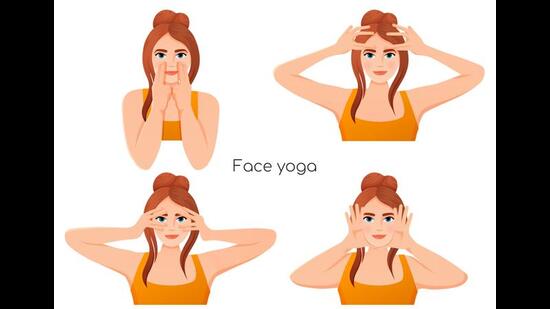
This is how face yoga can be done to brighten the face

This is how face yoga can be done to brighten the face


People are taking various measures to look beautiful and attractive. They resort to different types of creams, treatments and many other measures. Although all these will bring shine to the face, it cannot reduce the effects of aging on the face.


In such a situation, exercise for the face can prove to be very useful. For this you can do 'face yoga'. Just as yoga is important for health, it is equally beneficial for the face. How to do 'face yoga' to make your face attractive, what are its benefits? let's know


What is face yoga?


Face yoga is the exercise of facial muscles. It can make facial muscles flexible, improve blood circulation, relax, nourish and reduce the effects of aging on the skin.


What kind of yoga?


Lion pose


Throne yoga is done as a lion opens its mouth while roaring. It strengthens the mouth muscles. The lion pose tightens all the muscles of the face, improves blood circulation and also brings glow. This is one of the best yoga for face.


method


- First of all, lay a mat on the floor. This method can also be done sitting in bed.


-Sitting in Sukhasana and touching the mat with your hands. Extend the fingers of both hands near the knees. In this case, the elbow should be straight.


- Open your mouth well, stick your tongue out, spread your tongue out and roar like a lion so that the pressure on the facial muscles is reached.


-Repeat twice or four times every day in the morning.


Tap


It is important to start your routine by gently tapping the entire face and neck with your fingertips, i.e. by applying quick pressure to the face with your fingertips. This awakens the skin, increases blood circulation and produces elastin and collagen. makes


method


- Apply pressure by tapping on your forehead with the tips of your fingers, start tapping from the middle of the forehead and move towards the forehead.


-Starting from the chin and going through the base of the nose, tap the tap on your cheeks.


- Keep tapping your cheeks in an upward motion from the chin bone to the cheek bone.


-Tap above the upper lip for about three seconds, then tap tap below the lower lip for a few seconds.


Happy Frog


When a frog croaks like it is happy, it is called 'Happy Frog'. Face volume decreases with age. This pose tightens sagging cheeks and makes them look fuller.


In this mudra, the lower lip and the upper lip are joined together to make a smile. Repeat this exercise 20 times.


Kisses and smiles


In this practice, the lips are made to smile for a while and kiss for a while. It does not cause wrinkles on the cheeks.


method


- Take it near the lips with the thieving finger and middle finger.


- Then close the mouth and make a shape as if kissing and give a smile.


- Sit in the kissing posture for 10 seconds and then keep smiling for 10 seconds.


-Then come to rest position.


fish face


This mudra brightens the face and makes the lips look pink. Helps to improve muscle function.


method


- Close your eyes first.


-Pull your lips and cheeks inward to give a fish-like shape and hold for 30 seconds.


-Then smile for 30 seconds.


- Do this yoga three to five times a day.


Chin lift


Many people are suffering from the problem of double chin. Double chin makes laughing and speaking difficult. Chin lift yoga is the solution to this problem. In addition, it also works to improve the functioning of the jaw and neck muscles.


method


-Lift your head and look at the ceiling.


- Push forward as if trying to kiss the ceiling while trying to reach your lips. Continue this for a few seconds.


- Slowly return to your previous position.


-Repeat this facial yoga process three to four times.


Mouthwash technique


Mouthwash Technique Yoga is very easy and can be done at any time. The mouthwash method helps to tone the cheeks and remove excess fat from the face. This yoga is also effective in the problem of double chin.


method


- When rinsing your mouth with water, fill your cheeks with air in your mouth as if you were filling your mouth with water.


-When tired, rest for a while.


- Repeat this process two-three times.


Eye focus


This eye yoga helps to make the eyebrows beautiful and attractive.


method


- Spread your eyes as wide as possible. Do not squint your eyes while doing this.


- Now pay attention to see things as far away as possible.


-Slowly pay attention to nearby things.


-Repeat this process for a few seconds, rest for a few seconds.

How much meat is better to eat on Dashain or any other time? This is what the experts say | Do you eat potatoes? Let's know these are the advantages and disadvantages of eating potatoes: see

How much meat is better to eat on Dashain or any other time? This is what the experts say


Dasain has arrived in Nepalese homes. On the first day of Dasain, Dasain started after doing housework. Most meat dishes are cooked during Dasain. This is why the consumption of meat is excessive during Dasain. It is estimated that almost 10 times more meat is consumed during this time than normal time. It is customary to eat the meat brought especially on the day of Phulpati by wearing it on Dasain Bhari. However, meat consumed in this way is not beneficial for health.

Do you eat chow-chow? Take care, let's all see this good advice given by the doctor | These are: Let's know the pros and cons of eating Parsi Munta...

Do you eat chow-chow? Take care, let's all see this good advice given by the doctor


The practice of giving junk food to most of the children by their parents has flourished recently. If the children cry or do not listen to what they say, the practice of giving food to their children is now a problem from villages to cities.

This is how you can fill out the EDV form at home

This is how you can fill out the EDV form at home


The United States of America has also opened the EDV (Electronic Diversity Visa) lottery for the year 2024. To apply for this, a long crowd is now seen in various cyber, photo shops etc. Even though the EDV form can be filled for free, such shops have been filling the form by taking voluntary money from people.

Popular Posts